History was made Saturday when the United States and Israel struck Iran. Despite some initial confusion in the immediate aftermath of the strikes, it has since been revealed that Iranian Supreme Leader Ayahollah Ali Khamenei was killed during the airstrikes. It’s the dawn of a new era in Iran and the Middle East.
Of course, when a theocracy loses its dictator, the biggest question that must be answered is “What happens next?”
And that’s going to be a complicated situation.
“Rival opposition figures are jockeying for position in a new Iran, in the wake of the death of Iranian Supreme Leader Ayatollah Ali Khamenei,” reports the California Post. “In dueling messages on Saturday, opposition leader Maryam Rajavi and exiled crown prince Reza Pahlavi urged Iranians to unite — while making clear they have different visions for the country’s future.”
In the wake of Saturday’s U.S. and Israeli strikes, Rajavi, the president-elect of the Paris-based National Council of Resistance of Iran, renewed her call for the overthrow of Iran’s ruling clerical regime and the establishment of a democratic republic. With the regime under growing military and diplomatic pressure, Rajavi framed the moment as a turning point, urging Iranians to seize the opportunity to end decades of theocratic rule and chart a new course grounded in freedom and self-governance.
Pahlavi, the son of Iran’s last monarch, has a different vision.
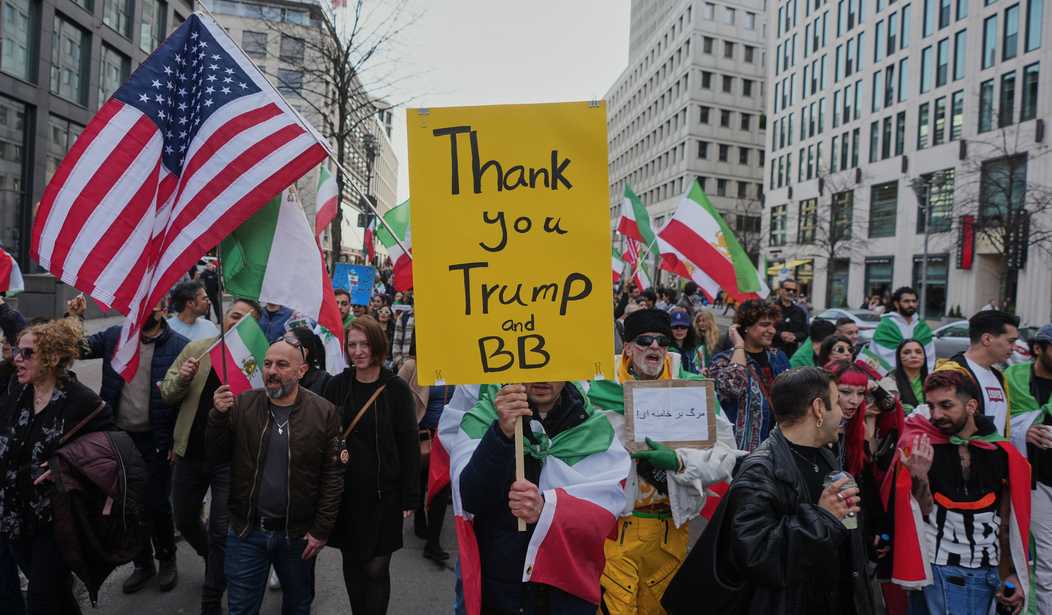
In a post on X, he praised U.S. military action as a “humanitarian intervention,” while reminding followers that Iranians themselves must win the true victory. “It is we, the people of Iran,” he declared, “who will finish this task in this final battle.” Pahlavi told supporters “the time to return to the streets is approaching,” hinting at a new wave of protests.
هممیهنان عزیزم،
— Reza Pahlavi (@PahlaviReza) February 28, 2026
لحظاتی سرنوشتساز پیشِ روی ماست.
کمکی که رئیسجمهور ایالات متحده به مردم شجاع ایران وعده داده بود، اکنون رسیده است. این یک مداخله بشردوستانه است؛ و هدف آن، جمهوری اسلامی، دستگاه سرکوب و ماشین کشتار آن است؛ نه کشور و ملت بزرگ ایران.
اما، با وجود رسیدن این کمک،… pic.twitter.com/kRiamgeCpS
Both Rajavi and Pahlavi are betting that the Islamic Revolutionary Guard Corps — the IRGC — will fracture.
The competing appeals highlight a brewing struggle for legitimacy among Iran’s opposition at the Islamic Republic’s most precarious moments in decades.
Pahlavi did not immediately respond to a request for further comment.
Experts have warned the Tehran’s terrorist Islamic Revolutionary Guard Corps could make a power grab, according to a CIA assessment in the event of Khamenei’s death.
Khamenei never publicly disclosed who he wanted as a successor, and his son, Mojtaba Khamenei, has been rumored as a possibility.
President Donald Trump and Israeli Prime Minister Benjamin Netanyahu have openly called on Iranians to seize their moment. “Our joint action will create the conditions for the brave Iranian people to take their destiny into their own hands,” Netanyahu said — an unusually direct invitation to regime change.
I am an Iranian and this is the best day of my life.🇮🇷
— ثنا ابراهیمی | Sana Ebrahimi (@__Injaneb96) February 28, 2026
The dictator, the killer, Ali Khamenei is dead. pic.twitter.com/FY3KarYRIb
So here we are. Iran’s supreme leader is gone, and the Iranian people are now caught between a dying theocracy and rival visions of the future.