
Our Western images of valiant knights come from the Arthurian legends of chivalry. We read the tales or watch the movies inspired by them and dream of our own Camelot, a time of ideals. Then we leave the theater blinking against the daylight, the dream fading in harsh reality.
We lament the lack of heroes to inspire ourselves and our children. Our media today don’t focus on the stories of true heroes, filled with resolve and pursuing a noble quest.
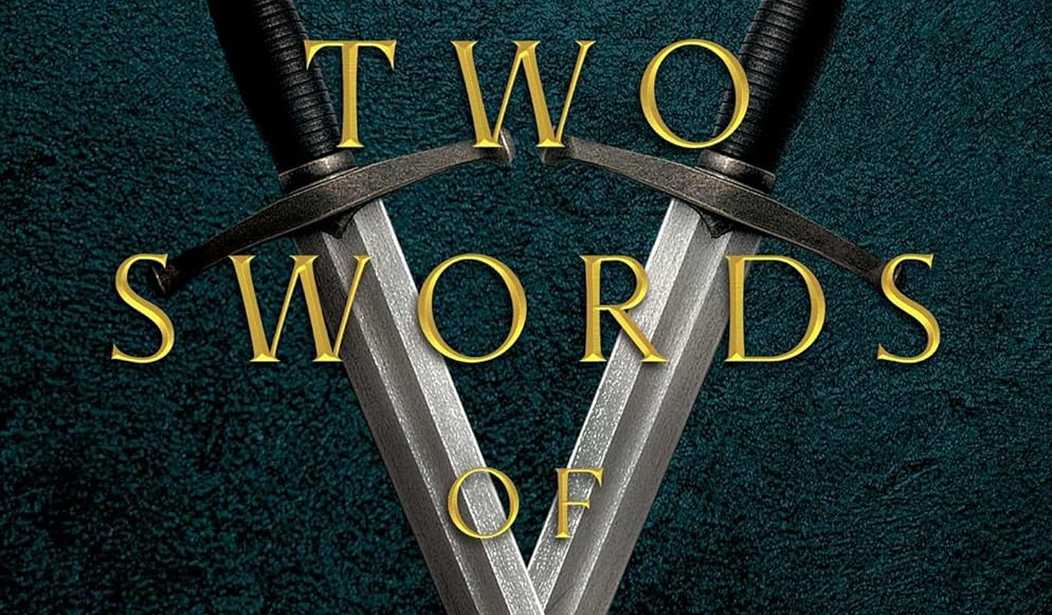
True stories of valorous knights are there, waiting for us. Raymond Ibrahim’s book The Two Swords of Christ: Five Centuries of War Between Islam and the Warrior Monks of Christendom spotlights two such brotherhoods: the Knights of the Temple (the Knights Templar) and the Knights of the Hospital of St. John (the Hospitallers.)
Forget what you have imbibed in modern fantasies such as the Da Vinci Code. Cast away the modern liberal version of the Crusades: that the Christians went on the offense against the Muslims. Ibrahim, a scholar of the Middle East (who also writes for PJ Media), author of six books on the Crusades and Islamic topics, published a book he carefully researched. He cites 109 works, including those by eyewitnesses of the events. Over forty pages of footnotes round out the volume.
I emphasize this to encourage the reader: you can trust what you are reading. The picture of the knights will cheer any Christian. They did not know luxury or indulgence. Instead, they embodied muscular Christianity of a type almost unknown to us today.
One warning: This book has over 500 pages. I had to rebuild my concentration which has been shattered by social media scrolling. However, once I started reading the lives of these fearless warriors, I read for hours at a time.
Do you know why the Crusades started? Perhaps not. In 637, Muslims conquered Jerusalem, a then-Christian city, during the first spread of Islam by the sword. Undeterred, Christian pilgrims still made their way to the Holy Land. Unimaginable to us today, in a world of instant news and instant reactions, Muslim raids on Christian pilgrims continued unhindered for hundreds of years.
The First Crusade (1095-1099) ended with the return of Jerusalem to Christian hands, leaving the lands around Jerusalem full of vengeful Saracens. Christians who landed at the Mediterranean port of Jaffa still faced danger. Several Crusader knights founded a brotherhood in 1119 to help them. First known as the Poor Fellow-Soldiers of Christ, later the Knights Templar, these knights protected Christians on their pilgrimages.
Those first crusaders came across a group of monks who founded a hospital in Jerusalem. The brothers cared for anyone, regardless of faith. That saved them from destruction while the Muslim governor held Jerusalem. Even Muslim commander Saladin recognized their charity.
Over the years, the Hospitallers added to their care of the “holy poor” the defense of the faith. As they slowly militarized, the Hospitallers joined the Templars as what Ibrahim calls “Christendom’s original commando forces.”
Both orders were in the vanguard of every attack and formed the rear guard of any retreat. Ibrahim describes the battles they fought using the words of eyewitnesses who sent accounts to those in Europe.
GIFT IDEA: If the man in your life loves the Roman Empire, give him this book. Men love to read about the Romans’s bravery in battle. The Templars and the Hospitallers aren’t just warriors, but defenders of the faith.
Reading it, you don’t just learn how long a medieval siege could be (months!) but feel the desperation and fear of the townspeople whom the knights protected. Another thing I never realized: the orders equipped every fort with a chapel. Amidst war, the brothers would stop for prayer, communion, and confession, making their peace with God.
Ibrahim gives full descriptions to the commanders the Christians faced. Most know of Saladin, but this book introduces us to so many more: Baybars, who was responsible for the fall of the Crusader fort in Safed, Suleiman, who accepted the surrender of the Hospitallers at Rhodes.
To understand the dangers the West faces today from militant Islam, you must read the story of the Crusades as told in this book. We see Europe failing to understand the threat, as PJ Media reports.
In the middle of the Crusades there is a funny interlude when St. Frances of Assisi undertook “one of history’s most memorable interfaith dialogues.” Francis sought to convert the Sultan of Egypt; perhaps amused at his naivete, the Sultan listened to him and let him pass back unharmed.
The modern notion of St. Francis as a dopey peacenik is wrong. Ibrahim writes:
… even St. Francis, who nowadays is seen and even epitomized as some sort of passive “hippie”, was both sympathetic to crusading and “made it clear during his discourse with the Sultan that he believed the Crusade itself was justified.”
Perhaps the enemies of the Orders gave the clearest view of their dedication and piety. Muslim military strategist Al-Harawi wrote that
“The Sultan should beware of the Templar and Hospitaller] monks… for he cannot achieve his goals through them; for they have great fervor in religion, paying no attention to the things of this world; he cannot prevent them from interfering in [political] affairs.”
Two Swords of Christ is the concluding book in a trilogy, featuring Ibrahim’s previous works, Sword and Scimitar: Fourteen Centuries of War between Islam and the West (2018) and Defenders of the West: The Christian Heroes Who Stood Against Islam (2022.) I started with the last of the series, and now I’m going back to the beginning to read them all.