
Worth Bagley was 24 when a Spanish shell ended his life aboard USS Winslow. Around him, sailors still had a damaged ship to save, wounded men to protect, and enemy guns firing into their position.
Nearby, Frank Newcomb kept the revenue cutter Hudson close enough to help. Staying meant exposing his own crew to the fire that had crippled Winslow, with shallow water threatening to trap a second American vessel.
On May 11, 1898, in Cuba’s Cárdenas Bay, their duties brought the two crews together. One young officer would never come home. Other Americans survived because the rescue continued.
Bagley had grown up in Raleigh, N.C., and graduated from the Naval Academy in 1895. Commissioned an ensign in 1897, he became Winslow’s executive officer, second in command aboard the torpedo boat. His professional life was barely beginning when war with Spain sent the vessel to Cuban waters.
Winslow entered Cárdenas Bay with other American vessels during an operation against Spanish forces. Enemy fire damaged her steering and machinery, leaving her struggling to maneuver. Lt. John Bernadou, her commanding officer, was wounded. Spanish guns continued firing as the small vessel needed help getting clear.
With normal controls damaged, Bagley carried instructions toward the engine-room crew to help keep the vessel moving. The work placed him amid the danger rather than apart from it. A shell burst near the after engine-room hatch during the action, killing him; the battle ultimately claimed four enlisted sailors as well.
He was the only American naval officer killed in combat during the Spanish-American War. Such a distinction can become a line in a reference book, stripped of the life behind it. Bagley had reached an age when most of us still expect our best years to stretch far beyond the horizon.
From the Naval History and Heritage Command website:
Machias destroyed the signal station, but inside the bay, Wilmington, Hudson, and Winslow were raked by fire from Spanish ships and shore batteries.
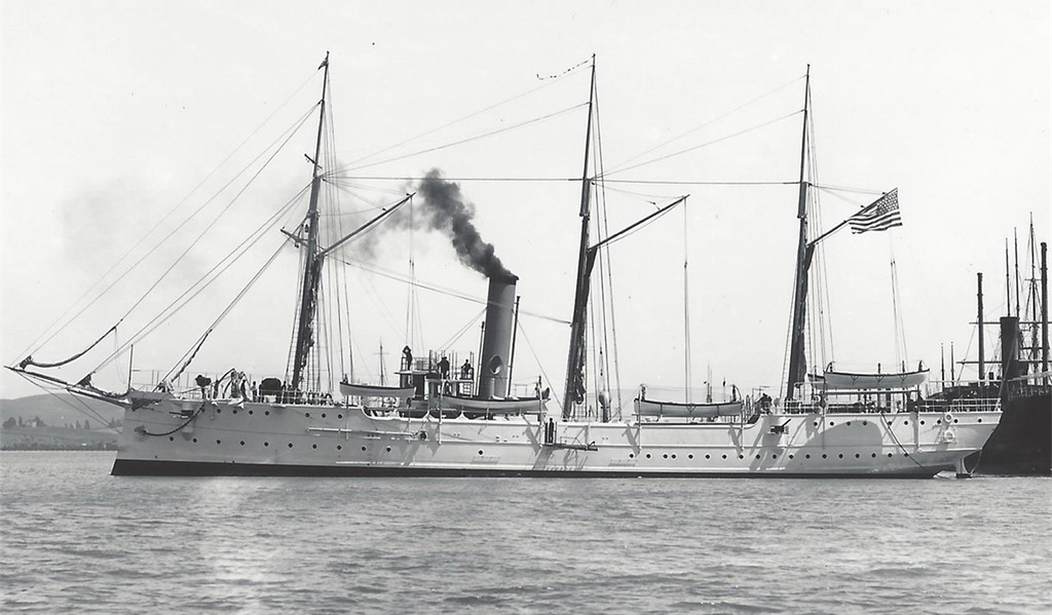
During the battle, Winslow suffered hits to its steering gear and engine. Seeing this, Hudson steamed to the rescue and towed Winslow to safety under fire. Because of the damage to Winslow, Ens. Worth Bagley, the vessel’s executive officer, had to carry instructions from the bridge to the engine room, where men manually steered the vessel below deck.
While making one of these runs, a shell struck Winslow, killing Bagley and two other men, while mortally wounding two others. Minutes later, Hudson pulled Winslow out of danger.
As one of the war's first actions, newspaper reports of the rescue excited the public imagination, and the crews of Hudson and Winslow were lionized as national heroes.
The five deaths on Winslow were not only the first, but some of the heaviest losses suffered by the United States Navy in a single action during the war, and Bagley was the only naval officer to die in combat. The death of Bagley, a young officer, incited national grief. Bagley was a native of North Carolina, and his death became a moment of unity between Southern and Northern states, still culturally divided by the Civil War.
Newcomb commanded a vessel from the Revenue Cutter Service, a predecessor of today’s Coast Guard. Hudson’s men worked their guns and handled the rescue under fire. Keeping close to Winslow also risked grounding their own cutter. They stayed until a line could be secured and the disabled vessel hauled beyond the Spanish guns.
Consider the responsibility resting on that small crew. They had to protect themselves, operate their vessel, and reach men whose own ship could no longer get them safely away. Helping required remaining where the danger was greatest, long enough to finish a task that would’ve been difficult even without gunfire.
President William McKinley asked Congress to recognize the rescue. Newcomb received a special gold medal, his officers silver medals, and his crew bronze medals. The honors acknowledged a collective achievement, reaching the men whose labor made their commander’s decision possible.
Bagley’s journey ended in Raleigh. His body lay in state in the North Carolina Capitol before his funeral and burial at Oakwood Cemetery. In 1907, a monument funded by contributions from North Carolinians was unveiled in his memory.
From NCpedia:
On 11 May 1898, as the Winslow was engaged in a battle in the harbor of Cardenas, Cuba, Bagley and two other sailors were killed in the performance of duty. On 13 May, funeral services were held in Key West. On arrival in Raleigh, Bagley's body lay in state in the Capitol.
The funeral was held in the south end of Capitol Square, and he was interred with the honors of a brigadier general in Oakwood Cemetery in Raleigh, near the graves of his father, his mother, and Governor Worth.
The monument preserved his name. Remembering what happened beside his ship preserves something else: the obligation his fellow Americans accepted toward men in peril. Hudson’s crew couldn’t undo the shell’s damage or return Bagley to his family. They could keep working for those still alive.
I find something deeply moving in the limits of that rescue. Courage could save some men, while grief would accompany the others home. Both belong in the story, because neither the surviving sailors nor the families awaiting the dead should disappear behind a tidy account of victory.
Bagley carried out his duty until he fell. Newcomb and his men carried theirs through the rescue. More than a century later, we can still honor the young life lost and the hands that held on long enough to bring his shipmates out.