


A university can spend a fortune teaching students how to think and still need somebody to explain why telling the truth matters. Dartmouth has provided an expensive illustration, complete with an Ivy League title and a computer that apparently couldn’t handle the honesty part.
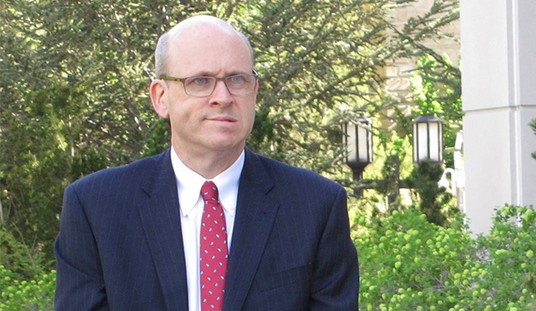
Provost Santiago Schnell resigned October 28 after a faculty-led review examined his use of artificial intelligence in academic publications and public writing. Dartmouth President Sian Leah Beilock announced that he was leaving the university and said he chose to resign.
From Dartmouth College:
The committee concluded that “the Provost used AI to meaningfully alter his writing in violation of at least one publication’s AI use and/or disclosure requirement, failed to disclose his use of AI in clear violation of a national newspaper’s stated policy, was not forthcoming about his AI use, and fell short of the standards set forth by Dartmouth’s Code of Ethical Conduct, the Academic Honor Principle, and Geisel’s Policy on Expectations for Professionalism for Faculty, Non-Faculty Academics, and Staff.”
As I wrote previously to the Dartmouth community, I expect our senior leaders to hold themselves to the highest standards. Out of respect for his colleagues and the institution, Santiago has resigned as provost and is leaving the university. This was his decision. We remain grateful for his leadership and wish him well.
The committee found disclosure failures and concluded that Schnell hadn’t been forthcoming about his AI use. Its investigators examined communications and available AI logs rather than relying on automated writing detectors. That’s an important foundation for judging someone’s conduct.
Universities sell judgment along with instruction. Parents paying tuition reasonably expect the people directing academic life to understand the difference between getting help and concealing help when disclosure is required.
A carpenter can use a power saw without pretending he cut every board with his teeth. A writer can use technology, too, as long as he follows the rules governing the work and accurately describes what he did. The person whose name appears above the article remains responsible for everything below it.
The report described substantial AI assistance with a chemical-kinetics manuscript, including editing, code troubleshooting, and figures. The required disclosure was absent. Schnell said he’d followed older instructions, but the committee found the publisher’s disclosure requirement dated back to at least 2023.
It also examined an opinion column about universities confronting AI cheating. Schnell’s acknowledged AI assistance violated that publication’s policy. Satire writers should probably take the afternoon off; the provost’s office has already submitted the winning entry.
The most revealing question concerns responsibility. Once you submit work under your name, you can’t assign the awkward parts of authorship to a machine while retaining the applause, professional standing, and authority.
Anyone who has worked under a deadline knows the temptation to hurry. Anyone who has corrected a mistake knows how unpleasant it can be to admit it. Neither experience requires an advanced degree, and neither excuses withholding an explanation owed to someone else.
The review found insufficient cooperation, including Schnell’s failure to provide requested personal AI logs. The committee also said he failed to make himself available at the requested time or to propose alternatives. Those findings make the controversy harder to dismiss as confusion over evolving software.
Dartmouth has made its report public, and Beilock said senior leaders must model transparency and human judgment. The institution now has a concrete example to put beside those words when it explains academic integrity to the next freshman class.
The lesson reaches beyond a campus. Employers, publishers, and schools are working out where AI belongs, but their rules lose force when people in authority treat disclosure as a chore for somebody farther down the ladder.
Clear policies help. So does the willingness to ask a plain question before submitting work: Have I accurately represented how I produced it? Technology may complicate the answer, but professional pride shouldn’t prevent anyone from answering.
There’s also a cost to everyone who followed the instructions. The researcher who carefully documented assistance, the contributor who checked a publication’s policy, and the student who asked permission all accepted limits on their own convenience. A prestigious title shouldn’t buy an exemption from the same basic obligation. Otherwise, the rules would become another campus exercise in memorizing words nobody powerful intends to practice.
Earlier generations would’ve recognized the obligation without attending a conference about it. Your name was your signature, and your signature meant you stood behind the work.
Schnell had sophisticated software available to improve his writing. Honesty still required him to contribute something himself.
Titles don’t put anyone above accountability. Help us keep asking uncomfortable questions by joining PJ Media VIP. Use promo code FIGHT for the available discount.

Join the Conversation
VIP members get the ability to comment on articles.