





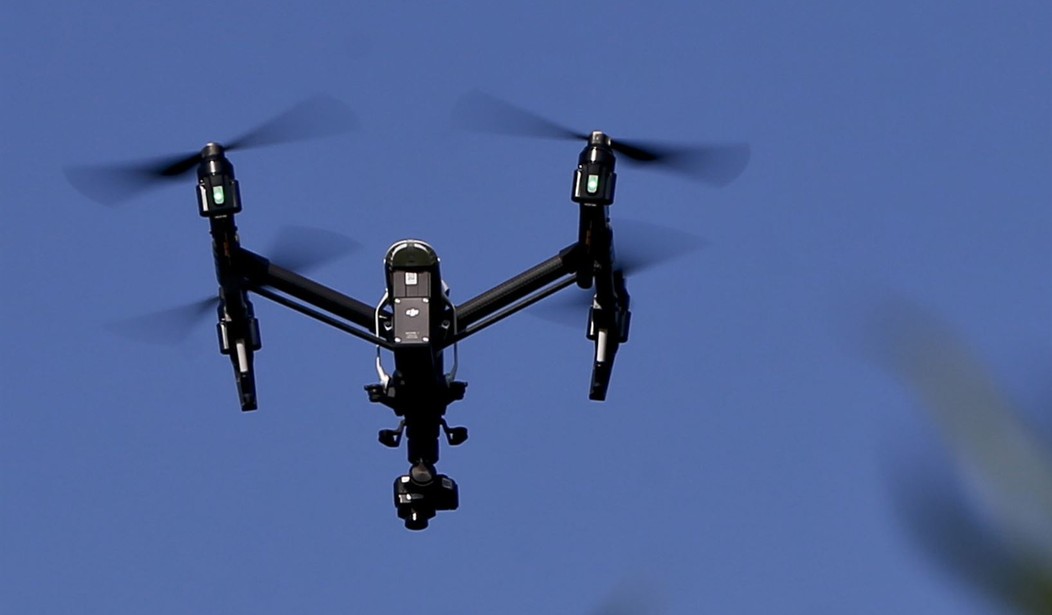
A human kidney flew across NASA Langley Research Center in Hampton, Va., on June 5, and the real story begins with what didn't happen. The organ wasn't rushed into an operating room, as no surgeon scrubbed in while a family waited outside. From Space.com:
NASA is hoping to use drones to speed up organ delivery for transplant patients.
A flight test earlier this month at NASA's Langley Research Center in Virginia saw a drone pick up a kidney and fly it for the first time beyond "line of sight", or the distance from which a drone is visible by an operator. Keeping a line of sight on a drone is a typical requirement for flight safety, but NASA is developing tools that may allow these machines to fly further away from operators in populated environments more regularly.
The kidney on the June 5 flight test was not viable for organ transplantation, which is why the agency and partner United Network for Organ Sharing were able to use it, according to WTKR. If all goes to plan with future tests conducted with NASA Langley, however, UNOS aims to fly organ-bearing drones as far as 15 miles (24 km), in between hospitals for example, to allow for swift and safe delivery to waiting patients. The drone collaboration was created to "explore faster, more reliable ways to transport donor organs using advanced aviation technologies", according to space agency materials published in April.
Drones may have a better ability than larger aircraft to navigate ground logistics or maneuver in dense or hard-to-reach delivery areas. What's more, drones might be able to do so faster than aircraft, which is crucial: organs can only last so long during transportation.
The test used additional radios on the drones intended to allow pilots to keep an eye on the drones even while out of sight. "What that means, more or less, is we're going to have the pilot in command be about a mile away inside of a control room," Kyle Smalling, an aerospace engineer at NASA Langley, told WAVY.com.
The kidneys used in the test had been donated for research after they were ruled out for transplant. Researchers still treated them like precious cargo because someday a flight like this may carry an organ that can save a life.
NASA Langley Research Center, the United Network for Organ Sharing, and LifeNet Health used a drone to transport human kidneys beyond visual line of sight. The flights lasted about 15 minutes, and researchers biopsied the kidneys and placed them on preservation pumps before and after the flights while tracking temperature, pressure, and altitude. Early results showed no evidence that the flights damaged the organs.
Mark Johnson, interim CEO of UNOS, called innovation in organ transportation essential because more than 100,000 people are waiting for lifesaving transplants. HRSA's public organ donation data puts the national waiting list at 103,223 men, women, and children. Seventeen people die each day waiting, and another name is added every eight minutes.
Those numbers don't leave much room for slow systems, missed handoffs, or traffic jams.
Transportation is one of the quiet pressures inside transplant medicine. A donor organ has a limited window of usefulness once recovered. Delays hurt organ function, affect outcomes, or stop a transplant from happening at all.
A kidney can travel by plane, ambulance, courier car, or handoff chain, but the weakest link often sits close to the ground, where congestion, routing, weather, and scheduling cost valuable time.
John Koelling, director of the Aeronautics Research Directorate at NASA Langley Research Center, said the project gives NASA a chance to apply Langley technology to a real-world problem that saves people waiting for transplants. The work uses NASA tools in flight planning, sensing, safety systems, and beyond-visual-line-of-sight drone operations.
Space-age language sounds distant, but the goal here is deeply human: get the organ where it needs to go with less delay and less risk.
The study also shows why serious medical progress frequently arrives in careful steps. Nobody should pretend drones will replace the transplant logistics network next week.
The aircraft, the route, the packaging, the monitoring, the hospital handoff, and the federal rules all have to work together. UNOS and NASA already described future phases that could examine scalability, longer-range flights, regulatory questions, and possible first-mile and last-mile routes. From LifeNet Health:
During the study, the kidneys were biopsied and placed on preservation pumps before and after the flights to assess whether drone transportation affected organ integrity. Temperature, pressure, and altitude were monitored throughout the approximately 15-minute flights. Preliminary findings showed no evidence that the flights negatively affected the organs.
Organ transplantation is one of the most time-sensitive processes in healthcare. Once recovered, organs have only a limited window of viability, making efficient transportation critical to successful transplantation. Delays can impact organ function, patient outcomes, and whether a transplant can occur at all. Transportation innovation, including the exploration of drone technology, has the potential to expand access to transplantation for patients on the waitlist or reduce the time to transplant, improving patient outcomes.
“With more than 100,000 people currently waiting for a lifesaving transplant nationwide, innovation in organ transportation is essential,” said UNOS Interim CEO Mark Johnson. “This successful collaboration represents an important step toward making organ transportation safer, faster, and more efficient.”
According to national transplant data, another person is added to the U.S. transplant waiting list every eight minutes, while 13 people die each day waiting for an organ that never arrives. More than 3,000 people in Virginia alone are currently waiting for a lifesaving transplant.
The kidneys used in the study were donated for research by a donor family working with LifeNet Health after it was determined the organs would not be transplanted. Through these gifts, the organizations were able to evaluate how drone transportation may support future advances in transplantation logistics and organ preservation.
While transplantation saves lives today, donation for research helps save lives tomorrow. Organs and tissues that cannot be used for transplant can still help scientists improve preservation methods, develop new therapies, and explore future innovations in transplantation and patient care.
“Just as every patient waiting for a transplant matters, so does the timely transportation of the organs and tissues that can save and heal lives,” said Rony Thomas, President and CEO of LifeNet Health. “Advancing transportation and logistics innovation can make a meaningful difference in ensuring these lifesaving gifts reach patients when they are needed most.”
Still, the promise is plain. A drone doesn't get stuck behind a wreck on the interstate. It doesn't need a parking ramp; it can take a direct route when the system permits it. For rural hospitals, crowded cities, and airport-to-hospital transfers, even a small improvement could mean one more kidney used, one more patient called, and one more family spared the grief of waiting too long.
America spends plenty of time arguing about technology that distracts, divides, or replaces human judgment. Here's technology pointed toward mercy; a donor family gave research permission. Scientists measured the damage that didn't appear. A machine carried human tissue through the air, and a medical system full of waiting patients got one step closer to faster transport.
NASA was built to reach beyond the ordinary. In Hampton, Va., that mission came close to the hospital bed. If the next tests hold up, the future of transplant medicine may not arrive with a rocket launch. It may arrive low over the ground, carrying a small cooler.
And a gigantic hope.
PJM VIP members make work like this possible, from medical innovation to the policy fights that shape American life. Use promo code FIGHT to save 60% on VIP access today.



Join the Conversation
VIP members get the ability to comment on articles.