
Archbishop Paul Coakley of Oklahoma City, president of the U.S. Conference of Catholic Bishops, is helping lead an act America rarely sees in public life anymore: a church asking a weary country to turn back toward Christ without asking Washington for permission first.
On Thursday, the U.S. bishops will consecrate the United States to the Sacred Heart of Jesus as the country prepares to mark the 250th anniversary of the Declaration of Independence.
Parishes around the country have been invited to join the bishops in prayer. The national act is tied to the Church's “We Hold These Truths” initiative, which includes 250 hours of Eucharistic Adoration and 250 works of mercy.
Consecration isn't a campaign rally in vestments; it's a prayerful dedication to God. In Catholic life, it means setting someone or something apart for a holy purpose. A family can consecrate a home, a parish can consecrate its work, and bishops can ask God to claim a nation's conscience, not by force of law, but by grace, repentance, and renewed love.
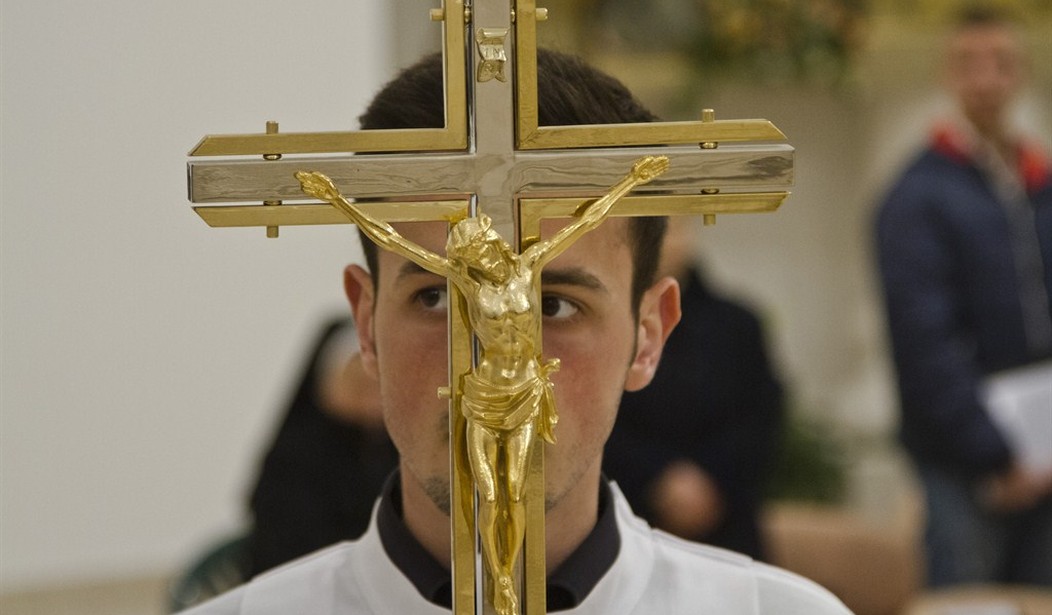
The Sacred Heart devotion is one of the Church's most tender and demanding traditions; it points to the heart of Jesus, wounded for mankind, burning with love, crowned with thorns, and still offered to sinners who keep walking away.
The modern devotion grew from the visions of St. Margaret Mary Alacoque in 17th-century France, and Pope Leo XIII consecrated the world to the Sacred Heart in 1899.
The devotion to the Sacred Heart has ancient roots, but it began taking its modern shape in the 17th century, Fastiggi wrote in the academic journal Religions in 2025.
That’s when a French nun, St. Margaret Mary Alacoque, reported visions of Jesus revealing “the marvels of His love and the inexplicable secrets of His Sacred Heart.”
Numerous religious orders and fraternal organizations formed to spread this devotion. Parishes and schools took the name Sacred Heart.
A 19th-century German nun, Blessed Marie of the Divine Heart, urged then-Pope Leo XIII to consecrate the entire world to the Sacred Heart. She foretold that he would be healed of a dangerous disease.
Leo XIII obliged, reporting the healing in an encyclical that promoted the devotion.
Archbishop Alexander Sample of Portland, Ore., chairman of the USCCB Committee for Religious Liberty, has framed the consecration around gratitude, service, truth, justice, and charity in American life. From the Washington Times:
The U.S. Conference of Catholic Bishops intends to use the consecration service to promote service to God, country and the needy, said Archbishop Alexander Sample of Portland, Oregon, who chairs the bishops’ committee on religious liberty.
“As we reflect with gratitude on the blessings God has bestowed on our country, our devotion to the Sacred Heart demands that we consider how we might foster truth, justice and charity in American life,” Sample said in a video promoting the service.
Those words sound mild until they land in a culture trained to panic when Christianity enters the public square without apology.
The complaints will come. Bet on it.
Somebody will drag out “separation of church and state” as though the First Amendment banned public prayer instead of protecting it. Someone else will claim the bishops are trying to establish a theocracy, which is what nervous secular activists often say when Christians pray in public and refuse to blush.
The consecration creates no law, funds no ministry, commands no citizen, and coerces no conscience, asking God for mercy over a nation that badly needs it.
Catholics have no reason to apologize for seeing history in this moment. America was never a Catholic country, and the bishops are not pretending otherwise. But Catholics helped build it, defend it, bury its dead, teach its children, staff its hospitals, and serve its poor.
From parish schools to battlefield chaplains, the Church has lived inside the American story since the beginning. A national consecration during the semiquincentennial year isn't an invasion of public life; it's a reminder that public life has a soul.
Many Catholics, me very much included, have watched the Church stumble through scandal, confusion, weak leadership, and a loss of nerve. Pope Francis left many Catholics feeling scolded when they needed clarity. Pope Leo XIV is still early in his pontificate, and plenty of Catholics, again, me very much included, are waiting to see whether Rome will speak with the old confidence or retreat into fashionable fog.
In that setting, the bishops' consecration feels like a needed step in the right direction.
Mainstream religion has been fading in American life; the pews are thinner, families are more scattered, and public moral language often sounds like therapy, politics, or advertising. The Sacred Heart cuts through all of it; it says sin is real, mercy is real, suffering isn't wasted, and nations, like men, can lose their way.
The best part of this consecration is its simplicity. The bishops aren't offering a poll-tested program; they're not asking America to admire their cleverness, but they are asking Catholics to pray, adore, serve, repent, and remember who owns the human heart.
Those words are old, but old truths often return with new force after a country exhausts itself chasing substitutes.
Let the professional complainers scream! Let the anti-Catholic crowd rehearse every tired charge about Rome, power, and public faith. The bishops are giving Catholics, and all Christians willing to learn, something better than another argument.
They're inviting a restless country to kneel before the Sacred Heart of Jesus and ask for healing.
America could do far worse. Lately, it has.