





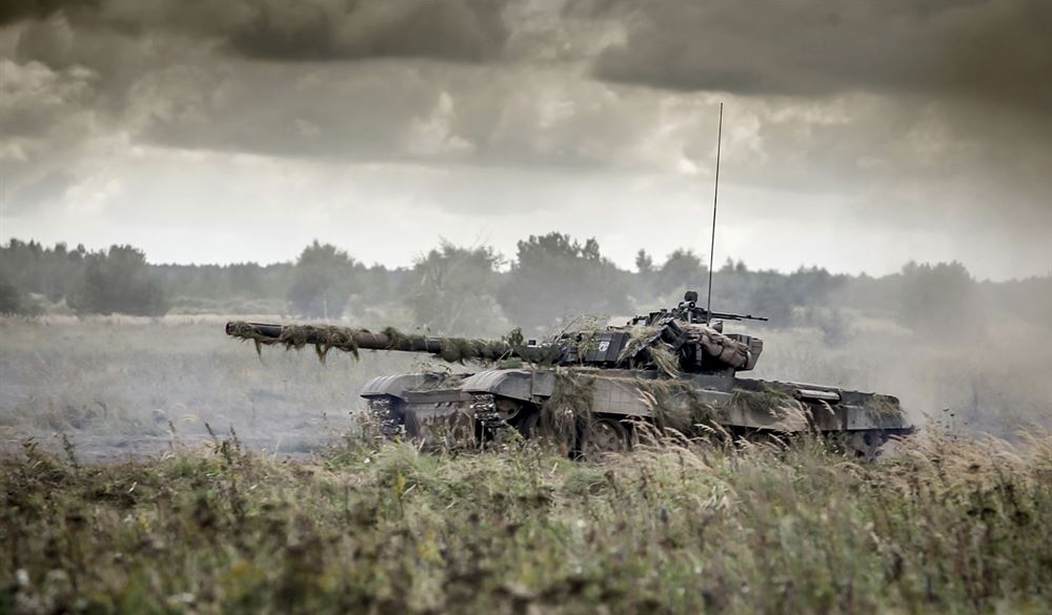
President Donald Trump has again put Europe on notice. The Pentagon plans to pull 5,000 troops from Germany, and Trump has signaled that deeper cuts could follow.
Germany still hosts major American military hubs, but locations alone don't settle strategy. Troops should sit where they strengthen deterrence, reassure serious allies, and make Moscow, Tehran, and Beijing study their maps with greater care.
Poland has made the obvious case; Polish Prime Minister Donald Tusk has said Poland wants more U.S. troops, though he added he would rather not weaken European solidarity by simply poaching forces from Germany.
Polish President Karol Nawrocki has been more direct, saying Poland is ready to host American troops withdrawn from Germany and pledging to encourage Trump to keep those forces in Europe.
Good.
Poland sits closer to the danger, spends as if it is a serious NATO ally, and understands Russia with the memory of a nation forced to learn hard lessons without the luxury of pretending geography is retired.
Writing at Just the News, Misti Severi shared President Trump's optimistic relationship with Poland.
“Well, Poland would like that," Trump told reporters at the White House. "We have a great relationship with Poland. I have a great relationship with the president. I endorsed him, and he won. He came from way behind, and he won. He's a great fighter, he's a great guy. I like him a lot, so that's possible.”
Germany is currently home to the largest U.S. military presence in Europe, with more than 35,000 troops currently stationed in the country, and is also viewed as crucial to the U.S.'s presence on the continent.
Germany's reaction has been predictable. German Defense Minister Boris Pistorius said the drawdown should push Europe to accept more responsibility for its own defense.
He's not wrong.
Germany has spent years treating American protection as both useful and politically inconvenient. German Chancellor Friedrich Merz now faces a White House willing to ask harder questions about burden-sharing, defense posture, and whether U.S. troops belong where gratitude often arrives wrapped in lectures.
The Pentagon on Friday had initially announced it would pull some 5,000 troops out of Germany, but when asked Saturday about the reason for the move, Trump didn’t offer an explanation and said an even bigger reduction was coming.
“We’re going to cut way down. And we’re cutting a lot further than 5,000,” Trump told reporters in Florida.
Earlier on Saturday, Germany’s defense minister appeared to take in stride the news that 5,000 U.S. troops would be leaving his country.
Boris Pistorius said the drawdown, which Trump has threatened for years, was expected, and he said European nations needed to take on more responsibility for their own defense. But he also emphasized that security cooperation benefited both sides of the trans-Atlantic partnership.
“The presence of American soldiers in Europe, and especially in Germany, is in our interest and in the interest of the U.S.,” Pistorius told the German news agency dpa.
Moving troops east wouldn't mean abandoning NATO; it would mean taking NATO's front line seriously. Poland borders Belarus, sits near Russia's Kaliningrad exclave, and stands much closer to Ukraine's war zone than Germany does.
Russia doesn't threaten Europe from a seminar room in Berlin. Russian President Vladimir Putin's pressure runs through borderlands, supply routes, energy lines, and nervous capitals that have spent centuries learning what Russian ambition looks like when nobody stops it early enough.
One question to ask is whether a troop move may weaken deterrence. But the better question asks where deterrence gains the most value. Germany remains important because of bases, logistics, hospitals, airlift, and command networks. Nobody should pretend Ramstein Air Base or Landstuhl Medical Center can be picked up like a folding chair after a church picnic.
Yet combat power, rotational presence, missile defense, logistics stockpiles, and training missions don't all need to sit deep in Western Europe while the threat presses from the east.
Poland also brings political will. Warsaw has pushed hard to modernize its military, including American equipment, and build a defense posture sized for the world as it exists. Germany talks about Europe doing more, while Poland acts like a nation that believes tomorrow's danger won't wait for another committee report.
American troops need allies who view their presence as a shield, not an awkward family heirloom kept in the attic because nobody wants to explain why it's still there.
President Trump has a chance to turn a drawdown into a strategic correction. Leaving Germany only makes sense if troops move to places where they increase American leverage and allied readiness. Poland offers infrastructure, urgency, and a clear view of the threat. Germany keeps an important support role, yet Poland helps make the front line stronger.
American troops belong where they're wanted, where they're useful, and where their presence forces adversaries to recalculate. Poland checks all three boxes.
Germany may grumble, and Brussels may clear its throat, but Moscow will understand the message faster than either.
Europe’s old security habits are getting a long-overdue review, and President Donald Trump is asking questions Washington should’ve asked years ago. For more sharp, plain-spoken analysis on American power, weak allies, and leaders who still understand strength, become a PJ Media VIP member today and use promo code FIGHT for 60% off your subscription.


Join the Conversation
VIP members get the ability to comment on articles.