
So, at this point I suppose everyone knows about there being two aircraft accidents with fatalities in the last week. This is notable for a lot of reasons — especially to the families — because there have been so few fatal commercial aircraft accidents in the last 10 years. In fact, there have only been three, including the two this week. There have also only been seven non-combat military crashes with fatalities in the last 10 years.
Aside. Military aircraft operations are inherently more dangerous, even when there is no combat. In fact, there are roughly 1000 times more military accidents that result in the loss of an aircraft, with or without fatalities.
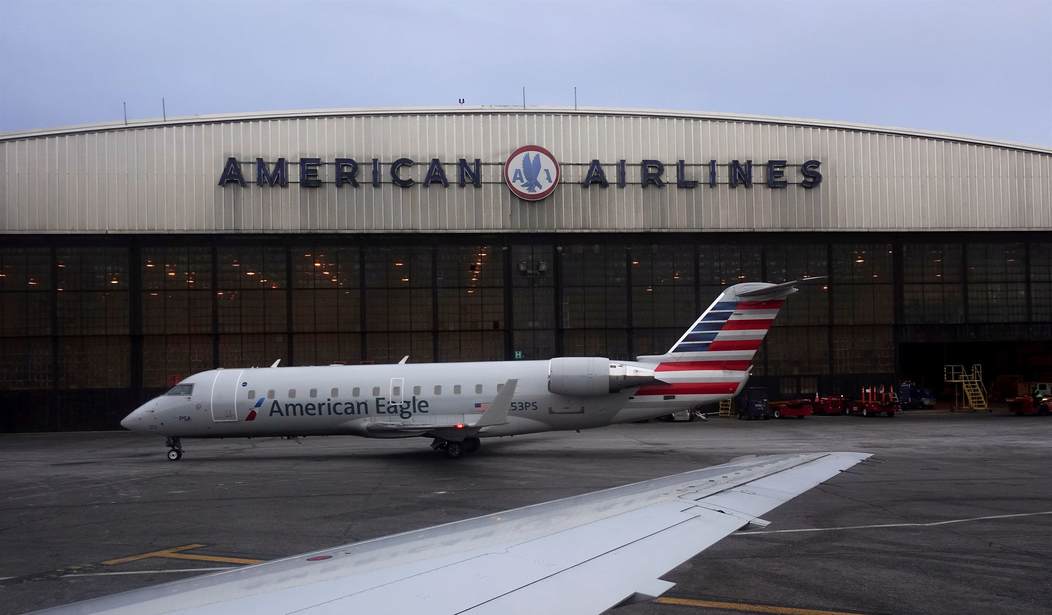
The first was the mid-air collision near Ronald Reagan Washington National Airport of American Airlines commuter Bombardier CRJ700, Flight 5342 and an Army U-60 Black Hawk helicopter, which resulted in the deaths of all 64 people aboard the American Airlines flight, and all three aboard the Army helicopter.
The second was the crash of a Jet Rescue Air Ambulance Learjet 55 within a minute of takeoff out of Northeast Philadelphia Airport, killing the crew, a doctor and paramedic, a pediatric patient who — sadly — was returning after "life-saving treatment" at the Shriners Children's Hospital in Philadelphia, and the patient's mother, along with at least one unfortunate on the ground. Everyone aboard was a Mexican national, and the flight was going to Tijuana, Mexico with a stop in Branson, Missouri.
The big question of course in both cases is what happened — and there have been a number of increasingly ludicrous conspiracy theories about the crash. So, just to forestall that, I don't think it was actually a drone helicopter used to murder 64 people to distract from the confirmation hearings, and the transsexual Army pilot who was supposed to have made a suicide attack has posted on X since then. I'm sure there are others, and I just want to say I'm not interested. Don't even bother.
But clearly something went wrong. Anytime two aircraft end up occupying the same chunk of sky at the same time, something has gone wrong.
But what?
In general, any time there is an aircraft accident, it will come down to human error of some kind, and it's almost never just one error that does it.
Now, I don't claim any particular expertise as a pilot — I haven't had a pilot's license of any sort since I was a teenager, and I have exactly one hour of helicopter dual instruction I gave myself as a birthday present a decade ago. For that reason, I'm drawing on a lot of better informed X posts for the details.
What I do have is a fairly good grasp of probabilities and the way people can go astray thinking about what is more or less probable.
If you want to skip over some fairly lightweight math and gaming, just scan down to the end; TL;DR, the answer is sometimes bad things happen even when everyone involved struggles desperately for no bad things to happen.
To understand this, I want to lead you through a couple or what Albert Einstein called "thought experiments" or Gedankenexperimente, which sounds much more impressive and besides he spoke German.
In the first one, we'll take a very simple game. Find 1 million willing participants, and give each one a dollar. And lock the doors so they can't abscond with the money until the experiment is over.
So now you have a million people, and the sum you've put into the game is $1 million.
The game is simple. You pair off the people, and the game has one simple rule: a fair coin is flipped. If it comes up heads, the person on the right gives all their money to the person on the left. Tails, and it's the person on the left who pays. Once you have no money left, you're out of the game and can go watch from the studio audience.
After one play, there are 500,000 people with $2 and 500,000 in the audience. After the next play, there are 250.000 people who have $4 and another 250,000 bitter losers. Then 125,000 who have $8 and ... you get the picture.
Now, notice that all through the game, it's still total $1 million. This is what's known as a zero-sum game.
After 19 plays, you have two player's each with a half-million dollars. After the 20th play, one player has $1 million, and the other has, as they say, bupkis. But at the beginning of the game, no one can predict who will be the winner. You just know someone will be.
Aside. This is sometimes called the Gambler's Ruin. As long ss the game is not explicitly in the gambler's favor, the gambler will eventually go broke. This one is just really fast, for explanatory purposes.
A somewhat more realistic game that a lot of readers will be familiar with is Dungeons and Dragons, where in any combat your opponent (the bastard!) or a monster attacks your character, and you make a "saving throw" to determine how much damage you took. Again, simplifying a lot, let's say the dungeon master has established the rule that all saving throws are made with a 20-sided die, and that any roll less than 20 is a saving throw.
This still runs into the Gambler's Ruin. It will take longer on average — you could have really horrible luck, and throw 20 20's in a row, and if you do I suggest you bring your own dice the next time — but you will eventually use up all your hit points and die. Always.
The opposite pole of this is called survivorship bias, but it's really the same gambler's ruin — in our coin-flip game, the one who walks away with a million dollars is a winner and the other one million minus one players are chumps.
Aside. This shows up all the time in the stock market. There are traders who make lots and lots of money day-trading stocks, or trading commodities or currencies. The really successful ones will often write books or sell courses about their strategies. The trick is, as with the 50/50 game or the really limited D&D, how can you tell if they actually have an effective strategy, or if they just happen to be the survivors?
So with that all set up, let's look at the real situation. A junior pilot is taking a night flight checkride with a senior pilot and a very senior crew chief. (For lots of details, refer to the Mark McEathon X post I've included at the end.)
Every one of the crew is reasonably experienced. The co-pilot, who is the one taking the check ride, is the one driving the bus, and contrary to one of the favorite conspiracy theories, she has been a woman for her entire life.
But ...
Former Blackhawk pilot here. I’ll try to describe it for you.
— Matt Leitch (@MrStand_Fast) January 31, 2025
Imagine you are looking at the world through toilet paper tubes, and everything is just different shades of green and black, with stars and ground lights hard to differentiate and aircraft lights that look the same…
It's a challenging situation, but not uncommon.
Spoke to someone who served in the same unit as the Army Black Hawk crew, knew them personally, and flew those routes. He made the following points:
— Kristina Wong 🇺🇸 (@kristina_wong) January 30, 2025
1) That it was a training flight was not unusual at all. Those flights are flown everyday.
2) The co-pilot was going through her…
At this point, there are a whole lot of things that can go wrong.
- The Air Traffic Controller (the ATC), who is basically working two jobs because a colleague took of early, changes the departure runway to a less-used one
- ... and is trying to keep track both of departures and of local traffic in the air. The ATC warns the Black Hawk about the departing flight and goes on to the next thing.
- You, the Pilot In Command, ie, the one driving, can become confused by the view in the night vision goggles
- The check pilot can confuse the departing flight with another one leaving from the accustomed runway
- The crew chief, who is the other set of eyes in the aircraft, is looking down at something inside the cockpit at just the wrong second
- the crew on Flight 5342 doesn't see the Black Hawk, which are actually built and painted to be hard to see because in normal use people shoot at them.
- and the two aircraft fail to miss each other by a few feet, and what could have been a near miss — isn't.
And here's where the Dungeons and Dragons example comes in. At every one of these points, a small difference — the ATC night have realized the two aircraft were getting into trouble, the pilot might have seen and recognized the other plane, the senior pilot might have realized the pilot wasn't recognizing the situation, the crew chief might have looked up at the right time, or the crew of Flight 5342 might have seen the Black Hawk (which was apparently off the right side while they were making a left turn out of the pattern). At any one of those decision points, everyone involved "missed their saving throw."
And bad things happened.
The Philadelphia crash sounds much simpler. Apparently — and this is always subject to revision when we actually know the details — the Learjet 55 was taking off from Northeast Philadelphia Airport Airport in bad but not unusual conditions, what's called IFR: Instrument Flight Rules. That means the pilot and co-pilot are depending on the instruments to tell them the attitude and airspeed of the plane, because there are situations where, without an outside reference, your physical sense of balance can be misled.
Just 30 second or so from takeoff, the aircraft stalled. I've seen some people suggest the engine stalled, but that's not what they mean. In an airplane, if your angle of attack gets too high, the air flowing over the top of the wing detaches and becomes turbulent, and the wing that was providing the lift becomes a paddle. Deprived of lift, the aircraft drops precipitously.
There are a lot of theories how they got into that situation, but all of them come around to the same crisis: the wing suddenly stopped flying.
In that situation, the pilot has basically one "saving throw" — get the nose down and get the wing flying again.
During takeoff, the ground is inconveniently way too close to the aircraft for this. In fact, stalls or stall/spins are not uncommon. They're a favorite way that student pilots can suddenly terminate their flight lessons, but it can happen to anyone.
Flying magazine had a monthly feature called "I learned about flying from that" in which a pilot described a situation that they might not have survived, but made their "saving throw." I read those pretty religiously as a baby pilot, and my dad, who had many hours as a pilot and then after he was injured as a navigator, read them even more religiously. And, of course, sometimes the pilot hadn't made the saving throw, but those were called accident reports. Then, years later in graduate school, I was an intern at NASA Airlab working on mathematical modeling of aircraft failures. The lesson of all this is that there are an amazing number of ways in which aircraft can go wrong.
And yet, fatal air accidents are very rare, and commercial air accidents are even more rare.
It's always tempting to look for some simple explanation, especially a simple explanation that lets us find Someone To Blame. But real life is that there's rarely any one person to blame, and it's instead a succession of people who didn't make their saving throw.
Sometimes, s—— stuff happens, even with everyone involved trying hard to make sure that stuff doesn't happen.
Details follow.
CNN asked me to email them my perspective on the tragic aircraft crashes last night in DC.
— Mark McEathron (@Mark_McEathron) January 31, 2025
The following is what I sent (it's long). They booked me immediately after.
Thank you for reaching out to get my impression of last night's events. It's important to me that families know…
The rest of the post:
It's important to me that families know that their loved ones did not die in vain but they were honorably serving their Nation. No matter what the investigation turns up, we are grateful for their service.
The concept of a crew cannot be understated in an aircraft. It's more than being a team, we're a cohesive unit, and it has to work that way.
The pilot's job is to plan the mission and fly the aircraft. The Crew Chief's job is the aircraft itself. When a Unit Commander takes over a unit, they have to take inventory of all of the equipment and sign a receipt for all of it. They then assign an aircraft to a Crew Chief and that Crew Chief signs for the aircraft on behalf of the Commander. They now have all of the authority over that aircraft that the Commander does. They are his caretakers of that aircraft.That aircraft does not fly without the crew chief on board.
This is important to know because rank matters very little inside the aircraft. There is a training rule of thumb that "the weakest man wins". What that means is that whoever sees an issue during the mission that they are uncomfortable with, if they speak up, their concern must be addressed before the mission can continue. If a Crew Chief shouts out "bank left" you bank left, no matter your rank.
Flying at night presents its own challenges that are amplified due to the fact that at altitude, you have no visual references. You have nothing to compare an aircraft to.
When you drive a car, ride a bike, or go for a walk, your eyes and brain automatically help interpret your position in space. Objects closer to you appear larger than they do at a distance. Driving by trees outside your car window seem to speed by while trees at a distance move slowly. This is called "Relative Motion".
Relative motion can create illusions and play tricks on your eyes. Most often this concept is called "Motion Parallax". The way that I used to teach my crew chiefs is by holding a flashlight in front of their face and moving it up, down, left, and right. If the light is moving, that means that it is not coming directly at you. If the light appears stationary, it can actually be moving directly at you. This is called "Constant Bearing, Decreasing Range". (CBDR)
So, take that concept and place it in the air, over a city.
When you look out of the aircraft at night at the space around you, all you see are lights. Bright dots everywhere. Some are moving some are not. Most of the ones not moving are on the ground.
So, from the aircrews perspective, they can be on a direct collision path with another aircraft but never see it. The light from the other aircraft doesn't appear to move. When in reality it is coming directly at you. CBDR. Combine that with the fact that aircraft lights can blend in with ground lights in the background.
This illusion can help explain why the Blackhawk flew directly at the other aircraft. without diverting.
Add to that the tasks and duties that go on inside a blackhawk during flight.
This crew just refueled. They were climbing. When that happens the co-pilot is reading off of a checklist. (especially on a training flight) and that checklist is often strapped to their leg. So, they have to look down, inside the aircraft to read off of it, out loud to the crew. They are not continuously looking outside the aircraft to see other aircraft. Meanwhile, the pilot is keeping their eyes on guages like rotor speed, torque, engine speed, etc. So, they too could be looking inside the aircraft.
The crew chief normally looks around outside to clear the airspace. They are responsible for airspace surveillance and obstacle avoidance.
However, going back to the crew concept, they also back up the pilots in their duties and confirm the checklist is being followed. They also do fuel checks that involve looing at the fuel gauge, then the clock, and writing it down. They then do the math to determine the rate at which the fuel is burning.
Add to all of that the chatter going on from multiple radios.
It becomes quite busy. It is easy to see how this could lead to a collision.
Air Traffic Control also did not help the situation when they radioed to ask if the blackhawk [sic] had the other aircraft in sight. The ATC did not give the crew anywhere to place their eyes. They didn't give the big three that we need. Direction (12 o'clock), Distance (2 miles and closing), Altitude (100ft above you)The air crew had no idea which way to look.
They confirmed that they saw AN aircraft, but clearly it was not the one they were in a CBDR destiny with.
All of this to say, any time we fly, after the mission, we conduct an After Action Review and discuss three things. What went right, what went wrong, and how to mitigate what went wrong.Never in my career did I ever have an AAR where there were no things that went wrong on the mission. Every mission has error.
We are human.These aircrew, and the ATC.....they are human. There will be lots of blame to pass around when the NTSB report comes out. IT's never ONE thing that brings down an aircraft. It's always several things.
The point is that these are humans, they collectively made mistakes, and it all resulted in a terrible accident.
I know this was long but I hope it adequately illustrates how I see an accident transpiring like this.