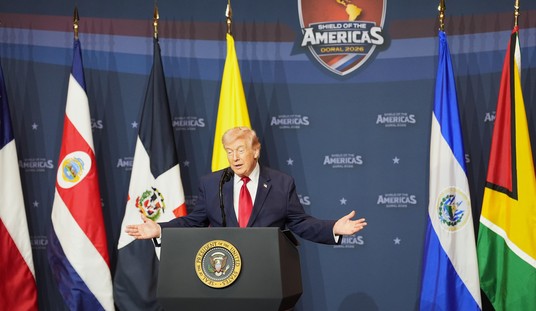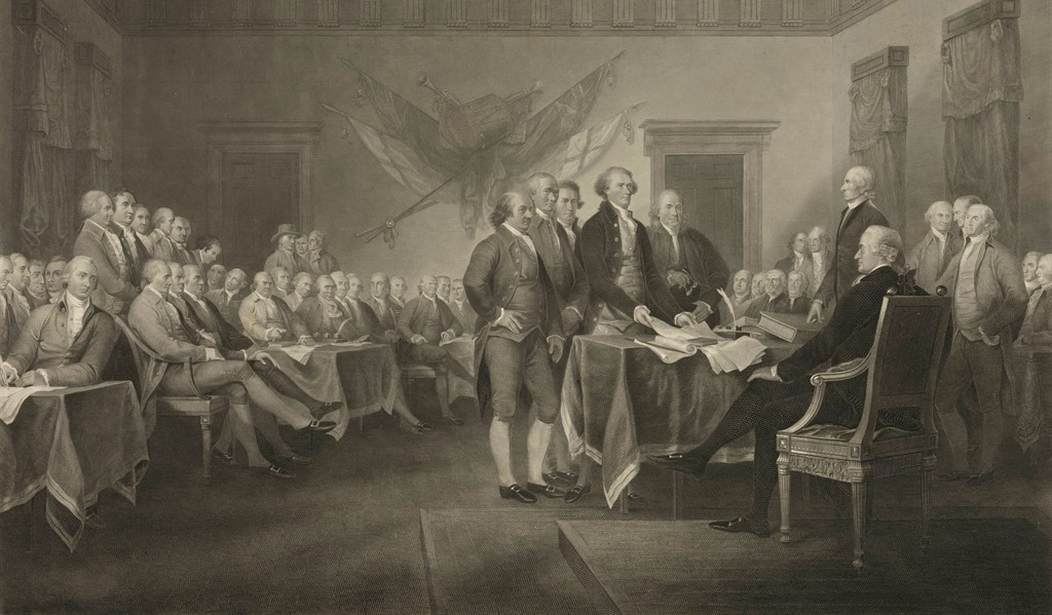
This year is the 250th anniversary of America’s existence, and it began with patriotic displays in D.C. from the Trump administration and a sinister Soviet-style speech from New York Mayor Zohran Mamdani.
The Jew-hating, jihad-loving, anti-American, socialist Mamdani intoned, “We will replace the frigidity of rugged individualism with the warmth of collectivism.” The Founding Fathers knew there is no warmth in collectivism, that individualism actually is the path toward widespread prosperity and poverty reduction.
Thomas Jefferson declared, “The true foundation of republican government is the equal right of every citizen in his person and property and in their management.” James Madison wrote, “Government is instituted no less for the protection of the property than of the persons of individuals.”
In the Virginia Declaration of Rights, George Mason argued, “That all men are by nature equally free and independent and have certain inherent rights, of which, when they enter into a state of society, they cannot, by any compact, deprive or divest their posterity; namely, the enjoyment of life and liberty, with the means of acquiring and possessing property, and pursuing and obtaining happiness and safety.” The revolutionaries launched their bid for independence because of unjust taxation, forcible quartering of soldiers in private homes, and other significant violations of property rights. Individual ownership was of paramount importance to the Founders.
Alexis de Tocqueville, when he visited the United States in the 19th century, observed that individualism actually spurred more people to take responsibility for contributing to society and helping out other members of the community. Instead of waiting around for the government to help out everyone in need, Americans believed they had to take action to solve the problems and enact the change they wanted to see.
The Founders foresaw such a situation. That is why they were also strongly opposed to the type of welfare system we have now, where people can stay endlessly on government handouts. Ben Franklin said, “I am for doing good to the poor... I think the best way of doing good to the poor is not making them easy in poverty, but leading or driving them out of it.” The idea was that welfare would only be for those who truly could not work and that, as much as possible, it would be a transitional reality, helping people move forward by supporting themselves. It was as opposite to Mamdani’s vision as possible. It was also a heck of a lot more successful.
Related: Yes, Mamdani Is a Commie. Will the ‘News’ Outlets That Insisted He Wasn’t Apologize Now?
In 2014, for the 50th anniversary of Lyndon B. Johnson's launch of the War on Poverty, the Heritage Foundation reported on how it was a catastrophic failure. U.S. taxpayers spent $22 trillion on the War on Poverty in half a century, which, adjusted for inflation, is triple the amount of all American wars since the Revolution, but the poverty rate was still almost exactly identical to what it was at the beginning. As of 2024, the utter failure of welfare programs remained just as true, and the poverty rate still had not been substantially reduced.
Communist China has a severe poverty problem, with a disastrous job market, no matter what socialist propaganda you find online. The people suffering under the socialist tyrannies of Vietnam, Cuba, North Korea, and other countries would have a word or two to say about the “warmth of collectivism.” Venezuelans are ecstatic because Donald Trump overthrew their socialist dictator.
The New Yorkers will soon be freezing in the frigidity of collectivism.