



Recently, while shopping at my local COSTCO, I noticed a glossy over-sized picture book of The Civil War by the Smithsonian Institution that commemorates the 150th anniversary of the start of that conflict.
Having a keen interest in the Civil War, I could not resist purchasing the book.
Once I started reading, I was stunned to discover that the book was bound and printed in Singapore, a nation as far away from Washington D.C. as you can possibly get and still be on the planet.
To think the Smithsonian Institution is outsourcing its Visual History of the Civil War to Singapore, is bizarre. Does this mean that throughout the fruited plain from sea to shining sea, there is no bookbinder and printer that compares to those found in Singapore?
This is a sad commentary on the state of our nation’s manufacturing base.
Ironically, as the book beautifully documents, one of the reasons why the South lost the Civil War was because the North at that time had an overwhelming advantage in industrial and manufacturing capability.
The Smithsonian outsourcing a history book to Singapore, is just a very small example of a much larger problem — that 150 years after the Civil War something has gone terribly wrong with our nation’s ability to “make things,” making us dependent on other nations to make things for us while the world becomes increasingly dangerous.
The United States still tops the list of the world’s top 10 industrial producers, but the trends are not encouraging. Even our intelligence community fears our manufacturing decline has extremely negative national security implications.
Which begs the question, in the 21st century is the United States slowly turning into the “Old South” while the “New North” is China, Germany, and Japan?
However, even if it was printed and bound in Singapore, I highly recommend this magnificent book The Civil War, A Visual History by that great American institution, the Smithsonian, on sale at that other great American institution COSTCO, where most of the durable goods and electronics are made in China.

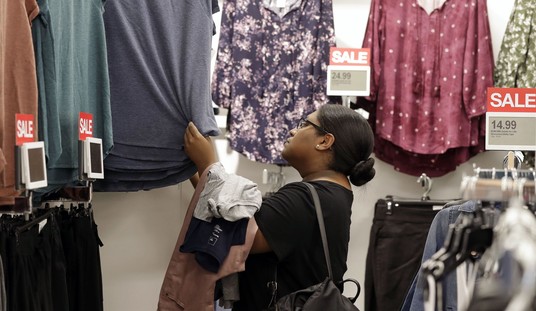





Most of the little toys and souvenirs in the Smithsonian museums are all made in China.
This will likely come as a surprise to you, but almost all museum books / catalogues are printed in Singapore due to the relatively high quality for the cost. Try going to any museum in your city and look at where the books are printed and you will see what i mean.
The USA has the 2nd largest manufacturing base in the world; it was only recently surpassed by China, so, for all practical purposes, it has as large a manufacturing base as China does.
So why the preception that we “don’t make things anymore?”
I don’t have the answer, especially since the pereception is not based on fantasy. Perhaps one question to ask is: why do we not seem to manufacture a good deal of what we use day-to-day?
“preception” should be perception
One ray of hope: America leads the world in small CAD-based custom manufacturing, ironically, assisted by Chinese mass manufacturing when there’s a need to mass-produce a “customized” item.
There may be a new industrial revolution in the offing, involving customization of large items, like cars, at prices affordable to the less-than-rich. Wired magazine did an article in 2010 on this subject. Again, American enrepreneurs have taken the lead in this. The danger is that Obama’s regulation policies could snuff out these endeavors.
Had Ms. Adams taken the time to look about Costco she would have noticed almost all items for sale came from China and in fact her shopping cart contained items from China.
The reason that she was in the store was the same as the Smithsonians, high quality at an afordable price direct from the largest growing economy in the world
Did you miss the last sentence in the post? I mention that most of the durable goods and electronics sold at COSTCO are made in China.
Regarding other museums books/catalogs printed in Singapore, this speaks exactly to the point of the post. American companies are going outside the USA for manufacturing.
This is a trend with national security implications. Click on the link in the post for just how serious this problem is becoming.
Folks, Singapore isn’t China, FWIW
Please stop using “begs the question” this way; it doesn’t mean that.
