



I have been meaning to write for some time some thoughts I have about the documentary film form and have been inspired to do so because of an article on Pajamas – A Liberal College Kid Sees Sicko. We published that piece because we like to stimulate discussion and because, frankly, we want to bring younger people into Pajamas Media. (The CEO is, as many of you know, of a “certain age.”)
Now my intention in this post is not to bash Michael Moore – I’ve done plenty of that – but to examine the documentary form. To be blunt, I am suspicious of it, no matter what point of view is taken by the filmmaker. Film, to begin with, is highly manipulative, but documentaries purport to be truth. Are they? Not really. They are an arrangement of the version of the truth the filmmaker wishes to portray or promulgate. In fact, in most cases, they are a HiMarks outline of that version of the truth, because the film is at most two hours long. (Of course there are exceptions – The Sorrow and the Pity, etc.)
In the best documentaries (Crumb), this arrangement of the truth is brilliantly and subtly done. In other cases, flashy techniques are used to preach to the converted (Leni Riefenstahl… or, to a much lesser, cheesier effect, Michael Moore). But still it is an arrangement. It almost always lacks the intellectual rigor of text. If you look at Wikipedia, for example, even given the inherent biases, a basis for fact-checking is established. Documentaries, almost deliberately, obfuscate the facts. Fiction films, of course, are fictions. (Ironically, they may often be closer to the truth.)
Now of course all written forms – film and text – (including this) obfuscate facts. But the issue is the feedback and the checking. You can give me feedback – right now – in the comments and tell me where I am wrong. You can’t do that with a documentary. The name itself is fallacious.


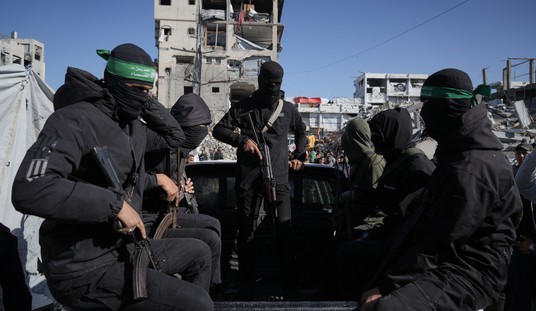



It’s true that documentaries are a constructed argument, but on the issue of feedback and checking, I don’t know if I’d go so far as to say it can’t be done. Rather, it can’t be done interactively with the presenter (in this case, the documentary film itself). It can be done after the fact. We’re witnessing this with the 9/11 Truth denial documentaries “Loose Change” and “9/11 Mysteries”, and the responses to them (“A Viewer’s Guide to Loose Change” and “Screw 9/11 Mysteries”, and “9/11 Mysteries Guide”). But yes, that’s after the fact, and unfortunately as some “truthers” have shown, they’re not willing to look for the real stories, only the stuff that’s appealing to them. Still, though, it’s happening; the cases I present illustrate this.
And yes, documentaries are manipulative and selective, but so’s the news. That’s why I’m oddly old school in my standards: Documentarians, like journalists, should consider it a duty to be dispassionate in the delivery of information and make an attempt to be as objective as possible. Granted, that’s a painfully tall order, I know, but I’ve never stopped believing that’s an ideal to aspire to, even if you’re only human and subject to the frailties thereof. Anyway, I think a good, honest documentarian can still get a good portion of the story across fairly and as balanced as possible; it’s just that I think documentary filmmakers nowadays don’t even try to do that anymore. Too many are too ensconced in their intellectual comfort zones to challenge their own preconceptions.
Blech… oh well… I concede the validity of your warning, but I assert that it doesn’t have to be that bad.
Errol Morris is my favorite.
I only wish he did more.
I agree. Documentaries show the “truth” that is seen by the director. In most cases, it doesn’t appear as though they intentionally lie (though Mr. Moore may be an example) and usually they make some good points. However, the ‘truth’ of any one person is unlikely to be the unbiased, objective Truth that may exist.
I saw Moore on the Daily Show last night and he talked about a guy that lost the tips of two fingers in a sawing accident. At the hospital, since he had no insurance, he was given the option of paying $14,000 to have his ring finger fixed, or $60,000 to have his middle finger fixed. That’s a choice that no one should have to face in a perfect world.
But, we don’t live in a perfect world. Thirty years ago, he would have only had to pay a few hundred dollars to stitch up his stubs. Reattaching fingers would have been out of the question. Yet, Moore didn’t mention this basic truth.
The thing is…. everyone from News Reporter to Documentary filmmaker to Talk Radio host to blogger does the same thing. Robert Anton Wilson called the psychological phenomena “The Thinker and The Prover”. He considered them to be like two actors in the brain, one that makes decisions on what to believe, and the other to manipulate our perception to prove the Thinker right. There are hundreds of experiments that indicate that this happens all the time to all of us.
However, we usually only notice it if someone elses Thinker disagrees with ours.
Errol Morris is my favorite.
I only wish he did more.
I thought at first the characters in The Thin Blue Line must be actors. Robert McNamara perhaps is.
If Morris could collar more political figures…
There’s another reason to distrust documentaries. If Sicko had
been a book chances are many, if not most reviews would have
been written by people who have some level of expertise on
the health care system. They would have told us weather Sicko
is in fact trustworthy or not and cited examples. Film critics
simply aren’t equipped to do this.
But don’t film ‘critics’ just look at film, as film? Set, direction, characters, story, etc… Method, in other words, or perhaps emotional content. But not facts per se. Maybe we need a new group of critics for documentaries, fact checkers. After all, that is what documentaries are about, isn’t it? Facts, or at least some magnified sense of same. Otherwise, just propaganda, one side/way or another.
I agree with you, too, Roger. Too many people see a documentary and make the mistake they are led to make and they assume that the film is accurate and fact-checked because it is a documentary…as if it’s just documenting the facts.
As for younger people in their PJ’s, hey I just got out of (pt. 1 of) college and I can’t get onto the real Pajamas Media blogroll if my life depended on it!
At the beginning of ‘the kid stays in the picture’, Robert Evans says “There are three sides to every story. my side, your side, and the truth.”
The documentarian is a fourth. He aims is to keep that one completely under wraps, but as Roger says, that may be nearly impossible.
Some of you may also know this phenomenon as the Ron Paul effect.
Not to pick nits or simply argue the fine points of semantics but there is nothing wrong with the documentary of an honest filmmaker who aspires to truth and fact. The problem is with the producer not the genre. The films of Michael Moore and Al Gore are not documentaries they are just propaganda. The viewer/reviewer has to have enough intelligence to see the difference and select the right descriptive word.
MikeD, excellent point. That brings us to the dilemma of a public that cannot differentiate between propaganda and documentary.
A solution could be to have a regulatory body rate a film as per it’s “truthfulness”, but I guess that’s actually a more slippery slope that I am comfortable with personally.
TD = true documentary
td = half true documentary
Republicans should press Congress for a “Documentary Fairness Doctrine” lol
Beware not only documentaries, but also reviews of documentaries.
See for example http://bokertov.typepad.com/btb/2007/06/in-a-just-world.html
I share Roger’s skepticism about the documentary form. The fact is that the movies can do a very good job of stimulating the emotions, but they’re a terrible medium for the transmission of information: their bandwidth is too narrow, and it’s extremely difficult to talk back to them. That may be why the movies are the medium of choice for demagogues.
Good film documentaries tell a narrow, focused story of real people. The best ones I’ve seen are all about sports: the much underappreciated film Hoop Dreams, and last year’s Murderball. Neither film tries to make a broad analysis; rather, they do what the movies do best: tell a story.
Just my $0.02 worth …
“Brother’s Keeper” from a few years ago was a good documentary, imo; it told a story of a death on a farm amongst these semi-unusual brothers who lived together and how the local people were somewhat protective of them. It had no real axe to grind (or if it did it was imperceptible) and came off as an honest portrayal.