



No wonder there’s so much bogus polarization in our society. Newsweek–as we know one of our major newsweeklies and still (at least in the short run) an important opinion maker–writes the following of Clinton and Bush:
For two men at opposite ends of the political spectrum, the relationship between the 43rd and 42nd presidents has grown surprisingly warm and personal over the last six months.
Opposite ends of the political spectrum? By whose measure? Clinton is the father of welfare reform and, as Glenn notes, supports the war on terror and in Iraq (same thing). Yes, they have some differences, but “opposite ends”? Please. Clinton has more in common with Bush than he does with Kerry ultimately, if you look closely at what they’re saying and take the team sports aspect out of it. What Newsweek is doing in its shallow thinking is encouraging that team sports thinking. But then Newsweek is the most traditional of organs, lumbering on like the wooly mammoth, which it will soon follow into extinction unless it metamorphoses into some web-based meganews outlet. Weekly? Something quaint in that. (“Remember, ma, when they used to have newsweeklies. I saw one at the dentist the other day.”)

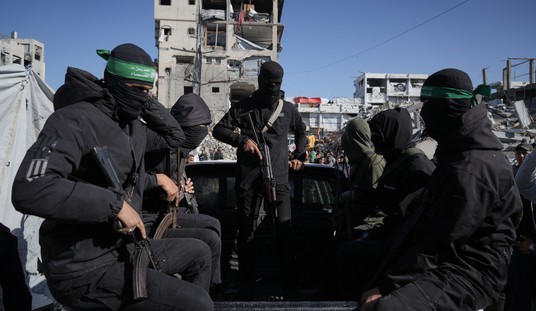

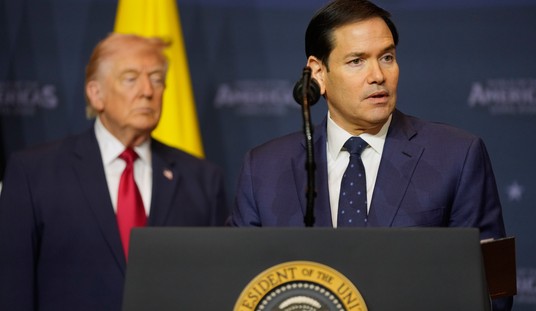




‘For two men at opposite ends of the political spectrum, ‘
The steel cage match approach of reporting – in hopes of selling magazines.
‘For two men at opposite ends of the political spectrum, ‘
Good guys and Republicans.
Clinton is the father of welfare reform
He signed a welfare reform bill, yes, but he did it in October 1996, when the bill had been passed by a Congress with Republican majorities in both houses. He had previously vetoed two welfare reform bills passed by the same Congress. In my opinion, he would not have signed the bill had there not been a Presidential election coming up in a month or so.
Clinton has more in common with Bush than he does with Kerry
I still respectfully disagree. Hillarycare, the appointments of Ruth Bader Ginsburg, Bill Lann Lee, and Mary Frances Berry, and the nomination (later withdrawn) of Lani Guinier, are not, in my opinion, the acts of a President with more in common with George W. Bush than with John Kerry.
Admittedly, it’s, uh, difficult to tell what Clinton’s principles are, but they really don’t seem to me to have much in common with the President’s.
They are at the opposite ends of the political spectrum.
60s Elite College-party-hardy and everything that goes with that, tho, they do have in common.
And W is wayyyyy more experienced in that area.
While I agree that Clinton and Bush seem very close indeed on the political spectrum, I think it has more to do with Clinton’s political expediency than a true meeting of the minds. If Clinton had been in a position to “just be Clinton”, there’s no telling what we might have seen come out of his administration (HillaryCare, anyone?).
Clinton may have touted welfare reform in his campaign, but its true fathers (and mothers) were Newt Gingrich’s Republicans in Congress, to wit, the Contract With America and the “Personal Responsibility Act of 1995″. Clinton deserves a share of the credit for understanding that welfare reform was a necessary political reality and for signing the legislation into law over the objections of many in his administation and party. But if the voters had not had their “temper tantrum” in 1994, would we have seen such a comprehensive overhaul of this entitlement program? I think not.
The single most exclusive club on the planet has to be the President and ex-presidents of the United States. The only people who truly can understand what it means to hold that office are the ones who have held it (I believe that, had it been necessary, Bush would have pardoned Clinton just as Ford pardoned Nixon). The ties that bind these men are very strong (heck, Clinton and both Presidents Bush even show deference to Jimmy Carter, whom all three no doubt despise).
As for Newsweek, it’s a rag and has been for decades. Friends gave us a “gift” subscription a few years ago; the magazine went straight from our mailbox to the recycle bin. One day in the not so distant future, Newsweek and most of its ilk will go the way of the trolly I once rode with my Granny to Flatbush Avenue.
I guess this depends on what your definition of “political spectrum” is. On the world spectrum of course they are close together. Even on the US scale, when Clinton spoke to that annual conference of diplomats in the Swiss Alps a couple of years ago, he sounded suspiciously like a neocon. So who knows?
Another difference: Clinton wasn’t hopelessly out of his depth.
What Roger said. More kinship:
– Clinton introduced, and Congress signed into law, legislation asserting that “regime change in Iraq is the official policy of the United States.” Clinton committed the US to overthrowing Saddam; Bush made good on Clinton’s pledge.
– Clinton was the first to make the case for pre-emption. In his address to the nation prior to bombing Iraq in early 1998, Clinton argued, “Saddam is determined to rebuild his devastating arsenal of [WMD], and if he gets such weapons, I guarantee you he will use them.”
– Clinton positioned the Democratic Party in the center of the social issue spectrum on not just welfare but also abortion (“make abortion safe, legal and rare”) and environmental issues. Regarding the latter, Clinton refused to go to bat for Kyoto, instead signing it cynically and then letting his own party shoot it down, unanimously, in Congress.
– It was Clinton, famously, who stood up to the Democratic party’s reactionaries again and again, introducing a new verb into the US political lexicon: to “Souljah” the noxious and smelly extremists within one’s own party.
Bottom line is that Kerry might have had a chance last November had he bothered to emulate the above Clintonian actions. Especially the Souljah one. There was no more obnoxious a**hole, more ripe for Souljahing, than Mikey Boy, and Kerry/McAwful’s response was not to smack him down but to put him in the VIP box. Unbelievable stupidity.
The reason, illison, Clinton wasn’t “out of his depth” was that, after HillaryCare, he stayed in the shallow end of the policy pool, preferring high approval ratings and near-certain reelection to actually doing useful things to benefit the long-term health of the nation (Social Security reform, real health care reform, fighting terrorism).
And so Clinton was gun-shy after the failure of health care reform – was that failure an indication of his being “out of his depth” there?
I’m not even going to get into your crack at Bush – it’s a canard, and previously discussed at great length here and elsewhere.
CLinton’s “depth” was most evident in the fine art of bullshitting an audience. Mainly by holding forth on policy details (ooh, aah, isn’t he smart?) and by closing with blue-sky feel-good rhetoric employing lots of empty Third Way, New Agey imagery. The practical upshot of which was usually nil.
In other words, the ideal speaker for a Davos gathering.
The MSM decided long ago that any Republican, any conservative, and anyone who supports the war on terrorism is an extreme right-winger.
Read them… Hear them…
A perfectly defensible political spectrum which would render the offending Newsweek description accurate:
I support/oppose [insert person/policy here] because President Bush/Clinton is for/against him/her/it and President Bush/Clinton is trying to preserve/destroy the country and all it stands for. Those who are not supporting/opposing President Bush/Clinton are either fascist (objectively if you like) or delusional. That’s my unbiased view. Oh, you want talking points?
For two men at opposite ends of the political spectrum…
Now there’s a laugh. Clinton was the most conservative Democratic president since Cleveland.
Roger:
The problem with Clinton is not his intelligence, he is undoubtably smart, it’s not his political skills, they are there in abundance, it’s his narcissim and ego. All of his skills were used to keep himself in power and so he could go from hyper-liberal to moderate to conservative at the drop of a hat. Any principles or political goals could be dismissed when the practical needs of keeping his job came up. All politicians display this tendency at times during their administrations but Clinton took this style to a new height. His lack of shame shows the lack of soul.
Michaelt,
Apparently “reform” is synonymous with “destruction” ’round these parts. And what’s Bush done to “reform” health care, aside from a creating a massive entitlement and plans to create a federal shield for malpractice defendants?
The mess in Iraq is not the same thing as fighting terrorism, Simon’s glib conflation of the two notwithstanding. I’ll gladly take wading in the shallow end of the policy pool over drowning in the deep end, thank you very much.
Illison:
Clinton supported going into Iraq and in fact in 1998 launched Operation Desert Fox and bombed Baghdad and wrote and passed the Iraqi Liberation Act in the same year.
He said that not only did Saddam have weapons of mass destruction, Clonton guaranteed us he would use them. I remember him saying those very words.
In an effort to trash Bush Democrats have tried to revise the 90′s ala Michael [the propaganda artist] Moore and convince us that Bush somehow dreamed up the War on Terror. Typical right wing scare mongering doncha know.
Clinton has for his part steadfastly maintained that AlQueda is a threat to the US and that he believed Saddam was as well. In the view of many Democrats those are views held only by the chimp moron Bush and his right wing minions and so they have tried to pretend Clinton was a lot further left that he was, or have just ignored the obvious.
The right wing on the other hand has been too angry with Clinton for not taking more aggressive action against the terrorists a decade ago to really appreciate the moral support he offers Bush today.
Bush is a lot smarter than people give him credit for and this simple minded knee jerk out of his depth line just illustrates that you are not as informed as you think you are.
I’ll ignore the ad hominem since it appears to be de rigeur around here.
Your comment is very interesting but none of your assertions contradict what I said.
Surely you can see the distinction between occasional bombings coupled with an essentially meaningless legislative enactment and a war that has cost billions of dollars and thousands of American and Iraqi. Whatever Clinton said about Iraq, the fact remains that he, like Bush pere, refrained from committing the military to an indeterminate occupation of Iraq.
Your averment about Moore is simply a non sequitur, since I didn’t mention him. Just as I don’t use Chalabi to smear everyone who supports the war, I wouldn’t expect a fair-minded person to lump everyone who questions the wisdom of the invasion in with Michael Moore.
Whether Bush is “a lot smarter than” unnamed “people” give him credit for is an assertion too vague to merit debate. If someone makes a series of bad and avoidable mistakes, with serious consequences, that person is out of his depth, and I don’t really care whether the mistakes decisions were a result of stupidity, ignorance, ideology, bad judgment, or something else.
illison:
The point is what does Iraqi Liberation Act mean? When the president of the US says that it is our national policy to remove a dictator from power because he is a threat to our country does it not follow that that might mean that some day it will be necessary to remove said dictator from power?
When the UN Security Council signed Resolution 1441, it was a mandatory or force resoltuion which according to UN charter is to be enforced by all means necessary, there was also the added attachment stating that there would be severe consequences if the Resolution was not complied with. I have read the resolution and there is no doubt that Saddam and his regime were in violation of said resolution.
As for my remarks about Bush I was just pointing out the fact that he had apparently read the Iraqi Liberation Act and the UN resolutions and knew what they said which is more than can be said for many of his detractors.
For eyars the US had spent billions of dollars and maintained a base in Saudi Arabia for the purpose of flying no fly zones over Iraq and they in turn shot at our planes.
Now my point about Clinton is that he said Bush did the right thing. He might not agree with the way he did everything, but he supported his actions.
As far as Iraq being a mess, it was a mess when Saddam put 13,000 dead children in one grave. It was a mess when he raped and pillaged and plundered and murdered and gassed the population. The fact that you did not have to see it on the evening news because the folks at CNN had decided that access was more important than truth does not change that fact that Iraq has been a mess for years.
And the anti war crowd did not give a rat’s ass.
I’m gonna have to defend my man Clinton. OK, disclosure, I voted for him twice.
He came in with a neo-isolationist foreign policy, and wanted to concentrate on domestic issues. He wasn’t that far off from Bush 41 either, recall the Peace Dividend was bruited about by both Parties and Clinton cut the military only a bit more than Bush 41 proposed. It was the end of the Cold War and both Parties saw spending opps for their favored pork barrel projects.
The problem with Clinton was that he was, by modern standards, an extraordinarily weak President. Hillary had far too much influence over appointments and policies, because of his philandering. Hence the tone deaf Hillarycare instead of real, bipartisan action when Clinton had maximum political capital. That Clinton did not have a majority merely a plurality didn’t help either. Janet Reno neatly encapsulates the weakness of Clinton. Hillary and others (NOW, Emily’s List) who’s support Clinton needed demanded a women AG, after Kimba Wood and Zoe Baird, the baton was passed to Reno and she had essentially a sinecure, despite her near total incompetence.
If you look at what Clarke and others have said, the military post-Mogadishu turned on Clinton, partly because he was risk-avoiding to the extreme and partly because he allowed clueless civilians to micro-manage military operations (no tanks, no air cover, over-reliance on Special Ops) and it got people killed for no good reason. Thus even though Clinton and others in his Admin recognized the dangers of Al Qaeda having terrorist training camps in Afghanistan, he was not able to deal with them. The military basically came back with an extended middle finger (tens of thousands of troops needed and massive casualty estimates) when it was suggested that the camps be taken out. Essentially, the Powell Doctrine on steroids.
Clinton was too weak to make his policies stick in the Pentagon, hence the cruise missile attacks and not much else in Afghanistan; bombing but no ground troops in Kosovo and Iraq. Les Aspin and Cohen pretty much speak to the weakness of the Party in general when it comes to Defense/Security issues.
Part of Clinton’s weakness was aggravated by his refusal to spend political capital in foreign affairs, but he came in weak, with Cabinet members, the First Lady, and various interest groups wielding far too much power.
To Bush’s credit, he realized that 9/11 mandated a complete turnabout in HIS neo-isolationist foreign policy (remember a “humbler” nation abroad) and made his policies stick in the Pentagon and elsewhere, even at the cost of considerable political capital.
Clinton seems to appreciate this, as well as Bush 43′s approach to break down the special interest strangleholds on policy that hamstrung Clinton.
Clinton has an “end” of the political spectrum the way a twenty-dollar hooker has things she won’t do…
Terrye,
Res. 1441 and the Iraq Liberation Act may have given Bush the legal authority to invade Iraq, but that does not mean it was a good decision to do so. I never asserted that the war was illegal, merely that it was an unwise decision.
The “antiwar crowd” may not have cared about Saddam’s atrocities, but I fail to see what that has to do with whether the invasion was in the U.S.’s best interests. If we’re going to play the “Your side doesn’t care about human rights game,” I could point out that, with a few exceptions, the pro-war crowd was silent on Rwanda, and doesn’t seem to care much about Sudan, or North Korea for that matter. I certainly don’t see many who supported the war advocating that those countries should be invaded. Hussein’s human rights abuses seem to be a post-facto justification, clung to after WMD and al-Qaeda ally rationales evaporated. If you think the U.S. should stop all large-scale human rights violations worldwide, that’s certainly a defensible position, it’s just not the position that the Bush administration and the bulk of Iraq war supporters have taken.