






The Hidden Hand
Why the consumer pays what he does at the pump or the store is not always obvious. Some costs have nothing to do with actually manufacturing a product. For example, merchandise shipped over the ocean must contain a tiny provision for costs associated with fending off pirates. A teeny bit of your gas bill goes to that. Did you know that a whole lot more goes to fighting off other kinds of pirates?
Stephen M. Carmel, the Senior Vice President of Maersk Line explained in a speech to the Second Fleet Intelligence Symposium in 2011, that the pirates who clamber aboard ships are a minor nuisance compared to the real pirates, the ones ashore. By that Carmel means the ever increasing tide of mandates and regulations, especially environmental ones.
First let me say right out of the gate I am no fan of pirates. Do not like them at all in fact, contrary to what many may perceive from my remarks on the topic. Pirates do impose a cost on our business that we would rather not bear if possible so it is something I worry about. But, while worrying about pirates I also worry about the effect of MARPOL Annex VI and the cost of complying with increasingly harsh emissions control requirements, something that will cost our industry roughly $6 Billion a year to comply with now and that figure will go up as tighter standards kick in in the 2014 time frame. I worry about the requirement to cold iron in LA, something that is very expensive and disruptive. And since while common for Navy ships to go on shore power, commercial ships never do it and are not fitted with a system to do so, a modification is required that will cost the equivalent of one ransom for each ship it is done on.
I worry about things like a proposal fronted by the World Bank, UNEP and others for a $50/ton carbon tax on ships bunkers, which will cost our industry about $17.1 Billion dollars per year. I worry about invasive species related ballast water mandates which will cost our industry approximately $15 Billion a year and I worry even more about California not going along with federal ballast water control mandates and instead implementing their own program at even greater cost to us. So tree huggers and environmentalists are costing us a heck of a lot more than pirates ever will, but interestingly I don’t see anyone agitating for the Navy to get underway to get the quasi-failed state of California under control. But if any of you are up for the mission I’d like to see it.I worry about the cost of fuel where each dollar increase in bunkers costs our industry well over $300 million a year and over the last 2 years the cost of fuel has gone up about $120 / ton meaning something on the order of a $36 Billion per year increase in fuel costs for the industry. I worry about Ad Valorum tax – a protectionist tax designed to benefit US shipyards we must pay on repairs on our ships done outside the US. My company alone paid over $10 Million in Ad Valorum tax last year – so US shipyards are doing way more damage to us than pirates are. I’d ask for the Navy’s help on getting US yards under control but based on what I read about the Navy’s adventures in shipbuilding, you’re having a tough time with them too. Maybe we would jointly be better off partnering on a strategy to deal with that threat instead of pirates since it is worse for both of us.
I worry about bad policy such as the requirement for 100% scanning of containers imposed by congress in the “Implementing the requirements of the 9/11 commission Act”, a requirement which the European Commission estimates will cost the global economy 150 billion Euros or about 215 billion dollars per year were it to be implemented by all our trading partners. With that single act congress potentially does 20 times more damage to the global economy than pirates do by even the most ridiculous estimates of the cost of piracy, and in the process actually degrades maritime security rather than improves it.
And Carmel is only getting warmed up. But for those who don’t want to read the rest of it, the takeaway is this: the price added to your gas bill at the pump by pirates wearing eye-paches is tiny compared to the exactions you pay to those wearing suits. Even the resurgence in real Horn of Africa piracy has become a business opportunity to insurers and even human rights lawyers.
Rather than pay for very expensive insurance it would probably be better to do something that ensures your ship does not get hijacked to begin with. That something would be armed security, which is so far at least, 100 percent effective. From personal experience hiring highly trained (in fact all ex- US SOF folks) as security on our ships I can back of the envelope it for you …
A team sufficient to protect the ship costs about $5000 per day all inclusive, for a total of $70,000. On a 2 Million BBL VLCC that means security to get it to the US costs about 3.5 cents per bbl. While it varies a little by grade of crude, a rule of thumb is that each BBL of crude will produce about 20 gallons of gas. That means piracy adds a little less than 2 tenths of a cent to the cost of a gallon of gas, or a nickel or so to a 25 gallon fill up. This as opposed to the approximately 43 cents per gallon or $10.75 in taxes you pay on a 25 gallon fill up. Once again that Pirates vs. Congress damage comparison sneaks in there and pirates seem the better bargain. If anyone is up for the mission of protecting us from Congress there’s another one I’d like to see.
Maybe the only thing worse than being successfully boarded by pirates is if they try it and find armed ex-SEALs ready to wipe them out. Then the real trouble will begin. For the ship will next be boarded by that sort of buccaneer against which no SEAL team can provide any defense: lawyers.
But there are a few things to remember when discussing the arming of ships that are worth mentioning. At my company we are very worried about liability, so only employ people we know can keep their heads under pressure, and are not prone to shooting people who should not be shot (an actually hitting the people that should be). So they are all former SEALS. We also limit the types of weapons they can have on board. The result is we, a responsible operator, have the best trained, but very expensive, operators in the world with a limited, but effective amount of weaponry the operators themselves chose. But that’s our choice, there is no international standard on the training or vetting of shooters, or even any requirement they are different than the normal crew. Nor is there any international standard on what types of weapons are considered appropriate. Nor, by the way, is there a US flag state standard for either shooters beyond having a TWIC card, something every AB has, nor limits on weapons and actually no useful guidance on training. That is all up to us.
What’s a guy to do? The gas has got to get through, but how to deal with the pirates in suits? Ezra Levant, who is the sort of Andrew Breitbart of Candada, observes, “if you can’t beat them, join them.” Levant, in the the video following shows that environmentalism has now become nothing more than just another lobbying group, a bunch of influence peddlers who makes millions to protect everyone from everyone. Everyone, that is, except themselves.
Who knows, maybe there are a few shady environmental foundations in America, too. Nah. But when Adam Smith talked about “the hidden hand” which makes each participant in the marketplace maximize his own interests, he surely made theoretical room for modern bureaucratic entrepreneuralism. It is that business where you turn forms, procedures and lawyers who would produce nothing into a factory which produces vast amounts of cash flowing from the pocket of the consumer to the poccket of the guardians. We need them. Like President Obama once said, there wouldn’t be a Facebook or a Google today without government. Now is not the time to give up. Was it over when the Germans bombed Pearl Harbor?
Meanwhile, back by special demand are the guys from the Moss Pawn shop, vendors of quality guns, who explain how to fill up a government form correctly in just a few easy steps.
How to Publish on Amazon’s Kindle for $2.99
The Three Conjectures at Amazon Kindle for $1.99
Storming the Castle at Amazon Kindle for $3.99
No Way In at Amazon Kindle $8.95, print $9.99

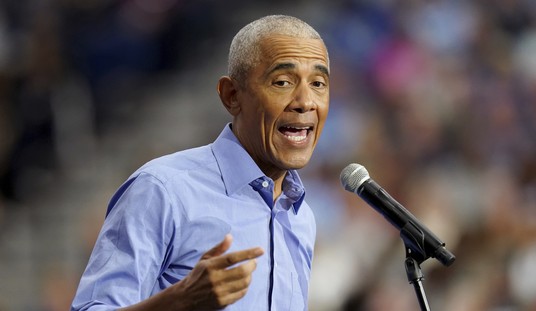


I’m glad to see Ezra Levant is getting more well known. He is a front-line freedom fighter for us Canadians. The problem with many sincerely well-meaning people is that they advocate policies based on their intent, rather than the actual outcome.
A few minutes ago I read an online article about the difficulties the EPA is struggling with (will send to Wretchard). It seems that decades ago a group of photographers went out to document the effects of pollution, rusting piles of debris on the NY Harbor, coal fired power plants being built, strip mines in operation, and so on. And then the photographers went back recently – and those landmark sites mostly are gone now.
An EPA official said, “We are the victims of our own success.” In other words, when you clean stuff up it gets cleaned up and there is less stuff to clean up. And less need for the EPA. Funny how that works.
How clean is clean? The bureaucrats will always in the end answer that it is never clean enough. Clean Enough means fewer bureaucrats and just as bad, fewer expanding jobs for bureaucrats.
I especially liked the line about the “quasi-failed state of California, as I live here and experience it every day.
As much as I’m exposed to it though, when I read more like this about the absolute antipathy to things making the human condition better (plentiful energy and access to fresh water), I get so angry I could chew nails.
Thank you and PJ Media for educating me. Canada is lucky to have Ezra Levant.
We are lucky to have everyone at PJ Media and Breitbart.com
Well I’ll tell ya, as a resident of Los Angeles I don’t have any sympathy at all for Mr. Carmel’s complaints about power, pollution, etc.
The US has gone through several very painful decades of cleaning up environmental messes and learning about externalized costs and the tragedy of the commons and all that. The harbor is a major business asset to Los Angeles, California, the USA and the world, but it has also been an exception to pollution controls for a long, long time. In recent years they have finally started to put requirements on visiting ships, and even visiting *trucks*. It’s about time. It also took years, decades, to get the ocean-adjacent power plants cleaned up, and the several oil refineries that are about the last thing one might expect to find in the middle of Los Angeles, but have been there a long time. Mr. Carmel, you’re only being asked to do what everyone at your destination is already doing, so man up and shut up.
For the most part, US progress on pollution is all to the good. Yeah, sure, there are excesses, and some of the greenies pushing the issue are plum nutz, but I guess they are also useful idiots in their own ways. Look at China, what a toilet they’ve made of their own country in the rush to progress. They will be copying most of the US measures over the next twenty years, I presume.
Los Angeles used to have days, weeks, months of air that you know was making you sick, but it was just, y’know, smog. The difference between the air even as late as about 1980 and today, is almost unbelievable, and way underappreciated. I don’t even want to remember trying to skin dive off Palos Verdes, adjacent to the harbor, and coming up in a spew of ship’s toilets – when the city’s own waste is reasonable well treated and shipped out far enough (from the famous Hyperion Outfall) to (very) seldom be a problem.
If Mr. Carmel wants to make a point, I think he needs to sort his issues a little better. Being asked to internalize some of the costs he was imposing on his destinations, is just growing up.
A PIRATE SUIT
Far from the swelling ocean roar
Far from the teeming ocean shore
Behind the guarded office door
There sits a man a licensed whore
Who sees a ship and what is more
He sees the payday that’s in store
He writes the rules in lawyer lore
That forces shipping rates to soar
Bound for New York or for the Nore
Perhaps it’s pig iron for the Ruhr
He careth not for who it’s for
He careth not for at his core
He careth only for the war
He wages in the name of Gore
And proudly shows the wounds he bore
While in the pirate suit he wore
I’ve found the candidate for November. Mr Carmel gets my vote.
“That means piracy adds a little less than 2 tenths of a cent to the cost of a gallon of gas, or a nickel or so to a 25 gallon fill up. This as opposed to the approximately 43 cents per gallon or $10.75 in taxes you pay on a 25 gallon fill up. ”
Oh. Come. On.
That 43 cents/gallon pays for the upkeep of roads and the construction of new roads. Yeah, yeah, some gets skimmed for mass transit and for HOV lanes, but by and large it is a user-fee system where the users of roads pay for their construction and upkeep.
The user-fee system where roads are largely self-sustaining through such taxes is one of the best arguments against high-speed rail schemes that will never be self-sustaining in that fashion and will require billions in general revenue.
“That 43 cents/gallon pays for the upkeep of roads and the construction of new roads.”
That’s a scam. Check it out. You will find the money goes into the general fund and is used for what ever.
Wow, somebody pushed 5. Josh‘s hot button. And once again he speaks from exuberance instead of prudence. Carmel is spot on about the quasi-failed state in its self-absorbed arrogance imposing it’s own quixotic requirements on others when federal standards would probably work just as well. For years Californian$ paid billion$ more $ for car$ because egomaniacs in Sacramento couldn’t wait another year or two to achieve smog-reduction. Let’s face it, our state government is a bully. Californians who deny this may be more representative of our politicians than they realize.
Our local government (USVI) just doubled the gas tax and our roads are worse than they’ve ever been. The EPA also recently imposed a $700,000,000.00 retrofit requirement for our local refinery to continue operations. Said refinery -once among the largest in the world- provided fuel oil at cost to the local government-run water and power production utility monopoly which charges us residents .43 per kilowatt hour for electricity…Several times the national average electricity rates. This with fuel provided to them at cost.
The EPA and their hippie lawyers are directly responsible for the shutdown of the refinery causing the loss of 2300 jobs directly and the loss of hundreds of refinery dependent jobs and untold money that the refinery once contributed in taxes to our local community, contributions to local non-profits, and all the local expenses it’s former (local) employees and their families injected into the economy by living and working here – rents, mortgages, schools, food, entertainments, and every other living expense encompassing every aspect of trade in our community. I personally know at least 50 people -who once resided solidly in the middle class- who are being forced to leave everything behind. Local businesses are failing en mass and the full socioeconomic effects of this disaster have just begun to be felt.
These government parasites have collectively imposed an unprecedented catastrophe on my community which is much worse than anything in living memory, including hurricane Hugo which literally destroyed us in ’89.
As I’ve written elsewhere; at this point, I wouldn’t cross the street to piss on one of these insatiable social parasites if they were on fire.
I know guys in this video (pawn shops) in places that I have only visited since 2007. Some of them worked for me in the Navy and I originally erred in measuring them by the degrees that they held rather than by the content of their character. After my absolution, when I spoke of such to my father and mother, they were concerned for my mental stability. Next when I spoke of them by the level of love that they had for my (our) country, my parents “learned” something valuable.
After I got out of the service and moved to Georgia, I got a job in Atlanta (a very long drive from home) as a fuels tax auditor. In my many audits I came to understand St. Paul’s understanding of the phrase, “salt of the earth.” I met so very many people for whom the law was as sacrosanct as it was for me. I grew to revere them the way I would valued family members. They clutched to their bosom the constitutional rights of the First and Second Amendment, as do I.
I remember growing up in a suburban Cleveland neighborhood, and the folks in the second video were what I might term – as East Indians would – untouchables; and ignorant bumpkins. Today, I know an East Indian professor, deeply schooled in what can happen in the third world and so wise as to what is going on in this culture today, who is hoping these “maggots” will be there when he, his wife, and their children most need them. I will assuredly be with him if “anything” happens, because I have seen his heart – unlike the Bush view of Putin – and he will be worth any…any sacrifice.
Today, schooled in the Bible and in the realities of life, I am at peace with the folk so many love to label as ignorant – but who are light years smarter than those termed “Brights.” It is only when we eschew common sense in favor of IQ that societies fall…and never know …”Why?”
I know why.
The lack of humility.
@ 9. stoicheionThat may vary from state to state. In CA one half of the amount collected in the northern 2/3 of the state is ripped off and sent to the southern 1/3. It was a power play (that’s why “democracy” is not really fair) that took place many years ago.
Josh @ 5: “Well I’ll tell ya, as a resident of Los Angeles I don’t have any sympathy at all for Mr. Carmel’s complaints about power, pollution, etc.”
No sympathy at all, Josh? Isn’t that a little extreme? Isn’t that extremism part of the problem?
California used to have smog, and even some polluted water. Now, for the most part, California is free of those particular forms of pollution. On the other hand, California is also largely free of the mines, steel mills, shipyards, automobile factories, aircraft factories, chip foundries, and all the other productive industries which used to provide jobs, pay taxes, and make the California Dream possible.
Now California has a clean economy, where lawyers sue doctors on behalf of realtors who sell houses to lawyers. Clean — and totally unsustainable.
Mr. Carmel’s point is really about costs and benefits. Yes, some costs are well worth paying to reduce externalities — and we should recognize it is not the Democrats’ fictitious “rich” who are paying those costs; it is you & me. Other costs are way disproportionate to the benefits. But brain-dead environmentalism based on junk science and dubious statistics does not allow for real cost/benefit analysis. That is the heart of the problem.
Anyway, I should not let myself get worked up about it. California is already Greece without the ruins. And once the real unsustainability of the “green” economy becomes obvious, California will have the ruins too.
California does a lot of dumb stuff, but it doesn’t help to criticize when they get something right. It’s too easy for conservatives to knee-jerk away from anything a democrat or greenie says, just as the leftoids do to anything a conservative says.
California imposing its own standards is usually a mistake, but even if these are local Los Angeles standards, or Port of Los Angeles standards, apparently there were no federal standards that were applicable. I really winced at the limits on visiting trucks, but the numbers are pretty solid, and it just so happens I often spend time downwind from the port, around Belmont Shores and Seal Beach, and used to live downwind in Huntington Beach also locally downwind from a stinky little oil well emitting hydrogen sulfide on a regular basis. Ah, those were the days, not.
Yeah we’re effete little wimps now compared to the rough, tough bastids we used to be, but it’s not all excess.
What gripes me NOW is when California puts on these idiotic tax initiatives so there are state (slush) funds for biomedical research or whatnot, and you thought Solyndra was a waste of money! Here comes another one just like the other one …
http://ballotpedia.org/wiki/index.php/California_Proposition_29,_Tobacco_Tax_for_Cancer_Research_Act_(June_2012)
… my distaste for smoking is as great as anyone’s, but my distaste for using it to create a slush fund, however well-intentioned, is even worse.
–
Yes, California is becoming industry-free, at just about the same time as it has become Republican office-holder free. VDH writes about the excesses that are killing central valley farmland, those are hugely counterproductive. But most of the industry is leaving for tax reasons and because of bureaucratic processes, the contraints aren’t that different anywhere in the country. And because of the cost of living, California is still the embodiment of “nobody goes there anymore because it’s too crowded”. Even with the report that California has had 4m more people leave in the past few years than have arrived from outside, showing a deficit for the first time ever.
A lot of stuff may be broken (and broke), but the port cleanup is not part of it.
Rich guys whining about having to live up to common standards does tend to rub me the wrong way. Cruise lines whining that they’d rather pollute, doesn’t sound like good PR to me, either.
After Ezra Levant’s take down of the Suzuki Foundation, the National Post reported that Canadian environmentalist David Suzuki has stepped down from the board of his foundation over fears his political views could put its charitable status at risk as Ottawa cracks down on charitable organizations deemed to be too politically active.
One other problem with these charities is that they accept donations that are tax deductible and then funnel the money to the campaigns of Green Politicians through affiliated companies. The Tides Foundation laundered money in this way for the Vancouver Mayor’s (Gregor Robertson) political campaign. Vivian Krause has questions about a total of $411,703 in campaign finance that Gregor Robertson has received from various Tides-affiliated sources on his path to power with the NDP (socialists) and most recently, with Vision Vancouver. She examines Suzuki’s funding in an article in the Financial Post.
I’ve got a feeling the Invisible Hand (whose wielder conceives copybook headings) is fixing to B-slap the wielders of the grasping visible hands.
Here is a story by a MSM reporter friend of Big Government, with a very limited sense of irony, about the regulatory aftermath of the Deepwater Horizon accident
Regulatory overhaul may be Gulf oil spill’s legacy http://tinyurl.com/7wn6o8m
Selected excerpts
“The nondescript, white-haired man who approved BP’s permit to drill its ill-fated well gave such drab and technical testimony before a government investigative panel on May 11, 2010, that few even noticed when he unwittingly captured the essence of a failed regulatory regime. Asked why he didn’t make BP certify that its blowout preventer — the mechanism that was supposed to close in the well in an emergency but failed — could cut through a metal drill pipe, he sheepishly said he’d never heard of the regulation.“…
“Secretary Ken Salazar hired Michael Bromwich, a former prosecutor with no oil and gas experience, to implement new safety rules”…
“And if regulators have truly broken with their less-than-fully-vigilant past, they might want to update their inspection forms. The sheet filled out last month when they reviewed operations on BP’s huge Atlantis production platform still say “Minerals Management Service” at the top.
@ 15. JoshI agree about the trucks, that should have been a “no-brainer” except for the idiot Feds. Calling for mandatory shore-power, however, is like taking a steam shovel to cultivate a flower bed, IMO.
The problem is toxic emissions while docking. Deal with the problem, don’t mandate the solution like a smartalecky bully. The law of unintended consequences will impact San Pedro and PoLA far beyond the cost of the nuisances they brought. Only a limited number of vessels will convert; thus their tonnage rates will increase; thus it will cost more to bring goods here; thus other ports will become more competitive; thus LA port associated enterprises will be less profitable; thus they will hire fewer employees; thus the economy will be driven further downhill; thus the need for increased local government income will compel higher taxes; thus the cycle repeats. Not well thought out.
RWE @ 2 – From Obama’s hometown http://tinyurl.com/7gts38v
Chicago Steelmaking: Dead but not Forgotten
“Today, Chicago’s steel industry is gone.”
“Now the vacant Acme plant, whose components were built between 1905 and 1930, is the last major Chicago steel industry structure left standing. Wisconsin Steel, U.S. Steel and the other major plants were demolished and sold for scrap metal. That was to be Acme’s fate as well, until a group of preservationists, environmentalists, former steelworkers and historians stepped in to save the structure.”
“Now, they want to turn it into a museum celebrating the history of steel in Chicago.”
I know guys in this video (pawn shops) in places that I have only visited since 2007. Some of them worked for me in the Navy and I originally erred in measuring them by the degrees that they held rather than by the content of their character. After my epiphany, when I spoke of such to my father and mother, they were concerned for my mental stability. Next when I spoke of them by the level of love that they had for my (our) country, my parents “learned” something valuable.
After I got out of the service and moved to Georgia, I got a job in Atlanta (a very long drive from home) as a fuels tax auditor. In my many audits I came to understand St. Paul’s understanding of the phrase, “salt of the earth.” I met so very many people for whom the law was as sacrosanct as it was for me. I grew to revere them the way I would valued family members. They clutched to their bosom the constitutional rights of the First and Second Amendment, as do I.
I remember growing up in a suburban Cleveland neighborhood, and the folks in the second video were what I might term – as East Indians would – untouchables; and ignorant bumpkins. Today, I know an East Indian professor, deeply schooled in what can happen in the third world and so wise as to what is going on in this culture today, who is hoping these “maggots” will be there when he, his wife, and their children most need them. I will assuredly be with him if “anything” happens, because I have seen his heart – unlike the Bush view of Putin – and he will be worth any…any sacrifice.
Today, schooled in the Bible and in the realities of life, I am at peace with the folk so many love to label as ignorant red-necks – but who are light years smarter than those termed “Brights.” It is only when we eschew common sense in favor of IQ that societies fall…and never know …”Why?”
I know why.
The lack of humility.
Forgive me for re-stating these examples of California INSANITY:
About 2003 the state of CA. was attempting to extort money from retired owners of dry cleaning businesses who had retired as much as three decades earlier. Lawyers for the state were seeking damages for “clean-up costs” for chemicals which were legal for those businesses to use during the period they’d operated, and the costs of responding to these lawsuits and civil and criminal actions had at the time of the articles (2002-2003) had already forced a number of retired couples into bankruptcy. On the face of it, the state was behaving as a tyranny, both in ex post facto prosecutions and in imposing dubious standards for the dangers of the chemicals and inaccessible calculations of the actual costs for “clean-up” which the state was not inclined to authenticate, merely to collect arbitrary penalties, fees, and fines not meant to be subject to challenge or appeal. (See Environmental Protection Agency…)
On a smaller scale, shortly after moving to CA in the early 1990′s I went to the Alameda County Library to get a library card. As I approached the entrance, I noticed a flyer apologizing for cutbacks in hours and services owing to budget shortfalls. After filling in the forms, I received my card from a Librarian and I asked in passing “What is the fine for overdue books?” She looked at me quizzically, as though I’d spoken in a foreign language or asked her to extract the cube root of Pi. Then she brightened and said with the friendly condescension one might use with a rude child, “Oh, there’s no charge for overdue books!”
One has to weep.
I’m so glad I left California.
Yes California has ejected manufacturing, mining, timber, and eventually agriculture, but it leads in growth industries of the American future. Taxes, regulations, fines, fees, permits, lawwrs, government unions, pensions, welfare, prisons.
The new standards for the truckers in Long Beach are publicly justified on the grounds of environmental concerns, but, as always, follow the money. They are little but a squeeze play by the teamsters and assorted unions in cahoots with the large trucking firms in order to squeeze out the independents. The new engine standard requires a capital investment that the little guys simply can’t be expected to meet. Rest assured that higher prices for port users and, ultimately, consumers are guaranteed. That’s the whole point, actually. This is a cartel action sanctioned under the guise of environmentalism.
These new standards for trucks and ships do have the combined effect of making the Los Angeles port a lot less attractive for shippers. I would expect to see a lot of traffic moving elsewhere to places like Mexico. Following the money again, which face-of-captialism billionaire, lauded as the sage of value investing yet who never makes a move without government backing, just invested billions in railroads?
Long term side play for the small guys might be railhead services in places like Barstow, CA.
The ability of the denizens of Los Angeles to advocate things so against their long term interests truly amazes. On this thread we have seen the otherwise sober and trenchant Josh succomb to the syndrome. It is the curse of the Valley of Smoke, which is the name given to the Los Angeles Basin by the native Indians long before any white man had seen it. The place is naturally problematic for air quality, it was never a good idea to put nine million people in it and divert rivers of water to feed it. Fixing Los Angeles is a bitter nut, and one that continually results in ironically setting a spiral of unworkable standards and higher costs for the rest of us.
But, on the other hand, again following the money, boosting the costs of Pacific shipping is a good way to protect American manufacturing.
California is so screwed up that even the conservatives are liberal. Hopeless.
Perc up Mad Fiddler…
Perchloroethylene
http://en.wikipedia.org/wiki/Dry_cleaning
was introduced to stop the fires that were destroying dry cleaners.
Perc distribution was the economic basis for VW&R ( Van Waters and Rogers )
http://www.vwr.com/
This, one of the nation’s largest chemical distributors…
Got its start getting alkanes ( kerosene ) out of dry cleaning — in the 1930′s…
Who knew?
BTW, Perc was eventually exonerated — after $ 000,000,000 in EPA grants.
Apparently NO ONE could connect perc to ANY negative biological consequences.
DANG!
====
None the less — it’s BANNED.
Cheers.
I agree with #10, #22, #23 and #23. CA is over regulated and over lawyered. Worse, the dems have an iron grip on the politics in California.
With the exception of Darrell Issa (R – CA 49th) most republicans don’t rock the boat. They keep their mouths shut and take what they can get. I think the pubs are out gunned (and realize it). The pubs are fighting a gorilla war – for those who choose to fight. It’s a desperate situation.
About invasive species in bunker water?, This is a serious problem but voulf you solve it by heating the water with waste engine heat to the point where the heat would kill anything in the water? sounds dumb but would it work?
re: externalities. Seems that it is L.A. that is exporting its own (selfish) desires to be f@rt-free. Talk about externalities – they are making everyone pay for their excesses. If they don’t like the smells they should (just buy and) close the Port of Long Beach and outlaw trucks and trains.
Also reminds me that torts have generally been a lose-lose save for the legal profession and the occasional lottery winner. If we can have no-fault divorce, we should have no-fault damage recovery – given the absence of malice and full disclosure (similar to NTSB rules). Would have the added benefit of returning the size of the legal/political class to something the size of Japan’s – (1% of ours) and return all that intellectual effort into creating, building, educating and servicing things – vice being a below-the-line-cost burden in every economic equation.
re: trucks. Wasn’t it the Gleick fraudster whose non-profit institute got (much more than Heartland) grants for studies about diesel particulates that was also a fraud? But CARB (AB 32) still stands even though based on junk science. Then again the so-called science has always been just an excuse. Crichton had it right, it’s too easy for religion and cults to masquerade as science so we must remember not to accord science any special role in politics – or regulation. i.e. those who we elect must remain personally responsible – and not be able to use others as an excuse.
re: use taxes. Last I looked the U.S. government had no problem taxing us all to pay for infrastructure of value to all. To claim that our arteries are something other than a common good irrespective of the fact that not all of us drive or transport stuff is specious. Given fuel is the foundation of all essentials – like basic foodstuffs – it’s clear the only reason we tax it (and don’t tax basic foodstuffs) is because it’s been demonized (big bad corporations) and it’s where the money (and political donations) are. Amazing how civil society responds to political abuse. They pay for more of it.
Re: China. Is cleaning up. It takes wealth to clean up. It took us 100 years. Russia still hasn’t. China will probably do it in less than 50. Then again, they are no longer creating jobs programs that build roads and dams with picks and shovels – and their blue collar workforce is much more numerate than ours (blue or white.. sigh..):
http://www.youtube.com/watch?v=Hdpf-MQM9vY
http://www.youtube.com/watch?v=1C7FH7El35w&t=2035s
This guy talking about the high cost of government regulation in contrast to the relatively low cost of counter piracy measures is starting to sound like the old joke about the guy who got his credit card stolen but didn’t report it because whoever stole it was spending less than his wife was. And next thing you know, the Left will be on the side of the pirates because, heck, they are just poor black kids trying to get by in an inherently racist world by fighting back against the heirs of the Amistad operators.
Josh, as one who deals daily with insane California regulations, your rant was just unforgivable. Most regulations passed in our state over the past thirty years are just plain loony. They bear no resemblance to any responsible regulatory system or to the real world. Anyone who has to deal with them will tell you that.
Yes, the air was cleaned up thirty years ago. So? As anyone familiar with regulatory costs knows the cost/benefit curve goes near vertical/ parabolic after nearly all easy low cost benefits/efficiencies have been implemented. When you are in the high ninety percentile of efficiencies, every additional tiny improvement costs a ton, and may when you look at the system as a whole actually be a detriment. That is where California is in almost all arenas of regulation.
I am no expert in the water/shipping regulation but based on past performance of our statewide officials in other areas of regulation, one must assume these new regulations over shipping are as loony as all the others.
They are in the process of widening the Panama Canal and will soon have more options to move cargo past PoLA through to the Gulf and the Atlantic seaboard.
I too grew up in LA and can attest to the polluted skies and waters. The bays looked like crap and then you’d go twenty some miles across to Catalina and waters were crystal clear. A lot of that had to do with storm water mitigation though. People were carving up the hillsides then letting the rain drain untold tons of silt into the ocean. I recently sailed my boat up from San Diego and blew my diesel 40 miles from San Diego and 40 miles from Catalina. I sailed in a 25k blow and holed up in San Pedro adjacent to the PoLA. There I had to clean the a couple of quarts of oil and diesel fuel mixed with sea water out of my bilge into a bucket using a small plastic scoop. Separate that and dispose and evaporate off the water. There was a day when people would have just pumped it out into the bay. Walking up and down the dock I can see the bottom and see starfish and other sea creatures. The fines for an illegal discharge are intimidating. $10k or more plus jail and there is no limit to US waters that allows you to discharge. There is no lower limit as to how much oil can be discharged. Maybe some reg somewhere puts in the ppm, I don’t know.
That said California is run by moonbats and brigands. If regulating tons than ppm and ppb is even better. California is famous for mandating things. Take MTBF, a chemical additive to gasoline. The state demanded that it be included in the formulation of gas used in California. The reformulation cost the refineries billions and barely a few years later, before the refineries could recoup their forced investments the state turned around and mandated that the gasoline be MTBF free. It turns out that it was a carcinogen and had a tendency to leak into the ground water. Oops. California is run by unions and moist of those directly trace their linkage to the communist party. Destroying business is not unfortunate side effect it is the main feature. We have past the point of peak government.
Perc distribution was the economic basis for VW&R ( Van Waters and Rogers )
This, one of the nation’s largest chemical distributors…
Got its start getting alkanes ( kerosene ) out of dry cleaning — in the 1930′s…
That’s incorrect. VWR got its start supplying glassware and reagents to miners in the Gold rush era. That business was acquired by VWR, but the basis for their business goes back farther.
Take MTBF, a chemical additive to gasoline.
Sorry to be a snit, but that’s MTBE: methyl t-butyl ether.
In Santa Barbara County the local AQMD found the Pacific Ocean noncompliant in regards to particulate matter introduced into the air. I guess they are still trying to figure out who to sue over that violation; I can hardly imagine the size of the fine that will be levied when the guilty party is identified.
But after all the furor of oil spills due to offshore drilling in that area, a study a decade ago showed that offshore drilling ahd actually improved the water and air quality by extracting oil and gas before it could leak out naturally. The combination of active earthquake faults and extensive oil and gas deposits produces natural pollution which is being cleaned up by sucking the stuff out of the ground before it can leak. By all rights, the county ought to be paying the oil companies to drill.
When I bought my house in Santa Barbara County I discovered that a smoke detector was mandatory. When I sold it 4 years later I discovered that two smoke detectors were mandatory. It was clear that we were going to end up with at least two smoke detectors required for every room in the house, and they would start requiring CO detectors as well. I call this the Smoke Detector Effect. When new technology comes along, in bureaucratically dominant areas it invariably moves from optional to mandatory and then ratchets up from there.
Once again, how clean is clean? At a meeting at Cape Canaveral several years ago, we were discussing the issue of hazardous waste left in the ground at old launch sites. Did it make sense to clean the places up, when the chances of their becoming schools or playground was zero? The Fed Govt civilian expert present answered with surprising candor when asked for his opinion. “If you ask me, well, I do that for a living. Enforcing the rules strictly decreases the chance that I will be laid off and increases the chances I will be promoted. So my answer is going to be yes, we should apply those standards.”
Good or ill, that is the way most bureaucrats think.
U @ 31: Yes, the air was cleaned up thirty years ago.
The big cleanup *started* thirty years ago, but the refineries were still reeking ten years ago, and the port was still reeking two years ago. As you clean stuff up, previously minor problems look larger.
If reasonable people don’t try to address these issues you get nutballs.
We have entire swaths of regulation that are total garbage, any CO2 restrictions are in that category (though I might support some form of monetization of the issue as a carbon tax), as are – air bags in cars! Asbestos regulations are about 99% excessive. Auto regulations are crazy, apparently you just can’t build a legal car weighing much less than 3,000 pounds now, which limits their fuel efficiency. Old Honda Civics, Fiats, old sports cars like Triumphs and MGs weighed in under 2,000 pounds. With modern technology those should be MORE possible now, not less.
I understand the problem, once you suggest that some regulation may be needed, some sorts of minds want to regulate anything, and come up with hare-brained regulations on the basis of nothing at all, except perhaps good intentions – and often not that but instead the worst intentions. And even a worthwhile set of regulations becomes a bureaucratic nightmare to deal with, and that monetizes to the cost of the time to try to deal with it.
–
Just one correction to my first post (which I knew was going to pick up static), Maersk Line is not a cruise line but a huge shipping company, they’ve run several of the ships picked up by the Somali pirates.
–
Cowboy, I originally thought the truck business at the port was just a Teamsters game or greens gone wild – and for that matter I pretty much rolled by eyes the first time I saw the issue of ship’s power. And I haven’t paid much attention to either, but later in the games on both I saw some numbers quoted and slowly came around to believing that there was a valid point to both, after all.
–
The counter-green claim along the lines of, “That’s the smell of progress!” drives me crazy, almost as crazy as the line both Hannity and Rush keep using, “Rich guys create jobs”. Seems to me about 90% of the jobs in this country are created by corporations, and even when a rich guy pays out of his own pocket, it’s a matter of creating an organization to take on a regular piece of work and it acts like a corporation, and in a 10,000 person enterprise there have to be a lot of people pushing in the same direction, “creating jobs” by being productive, by matching tasks to people in a cost-effective way, and the creation of rich people by the corporation is the way it goes much more than the other, no matter how critical or visionary the guy at the top is. And that’s what it takes, “rich” at the top doesn’t create jobs if it isn’t intelligent, it just runs through money. Smart creates jobs, not rich. Smart creates jobs out of nothing, and creates rich, too.
–
And good luck to them Google guys who want to mine asteroids. It’s the right idea. Whether it can be done with private money – I doubt. But I salute them supporting our technological infrastructure, even if the effort is at very long odds of success. Strangely enough, that seems to be the consensus reaction of the news anchors this morning, too – laughter and a grudging respect for the effort.
Q: What’s the difference between socialism and communism?
A: Socialists allow a grace period for voluntary compliance with their diktats, before moving to coercion. Communists go straight to coercion.
From the comments above it sounds like California starts with coercion. Actually it starts with a “C” but you know what I mean.
Josh @ 35: “And even a worthwhile set of regulations becomes a bureaucratic nightmare to deal with, and that monetizes to the cost of the time to try to deal with it.”
Now there’s the Josh we all have come to know and love!
Let’s not think about monetizing the cost of the time to deal with excessive regulations. Let’s look at it properly — the cost of any regulation diverts our always limited resources away from all other potential uses. Clean the air, and degrade the school system. Clean the water, and shut down hospital emergency rooms. Some of those trade-offs are worth it; others are not.
What we lack is a sensible system to help us make the decisions on trade-offs. Goodness, many environmental lunatics don’t even accept there is ever a trade-off at all!
#37
” What we lack is a sensible system to help us make the decisions on trade-offs. Goodness, many environmental lunatics don’t even accept there is ever a trade-off at all!”
Exactly right- the concept of “unintended consequences” and “diminishing returns” are an alien idea to the zealots on the left.
“What we lack is a sensible system to help us make the decisions on trade-offs. Goodness, many environmental lunatics don’t even accept there is ever a trade-off at all!”
There is no trade off in a religion. They are black and white ideologies that only follow dogma. And to those who think that we the public are not dealing with a religion suffer from serious delusion.
@Josh 35.
The big problem with refineries is that it is effectively impossible to get permits to build an entirely new one on a greenfield site.
As a direct result, ancient refineries, long past any rational retirement date, are kept in operation with hugely expensive upgrades and constant expensive TLC to maintain or replace old worn out piping and equipment.
Modern refineries build to the latest standards would have far far fewer emissions and be far cheaper to operate.
I am absolutely certain that by far the cheapest option that would also deliver the greatest pollution benefit would be to allow the refiners to build new refineries and progressively shutdown the existing archeological artifacts laughingly described as refineries.
Yet another example of how Green policies are actually counter-productive.
I am no fan of the enviro-nazis but do you really think this is a bad idea?
http://en.wikipedia.org/wiki/Shorepower
Here are the real culprits in this video from Portlandia – the satirical show about Portland Oregon. Portland is the place where young people go to retire. Sadly not just in Portland but all across North America people are asking “is the chicken local?”
No wonder there be pirates. Aaaarrrrrgh!
Let’s solve two problems at once: cede California to the Israelis. We’ll have better, more productive neighbors and the Muslims can go back to just killing each other and we save a ton of money not paying extortion money.
Dear Josh,
When people make things or move things, or fix things, waste results. Society through the ages has restricted these waste-producing enterprises to areas where the damage can be controlled. No society ever put the tanners next to the Imperial palace. Yet, they needed tanners, or they would go naked.
When I was a boy, I always knew when we got to Brooklyn because of the smell. Every block had a different smell, from laundries, foundries, food processing, bakeries, pickle works, oil refineries…you name it! Most of our work was inside these plants, working in close proximity to many substances which today are banned (especially asbestos), without very much in the way of safety equipment. I used to wear an asbestos suit for years, every day. My lungs are in excellent condition, but I don’t smoke. My doctor isn’t surprised. Almost all lung damage comes from smoking or genes. Most of those banned substances were only banned to justify raping some wealthy industry to pay union smokers’ medical bills.
Today, Brooklyn smells like garbage, or more specifically, that horrible perfume they spray on garbage. The whole place stinks like perfumed garbage. All those other businesses have been replaced by transfer stations. They were all put out of business, not by competition, but by the government. Unions, EPA, Taxes, regulation, all gone.
I, for one, don’t see the improvement. All the guys who worked and fed their families have been replaced by welfare recipients, dealing drugs and hanging out. They are now a permanent underclass, instead of a vital community. Crime is now the major employer. Taking garbage away does not produce wealth. Working for government doesn’t produce wealth. Manufacturing does, but it has become unfeasible to make anything, any more.
Our pal from Maersk is trying to explain reality to a world that wants to live in fantasyland. You are usually a well reasoned fellow, but you must be fully indoctrinated in the zeitgeist of Green. How old are you? Perhaps you really don’t remember how great things used to be. For everyone.
Dirty and smelly is how things are made, and dirty and smelly have been outlawed. Lawyers suing doctors will only work as an economic model until the wealth disappears, which it is doing rapidly. Obama is hiding the decline through blatant money-printing. When that dam bursts, your dreams of swimmming in your own toilet will disappear forever.
Swim at Catalina. Ship at Los Angeles. There have to be dirty places. There is always a downside to consider. Burning dung in your mud hut makes lots more pollution than those ships which create jobs do, or that refinery which provides the fuel to run that power plant does.
Why does everyone always assume that people who run companies want things to be as dirty and unsafe as possible? After all, they work there, too. Why would they want their employees to be sick? So they work less and less efficiently? Taking extreme examples and extrapolating them to accuse everyone else is the worst lib trick. There are self interested jerks running things, to be sure. It’s just that almost all of them are in government, shaking down decent people for a living. And they can never be fired.
There is no such thing as a free lunch. There’s just starvation.
Philip Ngai @ 41 asks if “Shorepower” is a bad idea (i.e., forcing ships in harbor to power down their engines and plug into external power).
The answer, as so often, is — it depends! Mr. Carmel’s point was that most merchant shipping is not designed to run off external power. This regulation will require expensive modification to the ships, which you & I will pay for, Philip. Some of us might have wanted to use that money to buy shoes for the kids, but the regulators do not allow us to make that choice with money we earned ourselves. They take our hard-earned money indirectly, and insist that cleaner air in the port is more valuable than anything else we might have wanted to do with our limited funds.
Now, where does the external power for Shorepower come from? It is an incremental demand for electric power, and California does not have any excess generating capacity. The incremental electric power for the Port of Los Angeles will come from the oldest coal fired power plant in the Western US. (Oldest, because that plant is least efficient and therefore is used only as needed). So some poor little Navajo kid in Arizona will have to breath more polluted air, just so that some rich Democrat political type in a gated community in LA can feel better about himself.
If Shorepower means that someone’s children go without shoes and little Navajo kids breath dirtier air, then — yes — Shorepower is a bad idea.
Josh@#35,
It really isn’t my purpose to become your assigned adversary, but you make these sweeping statements that simply cry out for response.
I lived in Southern California as a kid for about 7 years – two in the early 1950′s and later from 1958 to 1963. We used to drive down the coast from Ventura County to Long Beach to visit relatives just about every weekend over a 5-year period. Signal Hill – an oil field smack in the middle of Long Beach – in the late 1950′s and early 1960′s was COVERED with oil derricks and rocking horse pumps. In fact, you saw those scattered all over the basin. Now those have largely been replaced by shopping centers and residential areas.
Los Angeles basin on good days had a sort of yellowish overcast, with a constant pungency I actually learned to like. For decades after leaving California, I would experience the most intense nostalgia NOT from smelling Eucalyptus trees, but rather from catching a whiff of road-building asphalt activity!
When I returned to CA in 1993 for a job interview, THE SMELL WAS GONE.
As an adult, I drove all over the state in the decade from 1993 to 2003. Actually, my exploration and re-acquaintance with the west coast took me as far North as Portland, Oregon, Ukiah, Mount Shasta, Colusa, Yosemite, Fresno, Sacramento, Folsom, Placerville, Taho, Reno, Virginia City, and of course Los Angeles and San Diego.
I was thunderstruck by the vast change from the early 1960′s. On only a few occasions did I see a pall of air pollution over the L.A. basin as I came over the high pass from “The Grapevine” I-5.
Flying in 1994 from San Jose into Santa Barbara to take classes at WaveFront and throughout that brilliant spring week, I was amazed at the clarity of the air. In the early 1960′s I had ALMOST NEVER SEEN the Channel Islands just a few miles offshore, as many times as we’d driven northward on 101. I suppose that could have been because of fog as much as AIR POLLUTION.
But in 1994, the only tar balls on the brilliant white beach sands of Santa Barbara were from the natural oil seeps that have been going on since before humans arrived.
In California, your car’s exhaust system each year MUST PASS fairly strict standards; you have to repair your engine/exhaust system or face hefty fines. One of the great ironies is that it was in some of the regions wealthiest neighborhoods where I witnessed the most conspicuous air pollution. Within a mile or so of the intersection of say, Middlefield Road and Oregon Expressway near Stanford University, where stately homes could be seen beyond low walls and hedges, you can see Rolls-Royces, Mercedes, and the occasional Lamborghini parked on wide placid streets next to towering Sycamores and Virginia Pines. These streets are home to Silicon Valley entrepreneurs and innovators, professors and administrators, surgeons and physicians, who have worked decades to achieve success. On almost any Sunday afternoon you will see regiments and battalions of gardeners and yard workers equipped with shoulder-mounted leaf blowers pouring out clouds of purple-gray smoke as they relentlessly tidy up the gleaming sidewalks and grassy verges.
(Atherton, a few miles north, averages about $4 million per home, but they’re mostly hidden from street view, so you can’t see the legions of gardeners…)
So I have to wonder if Josh is just so young he has no memory of what it was like 40 years ago…
One of greatest and most consistent problems with handing power over to bureaucracies is that they always go too far.
One reason is the situation I presented above. But aside from that it is remarkable how many bureaucrats try to be “holier than Christ.” If the politicians and political appointees say “Consider doing such and such” that inevitably becomes “You must, absolutely must, do such and such” by the time it is filtered through the layers of bureaucrats.
During the Carter Admin some high level DoD people said we should consider using fixed price contracts where feasible. By the time that got down to the program manager level it was “You Must use fixed price contracts!” The Dems always vow to hold private contractors feet to the fire and it always results in a utter disaster for both the govt and the private firms.
When the Reagan Admin came in they tempered that contracting requirement with good sense, and eventually DoD did a 180 deg turn on the policy. And then in 1988 the LA times ran a story on how the Reagan Admin’s fixed price contracting efforts had badly damaged the defense industry.
On one blog I read a refinery manager described how in a late 1990’s training course in LA the Feds came in and told them they had devised a new enforcement policy. In case of violations the refinery manager would be held personally liable and the companies would be prevented from paying his fine. When asked how this would affect the industry the response was “Us? Little old us? Significantly affect a multibillion dollar industry that is part of a multi-trillion dollar economy? No way!”
And that’s the problem, the old Design Margin issue. Each individual mandate, regulation, requirement, report, and individual interpretation overreach is asserted to be trivial in comparisons to the “multi-trillion dollar economy.” Or as the people who handed out the reporting requirements at the Pentagon used to put it, “Hey, it’s only gonna take you 5 minutes, another few computer keystrokes.” Or in other words, yet another “5 minute” task added to a workday that is already normally over 12 hours long. But in aggregate all those “little” things are crippling. And nobody has the big picture except the poor SOB who has to make it all work and finally get home at 2100 hours, in time to eat a couple of oatmeal cookies, and then hit the sack so he can do it all over again the next day.
mf @ 35: Are you really expressing nostalgia for smog – and suggesting that I should too?
Hey, I understand the temptation, but what I’m saying is we really are better off without the smog, even thought it costs big money to clean it up and it conflicts with our childhood memories, even our childhood ideals. For that matter I remember walking through Manhattan in the 1950s and asking Mom why my eyes were burning. I missed those days in Pittsburg when people actually dropped dead, but I think I got an idea of what that must have been like.
The trick is to stop when the job is done and not keep going, trying to fix stuff that isn’t broken, trying to clean up cow farts and redwood tree fumes.
Pasadena is a great town and I always said I’d consider moving there if they only had air. Well, now they do. That’s a good thing.
Don’t even get me going on leaf-blowers …
I used to think that conservation and humanitarianism were good, and I still do. Perhaps even more so today than in years past. But any medicine can become a toxin when taken in excessive doses. The difference between the kindness of offering a man a glass of water and administering the torture called the Water Cure is only a matter of degree.
How is the degree of humanitarianism and conservation determined? Back in the day, purely by cost and private morality. Increasingly, it is determined by public policy.
Everything has a cost. We could have a completely pristine environment by returning to an earlier age, how early depends on how far back you go. The Age of the Amish? The Age of Fred Flintstone? But part of the cost of going back is losing some of the “good stuff” we have since learned to like. Air travel. Antibiotics. Paved roads. Abundant food. Some heating in winter.
Take food. A lot of people dislike food preservatives or processed comestibles. But back in the day they were marvels because they kept down the gastrointestinal scourges. Today we die of cancer at 80, but how many people get dysentery or cholera from bad food? Not many any more. My maternal great grandfather and grandmother died within hours of each other in the arms of gramps. The year was 1903 and it was the great cholera epidemic of the Philippines. There hasn’t been one since.
So we make choices as a civilization and tolerate a certain amount of pollution as the cost of affordable motor vehicles, or preservatives as the price of 65+ years of good health at the expense of cancer risks thereafter, etc. Similar choices are made with respect to caring for our neighbors. Probably no one wants to return to “nature, red in tooth and claw”. But neither does everyone want an Entitlement Universe.
The arbiter of these things is in my view, the price system. The objection to various forms of pollution abatement mandates is that they are too expensive at the margin. At the current level of technology, the additional steps achieve too little a result for too high a price. Is it worth something to keep the smog down? Probably. Is it worth wiping out an agricultural region to save the snail darter or some obscure bird? Maybe not.
But the equation could change given new technology. Suppose electric cars were to become practical and cheap. Well you wouldn’t have to mandate or subsidize them. As a matter of fact, people would beat a door to the automobile showroom and snap them up. The problem with mandating certain things, or declaring dirt or C02 a pollutant is the great cost and inconvenience that is associated with them. We have to give up too much of a good thing to get too little of a good thing.
Ultimately the process of cleaning things up is partly a function of technology. To everything there is a purpose and a time for every purpose under heaven. A civilization at the level of 1905 could never have mandated the electric car when even oil was in the future. Some things must wait until the technology is there. But steampunk solutions to pollution are still steampunk. Cost decides. When “progress” results in a net benefit loss it is not progress.
Right now, when people are really hurting at the gas pump, since people in trades or in some Western states have to drive a hundreds of miles each day to go about their business, what is the value of making things a little cleaner at the cost of fifteen cents more per gallon? What about a tenth of a cent? That could be a different story.
One problem, however, is that a hundred little interest groups could be looking to pile their tenth of a cent onto the price of a gallon of gas. Some of it for the 3 eyed foo-foo, some of it for the children, others for the sake of Gaia. Each of these might be inconsequential in themselves, but cumulatively they add up to a lot of cents on the gallon.
That means a battle is going to be fought in the regulatory arena because there’s no other place to fight it.
The cholera epidemic of 1902-1905 has always been of interest to me personally because it orphaned my grandfather. It’s provenance has been ascribed to the Philippine American War. The war might have been contributory, but it was clearly part of a much large pandemic. In a vain attempt to stop it, houses were burned, people were shuffled around, etc all in an attempt to beat the cholera. The US Army officer in charge of stopping it broke down under the strain. The second appointee gave up after a month.
Nor was it confined to the Philippines. In the same approximate era it killed 150,000 Americans and millions of Europeans. This, from Wikipedia.
Today billions of burgers are served. And the Colonel Sander’s despised frozen chicken is served worldwide in mind-boggling quantities, laden with everything the average Greenie hates. Yet’s where is the cholera? Where is the cholera? James Forrestal once said that after Iwo Jima he could never see a Marine without feeling a sense of reverence. Well I can never behold a can of corned beef without experiencing the same feeling of reverence. High in fats, high in salt. Low in cholera.
We all know about the famous “Spanish Flu” that ravaged the world right after the Great War. These things were as devastating as any world war. And yet they are largely gone from public memory. My sole personal connection to it remains my grandfather’s stories. How the church bells kept tolling. How he swore, to the end of his days, that he saw a ghostly friars walking through the streets. Today we have Hollywood movies describing some kind of airborne infection killing thousands and creating a zombie apocalypse. But in the not so distant past, this was not the stuff of Hollywood. It was real.
All of this has been largely eradicated by our despised civilization. The civilization that the Greenies laugh at. They think they can go back to their spinning wheels and Lorena stoves and lead their fantasy primitive life. But back of their minds they unconsciously think “and if I get sick they’ll take to the hospital”. What hospital? What medicine? What X-ray? What scanner? What antibiotics? What painkillers? None of this was around in 1903, except maybe for whiskey.
I’m all for going as simple as possible, but there’s a cost. Alas, the way back to Eden is barred by an Angel with a Flaming Sword. For most of us there is nothing for it but to reach for the stars.
“A civilization at the level of 1905 could never have mandated the electric car when even oil was in the future.”
Quote I recall hearing in college, from a 1913 issue of Scientific American:
“It is remarkable how much the automobile has cleaned up our cities over the past decade. The vast tonnage of horse manure that municipalities had to deal with a decade ago has all but disappered.”
They did have electric cars back then (one held the world speed record in that timeframe), and steam powered ones as well, but they were mostly just glad to be rid of the horse pucky. And prior to the automobile’s rise, the lighter and “useless” distillates of petroleum such as gasoline typically were just dumped in the nearest river. Lubricants were made from oil, other distillates were employed to manufacture products, and kerosene was useful for lamps, but that stuff we now call gasoline was worthless.
As as for the tax on gasoline being used for road building, just how much tax should we pay if it is to be used for landscaping 5 miles of highway in the middle of nowhere in Nevada or to build a $350M bridge for 10 people to use in Alaska, to cite one real and one proposed use of those tax dollars?
Ive read that the Indians called the LA basin something like “the land of gray air” It was a bad choice for a city location because of the microclimate. I live in Atlanta, a city in a forest. Lots of pine and upland southern hardwoods. We get slammed by the EPA with national standards for ozone because of the trees. We’re up against West Texas for air but they’re up against us for particulate matter (except now in pollen season)
Annoy is right. All Calif needs to do is again raise the price of business there and the world will come to Houston, NOLA, Mobile, Charleston, Savannah, Jax and Hampton Roads.
Kinuachdrach@45
Again, normally I am on the other side, but in this case, most of the people who pay for shipping do not suffer from the ship’s air pollution. So for them the price of air pollution is almost zero.
As far as where the power comes from, coal is not an incremental source, gas turbines are and they are very clean. (probably the cleanest fossil fuel by far) The only objection is the cost of fuel and that looks to be on a downward trajectory for quite a while. It is much cleaner than ship fuel.
Philip Ngai @ 53: “As far as where the power comes from, coal is not an incremental source, gas turbines are and they are very clean.”
Sorry, Philip — coal is quite definitely the incremental source for additional electric power demands at the Port of Los Angeles. The coal-fired power plants already exist. New-build gas-fired plants are a lot more expensive than additional use from an existing under-used coal-fired plant, simply because of the capital requirements.
Yes, gas-fired power stations are preferred today for newly-constructed supply. That is largely a regulatory matter; today, Big Government likes gas, whereas back in Jimmy Carter’s day Big Government prohibited the use of gas for electric generation. It’s Big Government — don’t ask.
Besides, any realistic assessment of pollution from gas-fired plants has to include the mining of the metals that went into the turbine and into the drilling rigs which provide the fuel and into pipeline construction to move the gas. Sadly, most of the enviro-tripe we are exposed to fails to look at the total picture.
Perhaps the most dramatic example of environmentalist stupidity is courtesy of Germany. Germans need to provide lots of (expensive) back-up power to cover the intermittency of their (expensive) wind factories and solar cells. They were using emissions-free nuclear power for that, until the unpleasantness following the Japanese tsunami. Now, Germany is planning a new generation of thermal power plants fired by brown coal. There are serious questions about whether even the Germans can afford the high costs (financial and otherwise) of ill-founded environmental fashion.
By the way, I am all for caring for this planet of ours. But we have to strike a balance. The path of excessive regulation we have been following has led to real unemployment in the US approaching 20%, and a Big Government which has to borrow (or print) over 40 cents of each dollar it spends. Environmentalism is simply not sustainable!
Ngai @ 41…
Your wiki link appears to be loaded with Greenie BS…
Starting with the term Heavy Fuel Oil.
Such ‘bottoms’ ( end of the line for the refinery distillation process ) were used — circa WWII — and with steam turbine power.
However, ever since the evolution of slow revolution super sized Diesel marine engines the industry has shifted towards various grades of middle distillate. ( i.e. Diesel fuel )
IIRC it is specified by various ‘cuts’ in the distillation stack — #1 through #6. Diesel #1 is used in Alaska pretty much year round — with winter fuel ‘cut’ by kerosene to make it even lighter.
Diesel #2 is the standard fuel that we all know and love in the remaining 49 states. It is also used as home heating oil. The difference being organic dyes marking the absence of motor/ road excise taxation. Any farm boy caught using agricultural Diesel fuel in his pick-up is in for brutal penalties.
Even the Iowa class battleships were converted off of ‘Heavy Resid’ before being brought back into the fleet during the Reagan era. This was done because the ENTIRE fleet was no longer using heavy fuel oil.
Slo-Rev Diesels had driven steam turbine power entirely out of commercial use. They reduced manning something fierce — and can go from cold start to full power much, much, much quicker.
All of which is to say that these maritime Diesels can be scrubbed the same way as ever. It’d be cheaper, by far, to just inject them with propane/ compressed natural gas while in port. This old trick drops particulates through the floor. Since it would only have to supply the auxiliary gen-set it would be VERY cheap to retrofit.
All that is needed is a natural gas whip, some shipboard piping and an after-market Diesel conversion kit. The methane is injected at near atmospheric pressure into the air intake manifold, metered, of course, so no high pressures are faced.
Since methane is cheaper than middle distillates — by far — this process would drop a ship’s energy tab about 25% while in port — even as it eliminates particulates.
The multitude of voltages/ frequencies and whatnot then become entirely irrelevant. It also would transpire that California need not spool up any additional generating capacity.
========
Folks, this is what you get when anti-scientific/ irrational Greenies stamp their footies and make policy.
They can’t even get up to speed on industry realities — like the death of steam turbine motive power.
I haven’t heard of any commercial ship raising steam in decades.
The rest of the wiki is filled with extremist ‘science.’
Yuuk.
The Yana Indians used to call the LA basin “the land of 1000 smokes” because the chaparral was always burning and the air foul because the sea breezes naturally trapped and concentrated the residues against the mountains. They refused to live there beyond seasonal hunting expeditions.
It’s a technological miracle that our internal combustion engines can now emit air that cleaner than what’s ingested if the air is fouled by incomplete combustion products, and various -thanes from plants and animals, etc. (i.e. a modern engine and its catalytic converter now burn whatever residues remain in the air more completely than what went in). There’s even some indication that air quality declines on days when there is no traffic (though it’s impossible to find good data save after disasters like the big quakes – but if you like to believe in fairytales (and models) – some computer simulations suggest this as well).
I find the gasoline tax particularly heinous because of what it does to the least of us. At its essence, value is denominated in human time. The poorer a person is, the more they value their next dollar of income which usually means ability to invest more time. When energy is expensive they can’t afford the most efficient (in terms of valuing human time) transportation there is if they have to go any distance at all to their workplace. They often lose hours of productive time every day because they have no choice but to use public transportation. Recovering that time by using a personal vehicle would have a much larger effect on their quality of life either as income or time with family than what would be seen by the middle-class and better. Every time energy is taxed (or growth is constrained) we hurt the poor far more than anyone else, and we make it even harder for them to save and move up scale.
Note we’ve paid enough in aggregate energy and transportation related taxes to re-build the interstate highway system every decade (if regulations had been held constant) – as well as insure no sub-50 mph (sub 80 kmh) major arteries at the busiest of times for 4-12x the current traffic in all of our major cities (including financing cross-city tunneled express lanes). Instead those taxes have largely gone to buy political favors, including roads to nowhere, beautiful boulevards and green-ways where votes are needed, and worse.
Since these transportation bills have become so corrupt (and since the auto-toll tech is now so cheap) I’d privatize all the roads if only to insure the dollars were denied the politicians, and we’d have a chance of getting the roads improved based on market demand rather than political favor (granted we’d need something extraordinary to shut down the local NIMBY and often remote special interest’s ability to stop local growth).
I’ve written elsewhere about radical decentralization as being the universal solvent for cleaning up this mess – returning to local control most everything (to something a half or a third the size of congressional district). Then competition between these Canton-like districts for the favor of the citizen and their enterprise would sort this all out. Absent this – eventually (as our host says when the design margin is all gone) the citizen and their enterprise will have to vote with their feet to survive – and given the lack of federalism there may be no place in the U.S. where we can go to protect the interests of our customers and investors (since even small business is now international in scope and reach – at least until we shut down people like Maersk).
Shenzhen is cleaning up (faster than the bowl that contains Beijing) and they aren’t shy about building needed infrastructure. As Steve Jobs suggested in his answer to Mr. O., the U.S. has lost the will (if not the ability) to be able to do certain things quickly, with quality, at low costs – but that’s to be expected when everybody is busy minding everybody else’s business.
What is your definition of “incremental source for additional electric power”?
Is it existing but cold power plants that get turned on, or new facilities that get built?
Blert: your suggestion of fueling the ships with methane, if feasible, sounds great to me. But I don’t see any mention of steam in that wiki page.
The wiki drafter is no STEM player.
Heavy resid/ fuel oil is NOT tolerated by even slo-rev Diesels.
Heavy Fuel Oil = Raising Steam. Period. Stop. No other use. Even gas turbines won’t tolerate it.
The drafter is entirely unaware that the old nasty fuel famed for particulates is so uneconomic it’s GONE.
Even the refineries don’t want to produce it. It’s much, much more profitable to tag it with hydrogen and lift the residual/ bottoms up into heavy distillates. This transformation is now done on a massive scale.
If you read this blog stream there is a reference to adding additional incremental power — spooling up a rotating cushion — to pick up this new load. Hence, my note that such is obviated by staying with current auxiliary engines — and just cleaning their emissions with low pressure methane.
Contrary to several posts above, the LA Basin was heavily populated prior to the white man. California had the highest population density among the Indians in the continental United States. Food was abundant. Water while seasonal was sufficiently available. The local tribes were protected by the mountains and the deserts from marauding tribes so prevalent in the east, and consequently were among the most peaceful of indians. Food was so plentiful it is said that most of the local indians in the LA Basin only gathered food for about half the year. They had a lot of time on their hands and exhibited many of the loopy traits Angelenos are known for today like strange religions and a laid back almost unmotivated attitude.
Many lefties blame the Missions for doing in the Indians. Not so. Life was relatively good in the Mission era, but an adjustment because the Indians actually had to do some real work and had to conform to a more structured lifestyle. Bummer Man! Life was also good during the Mexican Rancho era where many of the Indians were cowboys, but again they didn’t have to work very hard. When the Yankees came after statehood things got tough because the Indians had to compete with those damn industrious Yankees. But the drought of the 1860′s really did in their cowboy lifestyle and many just could not adjust. So they went poof.
There is nothing wrong with California except it’s guvmint. The government stopped improving it’s infrastructure, and got heavy into environmental and unnecessary socialist regulation and taxes during the first Brown administration starting in 1975, when they were only one third the people there are now. Things have just gone downhill in a very bad way ever since.
“How clean is clean? The bureaucrats will always in the end answer that it is never clean enough. Clean Enough means fewer bureaucrats and just as bad, fewer expanding jobs for bureaucrats.”
You see this in spades in auto emissions regulations. The smog problem is solved. Take a picture of LA these days. So why does the EPA keep ratcheting down emissions requirements even though the problem of auto emissions is, for all practical purposes, solved? Besides the bureaucratic imperative discussed above, I think it’s because EPA is infested with people who hate cars. The more expensive you can make cars the better for such people.
“There is nothing wrong with California except it’s guvmint. The government stopped improving it’s infrastructure”
They did far worse, they stopped maintaining infrastructure. That money went instead to salaries and benefits for the government unions, and when the crumbling infrastructure finally got too bad to ignore, they demand big new taxes to pay for what should have been done in the first place.
Er, Josh: Going into the 1950s the Texas oilpatch was as least as dirty as
what you saw in California. By 1980, Texas was effectively as clean as California was by 2000. As technology rolls on, Texas has reduced harmful emissions to about the quantities occurring with a complete absence of volitional activity.
Texas did all this not in spite of a lack of California-style regulations (bribes and squeezes) but BECAUSE of such absence. The Texas system makes modernity and efficiency profitable. Modern and more efficient plants have very little in the way of bad stuff. This is called “free market at work”.
Try it. You might like it.
PS: If petroleum and other fossil fuels were half as bad as is claimed, neither George W. Bush, nor I nor any of our West Texas contemporaries could have lived to adulthood. If you have not seen sour crude called “waste oil” and burned in open pits, or a gas flare that could be seen for 200 miles, nor seen a carbon black plant in operation, you haven’t seen a thing.
In addition to West Texas, there was the Golden Triangle (Beaumont, Port Arthur and Orange) refining center. There again a lack of statism has led to all-around environmental health in place of pathology.
Your environmental problems in the LA basin are caused by larceny, not industry.
“If I wanted America to fail”
http://youtu.be/CZ-4gnNz0vc
As a native of the Bay Area, with a masters in urban planning, and 30 years as a guide to the urban planning jungle, there are strange strengths and weaknesses in the Bay Area that have influenced life in America.
First, the bay area is ground zero for the environmental movement. It started almost 100 years ago when San Francisco got permission to build a dam in one of the two spectacular valleys in Yosemite. John Muir and the early “environmentalists” lost. The reason San Francisco and more than a million people in the bay area have some of the best quality water in the world is because the environmentalists lost. Yet it started the Sierra Club, and so the impact of those angry environmentalists is still being felt around the country. There have been a series of developments that strengthened the environmental movement in the bay area. One was the filling of the bay, which is shallow, and easy to build on free land. Around 50 years ago, the “save the bay” group started, they were able to get the BCDC approved. (The bay conservation and development commission). This is the ancestor of the coastal commission, the Tahoe commission, and your local environmental czar.
The bay did stink from the raw sewage. They did kill off the oysters, the hydraulic mining of gold in the Sierras 150 years ago did wash down to block the Sacramento River. So there were problems. The problem is that when you solve a problem by creating a bureaucracy, you have created a monster much harder to kill than any zombie.
The topography of the bay area is one of the strangest in the world. The bay area results from friction of the Pacific plate scraping past the North American Plate. LA is headed toward Eureka. The rupture isn’t just along the San Andreas fault. There are a series of faults that run from the ocean to the Central Valley. The interactions of these faults result in most of the land not being very good for building. The bay is a valley caused by the interaction of the San Andreas and Hayward faults. The Hayward on the East side of the bay pushes east, the San Andreas pushes west. They form a V with the bay inside. The land drops as the distance widens. The hills are places where two faults push together like a vise, and land is squeezed. If you are ever in the Berkeley Hills above Berkeley, and look at road cuts, you will see sedimentary layers buckled and curved. The Hayward pushing east and the Calavaras pushing west cause that. Places like this are vulnerable to landslides. Think of a sand pile on a table, raise the middle of the pile until the sand becomes unstable, just ready to slide. That is a good image of the geology of San Francisco Bay Area hills.
So we have an area where transportation is not simple. The bay, hills, and faults create many places it doesn’t make sense to build. Berkeley, north of the UC campus, is actually built on a giant landslide that is slowly moving. You could never get something like that approved today, but it’s there, the million dollar views just waiting to drop when the earthquake comes.
The bay area has more urban wilderness than other urban areas in the world.
In the bay area nature is more visible than in most places. You see the bay, it is hundreds of miles in area. This and the hills preserved for views, has caused a people who think everyone should benefit from their environmental heaven. In Marin County it is likely that Environmentalism is the largest religion.
A second strange twist is provided by the giant private sector job creation factory that is silicon valley. While public sector jobs in California are union, there are almost no major private sector unionized jobs in the bay area. All the hi-tech companies have done such a good job of competing for workers that unions have had no chance to infiltrate. Things change so frequently, and people move around so much that the major companies are non-union. This means that in this most liberal of states, a place where an effort in 1958 to make California a right to work state damaged the Republican party, the actuality of the bay area economy is like a right to work state. The success of the bay area comes from non-union labor. The heads of companies are liberal, but not when it comes to allowing their companies to unionize.
This is the paradox of the bay area, job creation, because liberals don’t inflict their ideology on themselves.
64. presbypoet
With all due respect it should be noted that “urban wilderness” is an oxymoron. Urban Greens may think that areas not built upon and adjacent to or within city boundaries qualify as “wilderness”. That is one of the identifying marks of the Urban Green species as laid out in the “Not-in-the-Field Guide to Urban Greens of North America”.
It just means they don’t have the faintest idea of what a wilderness is and would probably die of fright if they stumbled into one.
RWE:
At a meeting at Cape Canaveral several years ago, we were discussing the issue of hazardous waste left in the ground at old launch sites. Did it make sense to clean the places up, when the chances of their becoming schools or playground was zero? The Fed Govt civilian expert present answered with surprising candor when asked for his opinion. “If you ask me, well, I do that for a living. Enforcing the rules strictly decreases the chance that I will be laid off and increases the chances I will be promoted. So my answer is going to be yes, we should apply those standards.”
Bob Smith:
“How clean is clean? The bureaucrats will always in the end answer that it is never clean enough. Clean Enough means fewer bureaucrats and just as bad, fewer expanding jobs for bureaucrats.”
Excellent, gentlemen. You have identified the fertile ground onto which all of this is cast.
In the era of worship of the unassailable paycheck and pension, environmental extremism reigns supreme. Government jobs surrounding cleanup of earth mother have become priestly sinecures that no one dare assault for being guilty of crimes against the universe. And those who worship perfect job security for themselves regardless for the impact on their fellow humans will look at this scenario and grab on like a tick.
All of the above commenters who point out the need to clean up the mess (like Josh) are, I assume, well-intentioned. Thing is, nobody likes to live in a polluted and noisome neighborhood, or see others forced to do the same, or see vast tracts of land ruined. (Nobody, Josh.)
But the negative multiplier effects of this sort of zero tolerance “green” thinking may, in the end, be worse than the original problem was. Others have pointed out the often exponentially diminishing returns for the amount businesses must spend complying with regulations for in above comments, so I won’t go any further with that. The other less obvious negative effect is to embolden and empower exactly the sort of public sector parasite who deep down inside doesn’t really care about the environment, just her guaranteed paycheck, and doesn’t care how many businesses and people’s lives in the private sector she has to ruin to feather her own bed financially.
Steve Smith:
With all due respect it should be noted that “urban wilderness” is an oxymoron. Urban Greens may think that areas not built upon and adjacent to or within city boundaries qualify as “wilderness”. That is one of the identifying marks of the Urban Green species as laid out in the “Not-in-the-Field Guide to Urban Greens of North America”.
It just means they don’t have the faintest idea of what a wilderness is and would probably die of fright if they stumbled into one.
Thank you, Steve, for this comment. The average urbanite, even suburbanite, assumes that any place they can’t get to without a road or has a few hundred acres of trees or grass without buildings or paved roads is wilderness. Pfft.
Presbypoet, with respect, if you’d ever been to parts of the Missouri Breaks, or the Bob Marshall, or the east slopes of the Cascades, or the Sonoran Desert, or the stretch between Banff and Jasper, or the Everglades, or any part of interior Alaska – or for that matter the North Atlantic way offshore – you couldn’t possibly call any of those places around the bay “wilderness”. They are certainly beautiful and enhance the urban/suburban life and should be an important part of urban planning in all cities. But they aren’t wilderness.
“Seems to me about 90% of the jobs in this country are created by corporations”
Nope. Way more people are employed in small businesses. Googling around to find some numbers, this is the first seemingly reliable link:
http://smallbiztrends.com/2010/07/the-ideal-small-business-job-creation-numbers-for-politicians.html
Shows two very different numbers, based on two different ways of counting, by two government agencies. One says it’s mostly small biz, the other says it’s mostly small and medium, but they both show that big companies employ fewer people.
Of course one could quibble on the meaning of “job creation” which a lot of people seem to define as someone else creating a job for you; small business people generally create employment for themselves. And some of us never hire an employee.
Still, that’s where a lot of employment comes from. Large firms are only the most visible. And that is one reason business over-regulation is such a killer for the economy. Small businesses usually can’t afford to hire lawyers and PR firms and lobbyists to influence policy or public opinion. When the playing field is no longer level enough to stay in the game they just quietly go out of business.
sr @ 67: Nope. Way more people are employed in small businesses.
Small businesses, even one-person, even mine, are also usually corps or LLCs, and even simple dba’s and partnerships are also run as profit-centers, independent of the principals.
5 of 4
35. Josh,
” … Seems to me about 90% of the jobs in this country are created by corporations, and even when a rich guy pays out of his own pocket, …”
GO read here:
Who creates jobs?
A snippet:
“Firm startups account for only 3 percent of employment but almost 20 percent of gross job creation,” the authors write. “[T]he fastest growing continuing firms are young firms under the age of five,” the authors conclude.
They go on to mention that not all the jobs created are permanent, but a percentage are destroyed…
tom
Josh @ 48 & Mad Fiddler – There have been large improvements in “fugitive emissions”, mostly through the use of vapor collection systems. For example, in the old days, there was a vent (a so called “consrevation vent”) on the tank to allow the pumping of liquids into (pressure relief) and out of (vacuum relief)that vented to the atmosphere. Now they have “pipe-away” connections that run into the vapor collection systems. So then the EPA regs went after even smaller sources of fugitive emissions, such as the gaskets on the emergency vents, which should never open except in the case of a fire or other emergency and you do not want the tank to explode. So now you can buy a pilot operated emergency vent http://tinyurl.com/cnvn8oy that has a leakage rate in compliance with EPA’s Method 21 testing (<500 ppm). What your very sensitive nose could once smell, is no longer detectable.
The biggest sources of volatile organic chemicals that create smog come from cars. But people who drive cars vote! So if you are a populist politician and need a demon to go after, you pick out some new industrial target. That is why Chicago no longer has any steel mills and steelworker union jobs. Obama lives roughly 3-4 miles from the former U S Steel's South Works site. It is an empty lot filed filled only with politicians promises http://tinyurl.com/7zj9r46
"The Chicago Lakeside Development Master Plan will take an estimated 25 – 45 years to complete and will cost more than $4 billion in both public and private funds"
Not exactly what one thinks of as "shovel ready"!
Off topic, there is a great article about Gen Allen in Afghanistan on National Review
http://tinyurl.com/6v4eqnz
Summer camping without camp fires, roast your hot dogs and marshmallows by solar power only, no bar-B-Ques, NO don’t even think about a candle or lamp to run the skeeter’s off!
The State of Georgia has an E.P.A. burning ban in effect May 1st till September 1st 2012.
No Outside Fires for any reason.
No it’s not because of drought or a forest fire hazard, No it’s to lower the level of Ozone killing chemicals that your fire will give off, to save the earth, for the children of the future!
NO Do Not Even strike a match!
Big Brother is watching YOU.
It’s surprising that no one has commented on the second video offered up there, which is both entertaining and unsettling. As precious as our Second Amendment is, it’s still disconcerting to hear explicit testimony of people who are unable to spell their own name (or are unable to recall it!) as they work their way through a required form in order to take their newly purchased gun home. Frightening.
But not as frightening as watching the clerk brief a customer on the operation of her newly purchased pistol. He gives a rehearsed (and surely oft-repeated) lecture, while demonstrating the critical moves (loading, cocking, firing, unloading) very deftly, indeed so rapidly that she only has time to nod her head, eager to at last get the thing in her hands and go home. Look folks I’m a teacher, I know people don’t learn by hearing a rapid lecture: they learn by doing and having to answer clear questions. She never heard a word, and she learned even less.
Firearms are not toys, and this bothers me. Understand, if I lived in the USA again (I’m in Japan now) I would probably want to purchase one myself. But I would hope that some kind of training went with the receipt.
Best regards, Peter Warner.
your right firearms are not toys.
they are fun though.
its the responsibility of the purchaser to be aware of the rules of saftey regarding handling a gun.
chainsaws are extremely dangerous, I have used one for years to prep for winter and have routinely bought firewood permits from the forest service to to get my own wood. I would say that while logging for wood for your woodburning stove or fireplace and using a chainsaw you are in far more danger of mortal injury than just handling a gun
there is no government mandate that sears lecture me on chainsaw safety.
in other words dont get too alarmed at the video and its importance and harbinger of wild west world. your living in japan they dont even let you blow your nose with out government oversight, how about getting a motorcycle permit in japan it is near on impossible. we dont live in (barely) a country in which everything of risk must be mitigated outlawed minimized and hand held like we are 5 year olds incapable of wiping our own ass’s. bottom line if someone opts out of the gene pool through negligent stupidity thats life in the freedom loving fast lane.
the slow lane is may keep you alive (japan western europe) but the real living doesnt seem to be going on there, as evidenced by the complete lack of population replacement going on.
Peter @ 72 – Firearms are not toys, and this bothers me.
You’re absolutely right. Some statistics to confirm. WW II, over 50 million killed. At least 11 million Americans in uniform.
Over 5 million M-1 Garands manufactured & put into the hands of young troops, far away from home. Most had never held a weapon before military training. Very dangerous situation.
The result was peace and freedom for much of the world. We owe much to those immature individuals with dangerous weapons.
Can we trust our citizens with such tools? Look what happened last time we had so many in possession of firearms.
I don’t mean to disparage proper training, but are these folks mature enough to be trusted to obtain appropriate training? Perhaps their Texas Basic Firearms Safety Training Course requires them to bring their own weapon to class.
epignosis, by that logic private citizens should be allowed to keep a 155mm Long Tom in their back yard as well…
Why not let citizens have a Long Tom? You are surely aware that the Revolutionary Army contained citizens who brought their own cannon, yet they somehow didn’t shell the towns they lived in.
casey…
We have to draw the line at self-propelled.
Further, proficiency with indirect fires must also be established. This may require manual/ slide-rule back-up techniques.
What would be nice is the Koch brothers having their own fleet of carriers!
The guy down the road from me has a Lahti L-39. Isn’t cheap to shoot though. I am jealous just a bit.
And something Wretchard said about the cholera and influenza pandemics brought back a rant about these zombies and what not. Can’t get into the willing suspension of disbelief enough to read one through. But seriously a reanimating microbe?! Oh, and the zombie is supposedly immune to anything but a brain shot? Why is the hero shooting these things? When a large chipper welded to the front of a garbage truck with a big chute to guide them in and just blow them into the ditch… Some folks just can’t be bothered to put a little thought into their plot development!
blert 77,
“We have to draw the line at self-propelled.”
Why? It worked for James Garner.
Trailering a Long Tom would be a problem. I’d go for converting turkey fryers into turkey mortars. Portable and could be aimed by raising and lowering the tailgate of the pickup, or if operated by infantry, raising and lowering the wheelbarrow. Modify each turkey to be self propelled by inserting a stimulant. Pour in the oil and turn up the heat. A mass barrage of 1000 flaming turkeys would subdue anyone. Way better than a trebuchet.
“Oh, — the humanity —
… And I thought turkeys could fly…”
@79: A tank isn’t a self-propelled artillery piece. It’s a direct-fire weapon. Artillery doesn’t have to see its target.
Blert – the Turkey Battalion would be a civilized outfit – firing grocery store frozen turkeys only. It’s a modification of one of the events in the Newfy Olympics but this is not the appropriate forum.
Do a search on “punkin chunkin” and “Spudzookas”
- good for a lot of laughs.
rc 82,
pffft
I did Gunnery Officer Pacific. There is a title to parse.
stevesmith 81,
“… flaming turkeys would subdue anyone”
Have you seen the NY City Council in action? There is one group of self propelled flaming turkeys but I decline to be subdued.
Casey @ 75 – epignosis, by that logic private citizens should be allowed to keep a 155mm Long Tom in their back yard as well
If you assert that I have ever used logic here at BC, I will deny it and will produce many pseudonyms to support my claim.
Those 5 million young men (mostly) armed with Garands found them quite sufficient to complete their particular task. Besides, if you tote one around for a couple of years, you will also declare it to be massively sufficient.
I’m pondering now what the founders could have been thinking when they penned the words, “…necessary for the security of a free state…”.
I suppose it could mean that governing types control all the arms, just as they do the people, and perhaps lock them securely, until they feel the need to raise a troop. But, then, that seems inconsistent with people controlling their governors, the root of power or government steming from the fertile soil of consent of the people.
Who needs to control whom in this republic? Would you have us defend our families within our homes using a blunted kitchen knife as they suggest in UK?
May it never come to pass! You have a right to defend your family in your home using an adequate weapon. Recoilless rifles, self-propelled howitzers, and the like are really not necessary.
Furthermore, self-propelled hardware is unweildy in confined spaces. Recoilless and wire-guided rockets leave an awfull mess and can injure bystanders (possibly family) who have assumed a supervisory position behind the piece to confirm the line-of-sight.
The power should remain with the people. The ultimate assurance of that power is an armed populace, capable of defending their liberty against criminals and other domestic threats to freedom.
Peace officers and military are citizens who we trust to tote weapons and empower with special authority. Are they the only people in the nation who can be trusted?
By golly, I’m not done yet.
Last time I was stopped by a peace officer in the Great State, to comply with the law, I informed him that I held a concealed weapon permit.
The young fellow asked me if I was carrying at the present time. “I have one in the vehicle.” “Where is it?” “It’s behind my seat.” “Well, there is no reason to reach back there, is there?” “No sir, there is not.”
And with that, we had all the understanding that both of us required. Since the implementation of concealed carry, the dreaded shoot-outs in the dusty streets in front of the saloons have not occurred. People’s imagination has been distorted by watching too many western movies.
In general, violent crime has declined. Who wants to carjack a fellow who may have a 357 in his jacket? It’s just not worth the risk of being perforated.
Past job, everyone had a firearm (rifle) and knive (bayonet). I made them do stuff they did not want to do. Yet, I remain (no one killed me). The reasons are two-fold. 90% comply willingly with the law, and agree that we are not at liberty to kill one another without sufficient cause. The other reason – UCMJ, a system that actually delivers a speedy trial.
Not to shock those who have had no military experience, but the laws of the land are not the system applied to the military (under most circumstances). They do not have a right to free speech. They do not have a right to quit their job any time they wish. Many other differences. Once you swear in, it’s not all that voluntary, more like mandatory with severe consequences.
Even in the public arena, 90% keep the other 10% ‘in line’ by means of direct force and deterrence. Hence if you arm that 90%, the system works even better.
How do you determine if a person is in the 90%? Fortunately, those in the 10% self-identify early in life. They leave a substantial paper trail.
rumcrook reminds me that there is a downside to safety, or I should say the elimination of danger. That’s understood, one long term impact of providing the lion’s share for Europe’s security has been their dependence on us for it. Now that they no longer appreciate our assistance, it seems they have lost the ability to provide for it themselves. Japan is close to that situation as well, which is causing some alarm as China becomes more capable and aggressive.
As much as we are trained and matured by directly dealing with danger, it is nice to be able to go anywhere at any time without fear. In the 1980′s, if my work kept me late in a repair shop in Brooklyn, I’d sleep there rather than brave the late night subway trip home to Manhattan, it was so frightening. Living now in Nagoya, finding my car in the parking garage at 1:00 AM, there is no sense of constant danger. Families are out bowling until midnight, and schoolchildren ride the subway, and then walk home by themselves after 10 PM cram school lessons. It’s comfortable to live without fear, you can focus on being productive, and that’s a nice thing.
What hit me this morning thinking about that second video again, is that the problem is probably that ‘about half’ of the people asked to fill out the clearance form cannot read it. This is the monster of illiteracy, an education system that is managed to provide primarily for its teachers and administrators, and totally failing easily half of its students. For life. THAT is partially by design, I believe. Government education is inept and corrupt by design, and public service unions are destructive to society.
blert 77 wrote: “We have to draw the line at self-propelled.” Thank you. That made me laugh quite a bit.
epignosis, I share your distrust of government and your faith in the general populace. What reassures me is the education and competence of the general populace, and that is also what I worry about. Franklin famously declared that we had ‘a republic, if you can keep it.’ Can we keep it if a third of the population can’t read or write? That’s what bothers me.
And thank you, sincerely, for swearing your life to uphold the Constitution and protect the country, from all enemies foreign and domestic. There is still Freedom in the world because of you and your fellow servicemen.
Best regards, Peter Warner.
Peter @ 88 – You’re saying my attempts at causing laughter failed, outright?
And I thought that blert was usually stern and solemn one. Geez, I can’t seem to get it right.
Certainly, the system and people, in general, can disappoint. I would note, that in the troubled times in which we live, many solutions are offered for various problems, real and perceived.
Take note of those which include the notion “we, your betters, have to control you or your work output for the following reasons…”. It’s the same song, sung by a different choir. It is what your founders attempted to circumvent by establishing sufficient limitations on the powers of government.
But tyrannts are a dime a dozen and very persistent. Many believe themselves to be performing ‘ultimate good for mankind’ or ‘moral imperatives’. Many followers will be deceived.
Even the worst tyrannts (including he who shall not be named who was defeated in WW II) believe themselves to be doing good. Evil provides its own rationalization and justification.
Please realize that it seems prudent to “respond” to a broader audience when holding-forth on a given topic. There are many unannounced readers of these topics. Therefore the pedantics and tedium included in responses.
86. epignosis
I’m pondering now what the founders could have been thinking when they penned the words, “…necessary for the security of a free state…”.
Ask Madison, in Federalist 46, paragraph 9 on.
http://constitution.org/fed/federa46.htm
You might get some answers.
Don Rodrigo – It was a rhetorical flourish, but thanks for the reference. I would not have known how to find it.
Forgive me if I exceeded the statutory comment limit.
I would further discuss the recent trip to Ireland, because the daughter graduated university. What better way for her to celebrate than a trip with dad?
The protestant-catholic troubles seem to be in an uneasy quiescenct state. What’s it all about? History, clearly. Folks who have not reconciled with the past, still harboring resentment. Else why would my protestant neighbor get along so well with the catholic one, back in the states?
Likewise, there is simmering resentment in the minds of folks on this side of the pond. It’s related to the failed experiment with slavery. It boils over from time-to-time. This is one issue among many that contributes to the hidden potential for violence in this country.
Underneath our placid demeanor is great potential for violence that can exhibit on those occasions when the thin veneer of law-and-order is torn. That’s why we are not like Japan, which does not have a history to provoke resentments. Homogeneity is something we will never have.
We are not Japan, Norway, Portugal, or Morocco.
Since we’ve had so much discussion of the climate in LA, I would offer the thought that it is useful to contrast the climate there with the one in Las Vegas.
Why? Because the UN climate summit in Rio is about to propose trillion dollar carbon tax transfers from First World countries to Third World ones, based on climate change.
So why does LA have a different climate than Las Vegas? The answer is humidity. Here is a clear irrefutable demonstration that water vapor is the primary greenhouse gas. Another example would be the tropical rain forest of the Amazon versus the dry desert of eastern Peru. The intervening mountains squeeze out the moisture, so the downwind areas are deserts and have much higher diurnal temperature variations. A lack of water vapor in the air reduces the greenhouse gas potential of the atmosphere and the land cools much faster at night. A clear demonstration of a reduced greenhouse effect with a constant percentage of carbon dioxide in the air as the prevailng winds carry that air from one location to the next one over on the other side of the mountains!
So we have irrefutable evidence that water vapor (an inexhaustible resource on the “Blue Planet”) dominates the “Greenhouse Effect” and carbon dioxide is a triviality. The SCOTUS was factually wrong to assert in Massachusetts v. EPA that “carbon dioxide is the primary species of greenhouse gas”. Bring the Administrator of NASA before Congress, put him under oath, and ask him what gas truly is the primary species of greenhouse gas? That would throw the whole EPA machinery into disarray!
With the chance to save Americans trillions in UN carbon taxes, what politician would continue to support AWG? Even James Lovelock of GAIA fame is now recanting http://tinyurl.com/csbvsmm
I do agree with Joe Biden on one thing, people hate to be played for a sucker. Imagine how pissed they will be when they find out the AGW crowd has been playing them for suckers since Kyoto!
Blert @ 77… “slide rule proficiency”??? Damn, I’ve found a sinecure! Gunnery officer for a turkey artillery battallion!