



Jim Hoft declares the “Occupy Movement Is Dead As a Skunk… 5 Protesters Left in Chicago, 3 in Indy, 10 in NYC.” In the London Telegraph, Daniel Hannan drafts a memo to whatever protesters are remaining: “here are ten things we evil capitalists really think:”
Chatting to some Occupy protesters this morning, I was struck by how wide of the mark were the beliefs they attributed to me as a Right-winger. In the interests of deeper understanding, here are ten things which – trust me – most of the Tory scum I hang around with think. Obviously, I don’t expect to turn my Leftie readers in a single post; still, they might get a clearer idea of what we actually believe.
1. Free-marketeers resent the bank bailouts. This might seem obvious: we are, after all, opposed to state subsidies and nationalisations. Yet it often surprises commentators, who mistake our support for open competition and free trade for a belief in plutocracy. There is a world of difference between being pro-market and being pro-business. Sometimes, the two positions happen to coincide; often they don’t.
2. What has happened since 2008 is not capitalism. In a capitalist system, bad banks would have been allowed to fail, their profitable operations bought by more efficient competitors. Shareholders, bondholders and some depositors would have lost money, but taxpayers would not have contributed a penny (see here).
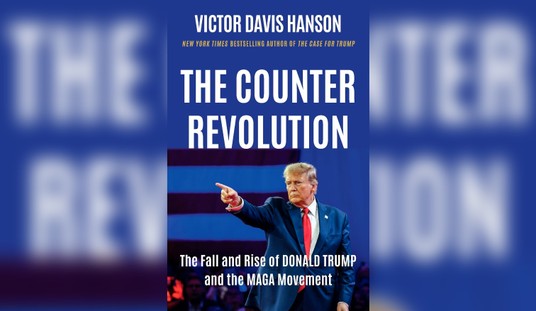
If Tom Wolfe’s “Great Learning” is actually occurring, the Obama era has jumpstarted it tremendously, Victor Davis Hanson writes in “Obama 101:”
We have learned from Obama that the messianic presidency is a myth. Obama’s attempt to recreate Camelot has only reminded us that JFK’s presidency — tax cuts, Cold War saber-rattling, Vietnam intervention — was never Camelot. We shall see no more Latinate presidential sloganeering (“Vero Possumus”), no more rainbow posters. Gone are the faux-Greek columns, the speeches about seas receding and the planet cooling — now sources of embarrassment rather than nostalgia. Chancellor Merkel won’t want another Victory Column address from someone who ducked out on the 20th anniversary of the fall of the Berlin Wall. Obama himself will not lecture crowds any longer about the dangers of their fainting when he speaks; Michelle will cease all the nonsense about “deign[ing] to enter the messy thing called politics” and finally acquiring pride in the U.S. when it nominated her husband. Even Chris Matthews’s leg has stopped tingling. There will be no more Newsweek comparisons of Obama to a god. Even the Nobel Prize committee will soon grasp that it tarnished its brand by equating fleeting celebrity with lasting achievement.
“Green” will never be quite the same after Obama. When Solyndra and its affiliated scandals are at last fully brought into the light of day, we will see the logical reification of Climategate I & II, Al Gore’s hucksterism, and Van Jones’s lunacy. How ironic that the more Obama tried to stop drilling in the West, offshore, and in Alaska, as well as stopping the Canadian pipeline, the more the American private sector kept finding oil and gas despite rather than because of the U.S. government. How further ironic that the one area that Obama felt was unnecessary for, or indeed antithetical to, America’s economic recovery — vast new gas and oil finds — will soon turn out to be America’s greatest boon in the last 20 years. While Obama and Energy Secretary Chu still insist on subsidizing money-losing wind and solar concerns, we are in the midst of a revolution that, within 20 years, will reduce or even end the trade deficit, help pay off the national debt, create millions of new jobs, and turn the Western Hemisphere into the new Persian Gulf. The American petroleum revolution can be delayed by Obama, but it cannot be stopped.
One lesson, however, has not fully sunk in and awaits final elucidation in the 2012 election: that of the Chicago style of Barack Obama’s politicking. In 2008 few of the true believers accepted that, in his first political race, in 1996, Barack Obama sued successfully to remove his opponents from the ballot. Or that in his race for the U.S. Senate eight years later, sealed divorced records for both his primary- and general-election opponents were mysteriously leaked by unnamed Chicagoans, leading to the implosions of both candidates’ campaigns. Or that Obama was the first presidential candidate in the history of public campaign financing to reject it, or that he was also the largest recipient of cash from Wall Street in general, and from BP and Goldman Sachs in particular. Or that Obama was the first presidential candidate in recent memory not to disclose either undergraduate records or even partial medical. Or that remarks like “typical white person,” the clingers speech, and the spread-the-wealth quip would soon prove to be characteristic rather than anomalous.
Few American presidents have dashed so many popular, deeply embedded illusions as has Barack Obama. And for that, we owe him a strange sort of thanks.
Finally in a somewhat related story, Glenn Reynolds links to a group of struggling young “Bobos in Paradise” writers trying to get on the board in a brutal economy and rapidly shifting marketplace:
THE EMPLOYMENT HORROR OF NEW YORK’S LITERARY CUBS:
Rebecca Chapman, who has a master of arts in English and comparative literature from Columbia University, hit bottom professionally last summer when she could not even get a job that did not pay. Vying for an internship at a boutique literary agency in Manhattan, Ms. Chapman, 25, had gone on three separate interviews with three people on three different days. “They couldn’t even send me an e-mail telling me I didn’t get it,” she said. . . .
Ms. Chapman added: “My whole life, I had been doing everything everybody told me. I went to the right school. I got really good grades. I got all the internships. Then, I couldn’t do anything.”
On Facebook, Kate Coe cruelly comments: “Bad news, honey. You didn’t do anything before.” Cruel, but the bottom line is if you want to be a writer, write. Despite what they tell you at Columbia, nothing else matters.
Despite her upbeat take on the proceedings, Ms. Chapman admitted she wasn’t feeling chipper. It was her birthday. A happy occasion? For most, maybe — but not, she explained, when you are turning 25, having graduated summa from Cornell, with a master’s from Columbia, only to find yourself unemployed and back living at home with your parents.
You can write in your parents’ basement. And if you want to make it as a writer, you’d better.
I won’t bore you with how I started writing professionally, except to note that when it came to writing magazine articles, I approached it as sort of a direct marketing exercise. I bought a copy of the Writer’s Market, and shotgun-blasted query letters out into the mail — “analog mailed” with postage stamps, letters and SASEs for the rejection letters. And there were tons of rejection letters, which you learn very quickly not to take personally. But there were also successes. And I was able to bootstrap myself up the magazine foodchain relatively quickly. But — and this also part of the Great Relearning, which the Occucrowd are struggling mightily to rediscover — you can’t sell something without the risk of failure and being humbled from time to time. And the writers that the Times profiles would rather not get on the board at all, rather than getting their hands dirty, and their egos bruised selling themselves.
Update: Bill Whittle’s latest Afterburner video on character, and how it is acquired fits very much into the above topic:
[youtube iEUKqZHAfG4]

Join the conversation as a VIP Member