Ed Driscoll

By Ed Driscoll

Bio

Get Updates From Ed Driscoll

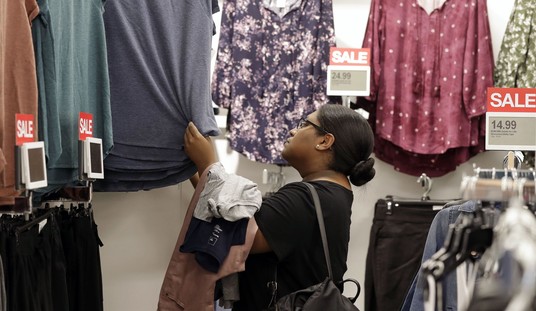
The New York Times’ David Leonhardt goes off on one of the papers’ frequent jeremiads on the evils of consumer spending, and how this time, it’s sure to be all over now, baby blue state:

But the real culprit — or at least the main one — has been hiding in plain sight. We are living through a tremendous bust. It isn’t simply a housing bust. It’s a fizzling of the great consumer bubble that was decades in the making.

The auto industry is on pace to sell 28 percent fewer new vehicles this year than it did 10 years ago — and 10 years ago was 2001, when the country was in recession. Sales of ovens and stoves are on pace to be at their lowest level since 1992. Home sales over the past year have fallen back to their lowest point since the crisis began. And big-ticket items are hardly the only problem.

Advertisement

The Federal Reserve Bank of New York recently published a jarring report on what it calls discretionary service spending, a category that excludes housing, food and health care and includes restaurant meals, entertainment, education and even insurance. Going back decades, such spending had never fallen more than 3 percent per capita in a recession. In this slump, it is down almost 7 percent, and still has not really begun to recover.

As blogger William Teach writes, “Missing is ‘Obama is clueless, doesn’t understand how the economy works, and has surrounding himself with advisors that still think they are in a far left college bull session:’”

See? Lilliputian consumer spending is not a symptom or result, but a cause. Which, let’s be honest, at this point, two years from when “economists” declared the recession over, could be considered a cause of the recession continuing on at the deepest level since the Great Depression. And, if that’s so, wouldn’t it make sense to enact policies that leave people with more of their own money, especially those evil rich people who have more buying power? Actually lower income and capital gains taxes, sales tax and property tax, at least for, say, 5 years? Increase consumer choice, like with incandescent light bulbs? Stop groping people at the airport who do not fit the profile of an Islamic terrorist? Stop putting more burdens on the auto industry which drives up costs? Let Big Oil and Big Coal (again, I’m not a fan of coal) do their jobs on American soil? Stop mandating the use of food as fuel? Heck, let little kids run a lemonade stand without a permit? All those, and others, would make sense, right? Au contraire, Rabbit!

THE notion that the United States needs to begin moving away from its consumer economy — toward more of an investment and production economy, with rising exports, expanding factories and more good-paying service jobs — has become so commonplace that it’s practically a cliché. It’s also true. And the consumer bust shows why. The old consumer economy is gone, and it’s not coming back.

In simple words, what seems to be suggested is an economy run by government (investments) with everyone at the same blue collar income level doing blue collar jobs (not that there is anything wrong with blue collar jobs, they just aren’t for everyone): in other words, their old buddy, communism.

Nahh, another New New Deal will do. Which should hamper the American economy almost as long as the old one. And who knows what other “miracles” it could bring about in the process before it’s over?

Teach’s post is headlined, “NY Times: This Prolonged Recession Is The Fault Of You Consumers.” Which wouldn’t be the first time a paper with that name made such an accusation, albeit on the other side of the Atlantic. The Times of London actually did run a Scrooge-like article on the eve of Christmas 2009 titled, “Thrifty families accused of prolonging the recession.”

Leonhardt’s column doesn’t go quite that far. But in addition to its hints of what Virginia Postrel would call “Depression Lust,” it’s yet another example of the strange push-pull mindset that’s often at work inside the Times. The advertising department is constantly looking for new companies to advertise expensive goods to Manhattanites, and even to “the dance of the low-sloping foreheads,” as another Timesman is wont to say, out there in the hinterlands. And yet, many who work inside the Times HQ may not realize it, but at the base of their office building, at street level, are countless…what do they call themselves again?…retailers. Yes! that’s the word.

PJ Media appreciates your comments that abide by the following guidelines:

1. Avoid profanities or foul language unless it is contained in a necessary quote or is relevant to the comment.

2. Stay on topic.

3. Disagree, but avoid ad hominem attacks.

4. Threats are treated seriously and reported to law enforcement.

5. Spam and advertising are not permitted in the comments area.

These guidelines are very general and cannot cover every possible situation. Please don't assume that PJ Media management agrees with or otherwise endorses any particular comment. We reserve the right to filter or delete comments or to deny posting privileges entirely at our discretion. Please note that comments are reviewed by the editorial staff and may not be posted immediately. If you feel your comment was filtered inappropriately, please email us at story@pjmedia.com.

43 Comments, 24 Threads, 2 Trackbacks

  1. 1. Gaffe Prices

    “I’ve got good news and bad news.”

    Start with the good news.

    “The recession ended two years ago

    That’s good news. Now what’s the bad news?

    “That’s when the depression started”.

    Oh.

  2. 2. Tcobb

    Yep–the real knuckle-dragging relics that have outlived their day are the “Progressives” of our time. They cannot learn from history or experience but keep trotting out the same limited instinctual responses to each and every problem.

    They forget everything and learn nothing, yet are convinced they are the crown of creation. The dinosaurs probably had similar attitudes.

  3. 3. Buck O'Fama

    The Times favorite economic miracle, the USSR, failed 20 years ago. The group-thinkers at the NYT are furious the Sovients couldn’t keep things together until 2009 when the explanation for the failure finally appeared: RAAAAACISM!

  4. 4. retlaw

    These high-bulging-forehead types, they were first in line to support Lenin, Mussolini, Hitler, Stalin, Mao, Pol Pot, and even Khomeini. Is it that they’re thirsty for low-sloper blood? Generally, I think not.

    It’s a mark of what a fallen creature we are, that the higher our IQ, the more we tend to be narcissistic, self-forgiving fools.

    • Challeron

      ITYM the more narcissistic they are, the higher they believe their IQs to be….

      • retlaw

        No, Challeron, I said what I meant. Jimmy Carter’s IQ is high, higher than Reagan’s and Washington’s probably. But Carter was the biggest fool ever to occupy the White House.

        Under Carter, Cambodia, Laos, Afghanistan, Ethiopia, Angola, Mozambique, and Nicaragua succumbed to Communist coups – tens of millions dead, hundreds of millions in shackles for lack of leadership from Washington. You’d think he’d be ashamed, but he’s still out blessing left-wing thugs around the world.

        To say that narcissists overestimate their own IQs is to say nothing much.

        What I’m saying is that the higher a man’s IQ is, the more likely he is to be a fool. Universities attract the highly intelligent, and if you’re looking for fools, that’s the place to go.

        • The Root '83

          Retlaw,

          I think youre right, and I think its evolutionary…

          In order to have the copious amounts of free time required to naval gaze about the abstract, SOMEONE had to keep the fire lit, fight off the wolves, and be willing to share their food with Braniac, who was too busy thinking about what he was THINKING about, to remember to provide for his own.

          These mid-fielders, the slightly above average ones, were the ones who could understand SOME of the useful aspects of Braniacs babblings, (and kept the others from burning him alive, just to shut his non-productive ass/mouth up) They were were the True Leaders. They would endulge the lazyness of the superfluous “smart weaklings” for the greater advantage of the tribe.

          They might not have had the abstract smarts to design the particular math/engineering details themselves, but they recognized the physical concepts of things they wanted, used, saw in nature, or tried to create themselves…..

          Scraping tools, an inclined plane, levers, the wheel…

          The basic recognition of what “made sense”, (and what didnt!) and the forsight to agree with and/or encourage others to move in that direction (allocate resources, divide labor, provide food, defense etc.) in order to achieve them in practicals way BEYOND the abstract.

          It is without a doubt, that the stangest, most uselessly over-engineered, unnecessarily complex, extremely user UN-friendly designs, come from the most “highly intelligent” of people.

          Whereas, the Wright Brothers, Henry Ford, Edison, and yes, The Gipper, all freely admit to an “average” intellect, comprised mostly of common sense, strong principals, and the ability to realize when they are WRONG.

          Things the beautiful geniuses simply dont have.

          • retlaw

            Thanks for your thoughts, Root.

            I like campfire stories, too, and I often speculate on inventors and their inventions. I think this phenomenon has little to do with evolution, though, and a lot to do with human nature.

            We tend to use ability badly. One guy invents the camera, and another runs it down to the local brothel and invents the French Postcard. Algore invents the Internet, and someone Clinton-like invents the porn site.

            High IQ easily spends itself on rationalization for selfish and bad conduct, and on counterproductive self-flattery (“I’m much too clever to be a con-man’s mark!” – if you want to sell the Brooklyn Bridge, look for buyers in Harvard Yard).

            Speaking of evolution, Charles Darwin is a fine example of an intelligent fool. It was plain from the late 18th Century that the fossil record clearly demonstrated species “developing” into new forms. Darwin just explained it with Malthus’ (flawed) population theory. (“Natural Selection” applies nicely to fish eggs and pine cones, but it’s not at work in higher mammals. Read David Stove’s DARWINIAN FAIRYTALES, cheap on Kindle.)

            Did you know Darwin opposed innoculations for smallpox? That he opposed the construction of sewers in city slums? What a guy. And he avoided debate even more adroitly than Gore.

            I’m not saying all high-IQ people are fools – high intelligence is necessary to accumulate great wisdom. But like the Bible says, “Wisdom begins with the fear of God.”

    • AliceBlueGown

      The fault is not in having a high IQ but in a lack of practical experience, academic thought untethered to experience. “The great difficulty in the application of pure reason to practical affairs is that never…does the reasoner get all the premises which should affect the conclusions; so it frequently happens that the practical man…who feels the effect of conditions which the reasoner overlooks goes right, while the superior intelligence of the reasoning man goes wrong.” -Elihu Root

      Our academics, lawyers, and politicians apply school learned ideas without ever testing their application to reality. And when reality fails to respond as the thinkers expect, reality is wrong. Hence Christina Romer and Ben Bernanke saying they don’t understand the reaction of the economy to their plans.

      By the way, which presidential candidate has the most practical experience?

      • Chris in California

        Well I’d say that would probably be Herman Cain, followed closely by Col. West, Sarah Palin, Michelle Bachman and on down the line. None of the career politicians should be included like Mitt Romney.

    • Chris in California

      I don’t know about the people killed by Lenin, Mussolini, Hitler so much but Stalin, Mao, Pol Pot, and Khomeini seemed to concentrate on intellectual people who understood how things economic worked. They killed off the inteligent folks and anyone who was productive and made slaves out of the rest.

      • retlaw

        Wasn’t talking about people killed by Lenin, Mussolini, Hitler, Stalin, Mao, and Pol Pot, Chris, but about those who supported them before and after they seized power. You can read in Goldberg’s LIBERAL FASCISM about The New Republic’s adoration for the first three, at least. Mussolini was wildly popular among the faculties of all the best universities.

        Mao couldn’t have come to power without American intellectuals egging on the Dems to keep ammunition from the KMT – a horrible page in our history that Dems like Kennedy and Dodd deliberately repeated in Cambodia when they kept weapons from the enemies of the Khmer Rouge.

        Who did these 20th Century plug-uglies kill? Anybody who didn’t lick their boots, and some who did. So the brave and the good were the chief victims – remember the guy who stood up to the tank at Tienanmen?

  5. 5. whiskey

    The NYT is correct on one part — consumer spending in the toilet is the major reason why there has been no economic recovery. But they never connect that the solution is to … put more money in people’s pockets. By:

    1. Increasing the value of the dollar, so it buys more food, gas, and clothing. Not the reverse with Helicopter Ben Bernanke printing dollars to bail out Wall Street at the expense of Main Street.

    2. Cut taxes and regulation to stimulate small business hiring.

    3. Lean on banks to make lots of loans to small businesses, capital margins and Tier One be damned.

    4. Drill baby Drill, to create new jobs and make future energy prices lower. [This also cautions oil producers because jacking up prices brings more reserves online in the Continental US very quickly. They don't want the Natural Gas inventory overhang.]

    5. Military spending — the only “shovel ready jobs” are ones building navy ships, planes, and so on. WWII spending, and Reagan’s Defense spending, ended the Depression and Carter Malaise.

    None of this is rocket science. Your average reporter can understand it easily. It is in fact obvious and should be blindingly obvious to every Dem policy maker with a pulse. Nearly all of it is popular and none of it would provoke open revolts from Obama’s Left Wing. It is mystifying as to why it was not done immediately.

    • sinz54

      World War II “spending” didn’t end the Depression by itself.

      It’s what we spent that money on: Bombing the hell out of Europe and Japan.

      The U.S. emerged from that war as the only major Western nation with an intact industrial base. All our potential competitors had been devastated. Now they needed to rebuild–and U.S. factories were the only source of products. So they bought from us–and we made the most of it.

      Massive stimulus wasn’t as helpful as bombing our potential industrial competitors into rubble.

      • Quite a number of years ago, in New Orleans, I saw Stephen M. Ambrose, give a lecture on public access, from his UNO class, on WWII. He spoke at length of what employment looked like at New Orleans prior to the War — around 75% unemployment, nearly 85% among the Black population. What happened was the Higgins Boat Manufacturing Company built three new factories, with three shifts, with daycare onsite, operating 24/7, and employment went from around 25% to around 98% in less than a year.

        What this did, was put lots of money in pockets of War workers, who had little to spend on anyway given rationing, and provided essentially seed capital for all those suburbs that returning GIs AND THEIR WIVES nearly all of whom worked during the War years could afford. It was a massive jump-start in consumer wealth.

        You saw the same thing among Reagan’s defense build-up. Suddenly oodles of firms that supplied the great Naval build up, the 700 ship Navy (we now have less than 300) started hiring like mad — and made a huge dent in unemployment and drove up wages for workers all around. It was not just guys welding steel — it was accountants, bakeries around shipyards, all that stuff. Including a web of suppliers of electronics, wiring, all sorts of things that go into fighting ships.

        • Sam

          Yes, but that still was not what ended the Great Depression.

          All that wartime employment was matched with wartime inflation, so the net impact on the economy was zero.
          What the wartime spending did was create a massive infrastructure, that, once the war was ended, could be transferred to consumer production.
          It was that consumer production and consequent consumption that ended the Great Depression, not the military spending that left the infrastructure for it behind.

          Military spending by itself is mostly a zero sum game, as the money for the military spending comes from taxes, which drains the economy, and the production comes from the pool that would otherwise produce consumer goods, which also drains the economy.
          At best you can get a collateral effect from the R&D for civilian applications and productions, though of course it is still as a result of the general drain caused by taxation.

          Military spending may be essential, but it should not be pretended that it can sustain an economy all by itself.

          • Edmund Burke

            What market production has, (i.e. production marketed to individual consumers entering the market voluntarily) that non-market production does not have is competitive profit which results from putting more value in the market than the value of the money seeking to be spent there. Producing for government has no real competition so the government and producer put a totally arbitrary value on the production, and like the two unused navy ships now being scrapped pre-launch, the value the government receives has practically no relation to the money spent to produce it or the money spent to buy it. Worse, the value of such monopolistic government goods, not being in the market, cannot give value to the overhang of demand (money) available to be spent in the market, and provide no support to the derivative value of money that gets all its value from the goods in the free market, many of which are resold after improvement (profit infusion). Inflation is almost always the loss in the value of the money equal to the waste of government which has no competitive compulsion to avoid that waste. If the government could be induced to make a profit through market production to increase the value of a growing money supply, Keynesianism through a pure multiplier without leakages (waste, theft, charity, unrequited consumption and corruption) would actually work to create more money value, wealth value, productivity and income for everyone. That’s the course to take, not a zero sum or negative sum pursuit of redistribution, without exchange, of an ever shrinking economic pie where the art of creating new money is entirely foregone. Ask the millions who starved in Soviet Russia, Red China, Cambodia, North Korea, Cuba, etc. how that worked out over the last 90 years of Socialism.

    • Menachem Ben Yakov

      The simplest thing to do would be allow all mortgage interest deductible on all single to four family homes irregardless of whether or not they are owner occupied for any part of the year or how many homes an individual owns.

  6. Fred:  We will all have jobs soon. The government is spending more on everything.
    Mike:  Who is going to do the hiring? I’m investing less in everything.

    Consumption Spending Is 70 Percent of GDP — So What?

    The link above to The Independent supports the quote below, no longer available by link.
    === ===
    10/01/10 – Sacramento Bee by economist Ribert Higgs

    [edited]  Team Obama theorizes that additional government spending (demand) will cause businesses to boost production, add jobs, and trigger additional consumer spending that will ripple through the economy for a stronger overall recovery.

    Yes, consumer spending is about 70% of America’s gross domestic product, and an increase in consumer spending would provide an immediate boost. But, consumer spending increased slightly as a percentage of GDP during the downturn.

    There was no decline in consumer spending [in proportion to the economy], so what caused the downturn? Answer: a sharp decline in private investment. To revive investment, the government needs to stop threatening the profits from investment and remove the regulation and uncertainty that paralyzes new, long-term projects.
    === ===

  7. 7. ejbgvfc8i253t7yf

    “NY Times: This Prolonged Recession Is The Fault Of You Consumers.””

    Yeah when government regulations have unintended consequences it is always someone else’s false. That’s why Frank had to re-regulate the banks when his misregulation of the mortgage industry led to an economic meltdown.

    New regulations cause some other evil entity to misbehave then they need more regulations to deal with that – ad infinitum. Until everyone is working for the governemnt enforcing regulations and no one is working in business making money to pay taxes. Then we crash and burn.

  8. 8. Michael K

    In defense of the article, consumer spending is in the tank because the economy is paying the price for the past 20 years of racking up consumer debt. The savings rate went from 7.5% to almost zero in the mid-2000′s. We had a nice long party but now we are suffering the hangover.

    • MarkD

      Zero is just about the interest banks pay for deposits. I’m sure it is a coincidence that people save less.

      • Especially if they see all of the deficit spending and figure that the grabbermint will inevitably monetize the debt at some point.

        That zero percent interest rate on savings will turn out to be negative in real terms.

        Hence the rise in the price of gold.

  9. 9. John

    >>> “We can’t drive our SUVs and eat as much as we want and keep our homes on 72 degrees at all times … and then just expect that other countries are going to say OK,” Obama said.

    These sound like the words of a man who’s encouraging people to consume less.

    • Chris in California

      Yes he did and he should be the first one to set a good example to follow. After all, he is our leader. Shouldn’t we do as he does, not as he says? Oh wait, that’s supposed to be “aren’t we supposed to do as he says, not as he does”?

      (Note to liberals reading the above, that’s called Sarcasm.)

  10. 10. JEM

    Leonhardt can’t see the forest for the trees.

    “We need more manufacturing! So we can build stuff! And export it, because Americans can’t afford to buy it!”

    So who will?

    The Chinese? Only until they can figure out how to build it themselves. Chinese Buicks are not built in Flint.

    Europe? Once the warmists get done destroying the continent’s power and transportation infrastructure in the name of climate change they might not have any manufacturing left, of course that’ll also put paid to their disposable consumer income as well.

    Japan? Russia? The rest of Asia?

    The point that this columnist seems to miss is that you can’t wave your arms in the air and proclaim you want to become a manufacturing powerhouse (again). You have to have cheap and reliable energy, a cost-efficient workforce, a fair legal framework, and a tax code that encourages return on invested capital. All things our Junior Achievement President and his gaggle of cloistered academics are doing their best to erase from the American experience.

  11. 11. Bob

    It is demographics or the retiring Baby-boomers. They are spending down their assets and the present generation getting out of college are not getting married or having kids. They do not or cannot buy houses or be consumers of old. Simple-the old model is no longer valid. It is beyond party politics- it is a cultural and demographic trend.

  12. 12. Mike K

    Andrew Mellon knew what he was talking about and was probably basing his advice on the actions of Harding when he took office in 1921. The economy was far worse than October 1929 and Harding cut government spending and regulation, ending Wilson’s fascist policies. The economy recovered in six months.

  13. 13. John Ransom

    The problem is that Obamanomics has hit its logical dead end. There are no more stimulus deals in the pipeline. Interest rates are at 0%. Obamacare is not being repealed. The EPA will continue its war on affordable energy. Dodd-Frank will continue to drive up costs for lenders and depress lending. And our dear leader – blocked by a conservative House – couldn’t anything else passed if he tried.

    He can’t even come up with a simple plan to end the debt ceiling stand off.

  14. 14. Ted Craig

    “The auto industry is on pace to sell 28 percent fewer new vehicles this year than it did 10 years ago — and 10 years ago was 2001, when the country was in recession.”

    That’s a major error. In 2001, following the Sept. 11 attacks, GM launched its 0-percent finance incentive. The other manufacturers followed suit. That drove car sales to a new record, but the pace was only set in the last quarter.

    Leonhardt often makes basic mistakes like this.

  15. 15. PTL

    To RETLAW, whence the higher I.Q. Obama, NYT, WaPo? Where is the proof? These
    people have not had an original idea in generations. Most new businesses are not
    started by these types. They are good at regurgitating stale ideas to please the
    people who hand out credentials. They are afraid of the creators and doers. The
    animosity they feel towards the military is derived from the fact that they know
    they are cowards. Physically and intellectually.

  16. 16. proreason

    “But the real culprit — or at least the main one — has been hiding in plain sight. We are living through a tremendous bust. It isn’t simply a housing bust. It’s a fizzling of the great consumer bubble that was decades in the making.”

    I saw that and burst out laughing. But ya gotta love em, the dears…they never quit do they.

    Let’s recap: leftists caused an economic crisis to get obama annointed. Home values crashed 30%. 401K’s dived 40%. Millions of people were thrown out of work. Obama then runs the national debt up 5 trillions by paying off his political allies with 1 trillion, and increases the size of government, in the teeth of the worst crisis since the great Depression, by 40%. Faced with these facts, the American people stopped spending like drunken sailors and started paying off their personal debts; the ones who still had jobs that is.

    Now, this slimey Slimes “journalist”, has discovered that consumer spending is down…and in an act of hutzpa unnmatched since the Slimes endorsed Uncle Joe, he tells us that the “culprit” for the current depression is that consumer spending is down.

    Orwell was an optimist.

  17. 17. Oldcrow

    So the Slimes wants us to act like Congress and say to hell with the debt spend spend and spend some more then get more loans?

  18. Spend and spend. It’s always the solution. My kids liked it. My ex-wife, too. It is funny how resistent to spending they get when it comes out of their sweat. Except for politicians of any stripe. There’s always votes to buy if you can give out bennies without making people report it. No W-2 for the welfare receipiend. No 1099-MISC for the Pell grant investee. If ONLY we could get a new 1099-GOV to track where our ‘income, redistributed’ went to we’d have a much clearer picture of how our politicians think we should spend.

  19. 19. Swen Swenson

    This Prolonged Recession Is The Fault Of You Consumers.”

    That’s dangerously close to Congress’ Flounder Defense: “It’s the voters’ fault, they trusted us!”

  20. 20. alex

    The grave error being made on this board is thinking this is the same as any other severe recession or mild depression. It is about to get worse by several times the previous depression.

    The USD is a Fiat currency, created in 1971 when the US government decided to convert a gold backed dollar to Petro-Dollar System. Since then it has lost 90% of its value, more importantly the structure allowed congress to spend wildly and without any fiscal restraint or accountability. The US Dollar has nowhere to go but collapse.
    Thinking that this is the result of the last 5 or 10 years is nonsense. This has been building for 40+ years with truly astounding events forced upon US taxpayers and citizens; NAFTA, GATT, Abolition of Gold Backed Dollar, Cash Payments for newly arrived immigrants, Section 8 Housing, Invasion of Iraq, Massive defense expenditures, deregulation of savings and loan industry in early 80′s, Savings and Loan collapse in late 1980′s, deregulation of Glass Stegal in 1999, banking collapse in 2007, massive entitlement spending off ledgers and off budget, and then cutting the source of revenue to pay for all of the above.

    This is not a Left or right issue, they are corporate and international banking entities that are happy to continue loaning money to US taxpayers. They don’t care who the president is, they don’t care who controls congress, or any political or social issue.

    They only care the US voter stay as ignorant of economics as they are today and continue their obsession with Right / Left politics and remain superficial as possible.

    Enjoy the view, your paying for it.

  21. 21. MarkD

    If the government would just let the unemployed and destitute print their own money, they would spend it. They can pay it back later.

    It worked for the government, right? It must, we keep on doing it.

  22. 22. Jacobite

    Reading this article brings to mind a perennial question: “We are supposed to worry about al-Queda getting their hands on a nuke because…?” Although he later cracked up, I don’t believe for one minute that Barry Goldwater was joking when he suggested sawing off the NE US and letting it drift out to sea.

  23. 23. 1389AD

    Considering that the NYT has been an engine of leftist propaganda for many decades, it certainly shares the blame for the predicament that we are now in.

    I can’t remember how long ago I last purchased a copy of the NYT, but it was probably several decades ago.

    While the ownership structure of the NYT is set up to ensure permanent family control, that will not keep the paper from eventually going out of business because nobody wants to read it any more.

    Who owns the media, and what can we do?

  24. 24. Jack in Silver Spring

    Ed – Milton Friedman in one of his classic monographs (A Theory of the Consumption Function) showed that consumption was related to permanent income which is the income an individual (or household) expects over a relatively long period. If we observe consumption expenditures slowing, it’s because permanent income is slowing. One can only conclude that Obama’s actions are leading to such expectations and no amount of tinkering is going to make a difference.

    Also, may I suggest that everyone should ignore what the NYT has to say when it comes to the providing useful information. For such purposes, it is a useless piece of junk. On the other hand I have found three good uses for the paper. It’s great for to use for kindling in a fireplace, in particular in the winter when Pathetic Electric Power Company (aka PEPCO) has one of its usual outages; it’s great to use for traction in an ice-storm; and it’s great for wrapping fish.