



“Borders, the struggling book chain, said on Sunday night that it would delay more payments to its vendors and landlords as it tried to preserve cash and avoid bankruptcy,” the New York Times reports:
Borders, the struggling book chain, said on Sunday night that it would delay more payments to its vendors and landlords as it tried to preserve cash and avoid bankruptcy.
In a statement, Borders said the delay was “intended to help the company maintain liquidity while it seeks to complete a refinancing or restructuring of its existing credit facilities and other obligations.”
AdvertisementBorders, the second-largest book chain in the United States, added that it “understands the impact of its decision on the affected parties.”
It is the second month in a row that Borders has delayed payments to vendors. In late December, Borders abruptly informed publishers that it would not make a scheduled payment, and later asked publishers to convert the missed payment into a sort of loan.
Publishers have not been persuaded to accept Borders’ proposal. Several publishers said last week that Borders executives had not addressed the fundamental issues that drove the company to its current troubled position.
In talks with Borders last week, several publishers did not formally reject Borders’ proposal, but made it clear that they were not inclined to accept it.
An executive at one major publisher said on Sunday night that the announcement was only the latest sign that Borders was headed toward bankruptcy.
In related book news, ebooks for Amazon’s Kindle outsell paperbacks for the first time. As one of Ace’s co-bloggers notes:
I love my Kindle and I buy e-book versions of novels whenever I can, but still…I find this news unsettling. There are some fairly deep questions about what will happen if books go the way of film cameras and music CDs. E-books can’t be loaned or re-sold, and can be “lost” forever if your device malfunctions or gets broken somehow (though the “cloud” model in theory allows you to re-download, what happens if the “cloud” goes down?). All the same caveats that apply to digital music also applies to e-books, and more besides.
It just seems to me that we are rushing into a paper-book-free world without really considering what that really means.
If Amazon ever gets into similar financial difficulties as the Times describes Borders as being in or worse, presumably whoever acquires the chain would continue to service the Kindle. But that’s potentially another issue with the Kindle and other electronic readers: if the bookseller associated with your reader ever tanks, your tomes have hit the fan if and when your reader crashes.
(Which isn’t going to stop me from buying more books for my Kindle, but still.)

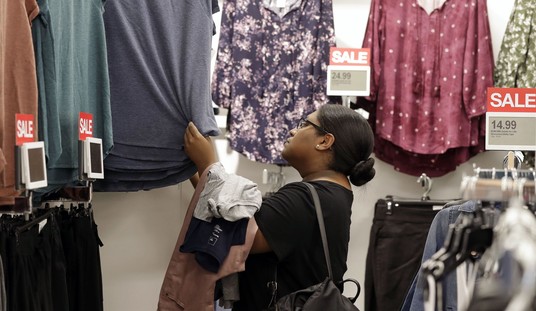







A few months ago, prior to Christmas, I made a special trip to my local Borders to purchase Decision Points with my 1/3 off coupon. I bought the book and a magazine. At checkout, I was given the discount on the magazine only. When I asked the sales person why that happened, she politely informed me that the discount was only given on the lower priced item.
Within a day, I emailed Borders Customer Service and related my experience. When I suggested that the explanation made no sense, in that it would force me to go through the line twice, or in the alternative, not make a magazine purchase, I received a reply that said, essentially, tough… that’s our policy and we’re sticking with it.
Since I had been a loyal customer for many, many years, and would drive out of my way to go to the store, I was a little miffed. So I asked for a Kindle for Christmas.
I now enjoy not driving to Borders, getting my books instantly, not putting up with oh-so-smart-and-smarmy sales staff, and realize that the $600 dollars or so I spent a year at Borders buys even more material when it’s in e-book rather than hard paper form.
To paraphrase… I didn’t leave Borders, Borders left me.
C’est la vie.
I have to respond to this comment because I don’t believe it. I work at a Borders and know for a fact that our coupons don’t work on magazines unless it specifically states it’s for a magazine, and that rarely happens. We are already struggling and don’t need people making things up.
Quite right, Yolanda. I used to work at Borders myself and magazines were never discounted at all, not even for employees. My local store where I used to work is leaving the mall and the sale signs specifically point out that magazines are still excluded. The chain makes no profit on the magazines, hence they can’t discount them. And frankly there’s no such thing as a store that’s going to take the “N% off one item” coupon from the more expensive applicable item anyway; complaining to customer service about that is ridiculous.
I know my local store is leaving the mall largely because a delayed construction project has closed down their front entrance for an extended period and the promise of being built a new store has kept projecting further out. With the chain’s financial woes this just makes good sense, although I’m deeply saddened to see the store go.
For my part I love Amazon and its review system, but I value paper books highly, and browsing them is a favorite pastime I will have to now satisfy at Barnes & Noble since there isn’t another Borders around for 50 miles. B&N’s once-great selection isn’t what it used to be, but then even my local Borders had suffered in that department due to the aforementioned construction. I just hope B&N, which I know is already seeking a buyer, doesn’t have the same problem. It might help both chains to stop selling DVDs at such ridiculous jacked-up prices, though.
Sorry but no, the discount should go to the most expensive item. Because otherwise I’m putting everything else back. Which is the attitude of pretty much every consumer out there.
Besides it has been my experience that the most expensive item is exactly what gets discounted whenever I print off a coupon and take it into Borders…
Tom Donahue, US Chamber of Commerce head, on the uncertainty, mandates, taxes and new regulations put on business by the healthcare legislation.
“It’s a job killer”
Starting just a few years ago, Apple started up its own branded bricks & mortar stores, including the acclaimed cube in the courtyard in front of what used to be called the GE building at 767 5th Ave. in New York City. Maybe someone with greater business creativity than me can figure out how Amazon can integrate – maybe not all the Borders super-stores, but perhaps around 50 of them – into its profit stream. (There’s still demographic, e.g., me, who is more likely to buy something hawked by a smiling young lady, than buy it off an online display ad.)
WSJ a couple days back. Border’s had secured approx 500 million credit facility from GE capital. But covenants include securing a smaller line from another bank and getting concessions from venders. Not an easy get.
Bottom line according to one vendor….. they have to change their operations or they go under sooner or later.
“It just seems to me that we are rushing into a paper-book-free world without really considering what that really means.”
Not me. Old curmudgeon that I am, I still buy all my books printed on dead tree. Kindles do not interest me. It’s just not the same.
You don’t have to be an old curmudgeon to prefer real books. My 20-something year-old daughters not only prefer paper, they prefer the total sensory experience of OLD books, taking the time to enjoy the fragrance and texture before reading.
I was in the book business for years. I have a somewhat different perspective on the Kindle vs. bookstore discussion.
For one thing, a Kindle isn’t a bookstore. Browsing for a book to buy on it, to my mind anyway, is a tedious task. It’s nowhere near as fun as going to a bookstore and browsing for books. There are the associated discussions about what happens if your reader’s company goes belly up, etc. And at least for me, the Kindle’s ability with illustrations is only OK, at best. Admittedly I have the small one, but there’s no color (though I gather the Nook can have a color screen now) and the screen is too small to show much detail.
This doesn’t really tell us why Borders is in trouble though. It implies one of the factors that might be significant, but if it were just that Kindle is outselling paper books, well Borders sells a Sony e-reader, too, so that should solve that. If it’s just the e-reader issue, why isn’t Barnes & Noble in as much trouble. Yes, they’re in trouble, but it’s nowhere near the same level.
I submit that the problem was Borders’ business plan. They were always a younger, hipper store than B&N. That’s not neccessarily bad, but that younger crowd is more likely to purchase a Kindle. Borders also invested a lot of money in selling music and DVDs, and of course that same young, hip generation knows how to get those things free or very cheap on the internet. And because they were young and hip, they always had a young and hip staff, who usually weren’t as interested in selling books as their counterparts at B&N were.
One thing piles on another…
I am an employee of Barnes & Noble from Massachusetts and the Color Nook detail for a magazine or newspaper is fabulous. Go to your nearest B&N and look at the demo model at the Nook counter. I have a regular black and white Nook because I am not a magazine fan and just prefer to read books. One advantage the Nook has over the Kindle is that we can give a customer personal troubleshooting help with their Nook and my store has Nook classes every other Tuesday night.
I’ve always liked Borders, but one of the things I dislike is their DVD pricing. They sell at MSRP, which is economically inept. MSRP on DVDs is much, much higher than what Amazon or Best Buy or other competitors charge. Barnes & Noble is reportedly the same. I used to like Media Play before that chain disappeared, but it had the same problem. What they have in common though is selection–you can sometimes find rare DVDs there that are hard to find anywhere but online, and when you do they tend to be priced reasonably. But I think the price point on regular DVDs is a killer. I’ll never pay $30 for a new release that I could pay $20 for somewhere else, unless I have a coupon that was going to go to waste anyway and it equalizes the price. I think the price point is killing them.
However, I do think the chain’s attitude toward conservative books (and this extends to their competitors as well, and to publishers) isn’t helping anything. Pushing away a bunch of your market just isn’t smart.
I actually happen to be a conservative, and I will tell you that conservative books have been selling way better in the year and a half that I have been working there. Decision Points by George Bush absolutely flew off the shelf. My store is in the greater Boston area and I think my manager is pretty neutral. I can imagine that other manager in other stores may not be as neutral. I agree with you that the DVDs are more expensive; but our store has a huge inventory of hard to find stuff and our customers seem to appreciate that when the need a quick gift.
The advantage of e-books is that a lot of classic, pre-1923 stuff is free. Some of it ungodly good stuff, too. For those with limited vision, the advantage of larger font sizes is handy too.
But for most, I think it is the advantage of convenience over quality. A film camera, and the photos it takes, can last decades. Your digital file may be lost, or useless, ten years from now. Meanwhile, The Impossible Project has brought back Polaroid film (its rumored they and other companies may make more instant cameras). A number of bands release on vinyl. Niche to be sure, but there is a market for quality/analog over digital/convenience.
But for most people, a digital edition on their Kindle makes sense, because its more convenient, and significantly cheaper. Just like buying ala carte off Itunes. I love printed books, nothing to turn on, easy to read, convenient anywhere. But finding, say, out of print stuff of Eric Ambler or Charles Williams can be tough, much less classics out of print.
Borders was poorly run for decades, and had a debt load and infrastructure for a mass media while getting a niche customer base (sound familiar, Katie Couric?) Competitor Barnes and Noble has put itself up for sale (no takers so far) but is in better shape. They offer their own e-reader too.
The biggest move however is self-publishing instead of gatekeepers via the major publishing houses. Yes most is pretty dreadful, but anyone can get published via Amazon. This allows conservative voices in culture to be heard, and even make some money.
I am a Barnes & Noble employee from Massachusetts. B&N survived a hostile takeover attempt by Ron Burkle. Leonard Riggio, original founder, retained control of the company in a stock holders vote on Septemter 28, 2010 and we are being told that Riggio does not plan to sell at this time.
I got myself a Nook for my birthday. But everything I’ve put on it is DRM free. A lot from the Gutenberg Project, some from Google Books, and some from Baen.
If it’s DRM entangled, I won’t touch it, for all of the reasons Ed cited.
Got a Kindle for Christmas. Previously I had been agnostic – I like sitting down with a hard copy book. On the other hand, my job involves lots of travel, and much weight in my luggage is books. As Whiskey notes above, a lot of older stuff is free, or nearly so. I won’t tuck Momssen’s five volume History of Rome, or Gibbon’s six volumes of Delcine and Fall in my suitcase…
However, I downloaded one for $.99 and the other for $1.10. And then I got Suetonius, Herodotus, Tacitus, Polybius, Arrian, Xenophon, Thucydideds, Caesar… all still sit on my shelves at home, but now they also can go with me adding no more weight and space than the Kindle. In addition, there are the Father Brown books, The Screwtape Letters, the complete Sherlock Holmes, Robert E. Howard, H. Rider Haggard, Robert Louis Stevenson, Jules Verne, P.G. Wodehouse and many others too bulky to bring along in hard copy. Every few years I would hanker to read Suetonius’ salacious accounts of Caesarian decadence, and would end up purchasing a copy of what I already had at home. Were he still living I’m sure he’d appreciate my regular custom.
For travel, nothing beats a Kindle (or other e-reader, I suppose). It sure won’t clear any space in my library at home, but finally I can bring along ridiculous amounts of books I otherwise would do without while away.
Purchasing dead tree books in a bookstore is a pain in the arse. You have to turn your head sideways to read the titles (not a mean feat with bifocals),you have to figure out where the book is located, and often times the book is just not there. I have found myself pulling out the smart phone to read the Amazon reviews on a boom I’m looking at in a store and wonder why I’m even bothering to be there.
With the Kindle, you can also set up an account on your laptop and back up your entire library to a hard drive. No worries.
As for Borders, just another dinosaur falling into the mudpits.
Sorry, but I love hardbound paper books.
I’ll go down with them like the captain on the Titanic.
Borders and B&N have library-catalog-style terminals, but it would make sense to offer free wi-fi inside the store for people who want to do more research than the terminals offer.
I’m old enough, and my tastes low enough, that I got used to doing my book shopping at the supermarket, back when my local supermarket offered a selection worth browsing. Now, although I could easily make a habit of browsing Books-a-Million once a week if it weren’t so damned inconvenient to get to (and out of — very bad traffic design at that shopping center) my most recent visits persuade me I’d only find a book to buy on every fourth or fifth visit.
I’ve been avoiding shopping online because of the shipping lag, but with two e-book apps on my phone I guess it’s time to get used to yet another way of buying books.
I keep getting email from Borders that I have all sorts of discounts awaiting me, but if I don;t mention them, well, they go unused.
Strikes me that if Borders sends you a note, if you then buy a book and present your membership card, they should fall all over you, to get you to come back. Instead, Border’s presents deals to gull you in, If you don’t insist – and really, I can’t be bothered to – you get nothing.
Borders is screwing itself by actively screwing its patrons. To hell with it.
Brian @ 3
Amazon won’t want any bricks and mortar stores, ex-Borders or otherwise. A single such store means all Amazon sales in that state are subject to sales tax, as Amazon would then have a physical nexus there. Some states have legislated that an Amazon associate in their state is sufficient nexus for all Amazon saloes to be subject to sales tax–and Amazon then terminated all those associates. As a matter of policy, Amazon will not easily give up that sales tax exemption. .
“It just seems to me that we are rushing into a paper-book-free world without really considering what that really means.”
Frankly, I still prefer my books chizeled in stone. What if the library catches fire and burns down? What if my basement floods and destroys all my books? I think we’re rushing into this stone-free world without really considering what that really means.
I am selling most of my books – they collect dust and I know I won’t read most of them again.
I like Kindles, but doubt that I will buy one. My son tried to get me to buy an iPad to use as an e-reader, but I asked him how it worked in sunlight. End of discussion.
Borders is even more of a leftist hate-filled store than B&N, and I won’t go into either one. They can sell their agit-prop to those who want it. I am not their target customer.
Print books aren’t going to go away. But the whole ebook thing is going to force publishers to makes some drastic changes in the way they produce and price them. The days of walking into a Borders and dropping $80 for three little books will soon be over . . .
I had already gotten two closing notices for Borders stores I’ve used prior to this information coming out, for their store on the Third Street Promenade in Santa Monica (very hip and trendy area) and for the Carousel Mall in Syracuse (not hip or trendy at all, and they probably were done in when the mall shut off their lot entrance to build a new wing and then ran out of money to complete the project). So the problem has been coming for a while, and was probably exacerbated by Borders’ failure to develop much of any online book sale presence, as Barnes & Noble did (B&N is a distant second to Amazon in online and e-book sales, but at least they saw the way the wind was blowing and tried to have a back-up plan, including trying to peddle their own e-reader).
The Carousel Center is owned and run by the Pyramid Co., whose name tells you all you need to know.
It’s all my fault. I recently installed the Kindle app on my iThingie and I’ve been using it.
Though, so far I’ve only been “buying” books that don’t cost anything…
True enough – but I’m afraid a transition to printed books as a niche market means those three books will usually cost much more than $80, and require paying shipping on at least two of them. I’ll hate that…
I used to shop at Borders and enjoyed sitting and perusing several books while I decided which to buy. Slowly but inevitably, Borders removed all of their chairs. I stopped shopping there.
Do the Kindlemasters hide all the right-wing books behind the left-wing books?
I never thought about that until just this moment, but that’s enough reason for me to cheer Borders’ demise.
A
As a novelist and former lit teacher, I love ebooks. Out of print? No problem, sell it on your own. Half the time you go into a bookstore you need the computer kiosk to find anything. And many times it’s not in the store. Amazon has over 800,000 ebooks now, B&N over 1 million. I can actually read the notes I attach to my ebooks, unlike my hasitly scribbled handwritten notes of the past. And I’v been able to stop the bookcase madness. I no longer house a mini library in my home, making space and room for artwork and furniture. As for proprietary formats, there are many on-the-side utilities that will read and/or break these proprietary formats and DRM-locked books. Your library is safe in the cloud, or on multiple disks. Ralph Elison’s second novel, near completion, was lost in a house fire. Carbon copies and bound books are poor literary backups. The library of Alexandria burned. It’s easier to make sure ebooks don’t suffer the same fate.
“… delay more payments to its vendors and landlords as it tried to preserve cash…” Ohhh, kiss of death, that is. Stalling your suppliers – for a small firm, that’s a death spiral.
E-readers, like the Kindle or the Nook do have their points, such as portability, the availability of classics, and being able to adjust the print size … and for an indy author trying to break into the book-writing game and build a readership, e-books are the name of the game. It cuts out the expense of printing and distribution right at the beginning, and by setting the cost of an e-book to about the cost of a cup of gourmet coffee, the theory is that a reader is tempted to take a chance on a relatively unknown author. Why not? If you don’t like the book, you’re only out the cost of a cuppa – and if you do like it, the author has another fan… a fan who might go all the way next time and buy a hard copy of your book.
*insert shameless self-promotion here* All of my novels are available as Kindle and Nook editions. *end shameless self-promotion*
BTW, I’d been hearing rumors of Borders being on shaky ground for about two years.
I’m with Sgt Mom. Several of my books are now available for downloading from Amazon, and if I can ever get through most of the madness from B&N, they’ll be there too. I write for pleasure, but I also like to share what I write. If I can make a buck at the same time, that’s a plus.
There are supposedly a million books written each year, with about 3000 of them actually seeing print on dead trees. There may be something quite intriguing in those other 997,000 to a few readers. Having them available in an electronic version ensures that someone, somewhere, will be available to find them and enjoy them.
That doesn’t mean I don’t have a library of over 2000 books in my home, just that it’s been greatly extended by all the low-priced and “free” books offered in some ebook format or another.