



Our Culture and Christ: A Blog for Christmas

All art — all storytelling, picture-making, music — is an attempt to record and communicate the experience of being human. There are no words for this experience. Only metaphor and imagery and music will do. All peoples leave these traces of themselves. It’s their way of saying not just “We were here,” but “We were here — and this is what it was like.”
In the west, especially in that part of the west formerly known as Christendom, the project of art has taken on a special significance. That significance accounts for western art’s unparalleled greatness, for the fact that European productions between the Renaissance and World War I represent the pinnacle of human cultural achievement thus far. No other painting, literature or music has ever been more beautiful or more deep — more generally successful in doing what it is art does.
The special significance of western art — its special urgency — derives from the fact that westerners have a unique belief that the experience of being human, while by definition subjective, is nonetheless a reflection of an objective truth: moral truth. We believe that a human life can embody the ideas of God.
We believe this because our minds, our outlook, our culture were all formed under the pervasive influence of Christianity — the pervasive influence of Jesus Christ.
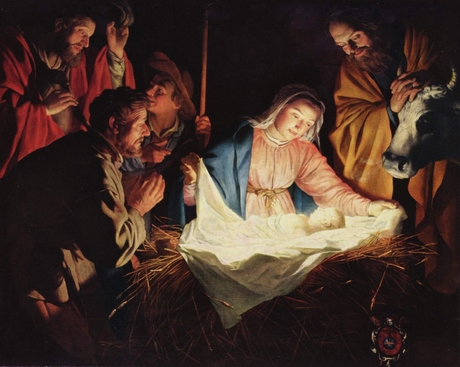
The oldest extant fragment of the canonical New Testament we have is a parchment the size of a cell phone that bears portions of the confrontation between Jesus and Pontius Pilate. During that confrontation, the Jewish preacher tells the Roman procurator that he has come to testify to the Truth and that all who are of the Truth will hear his voice. To this, Pilate responds — derisively, one imagines — “What is Truth?” Jesus doesn’t answer him here, but he has already given his answer earlier in the same gospel: “I am.” “I am the way, the truth and the life.”
This statement is the fruition of Jewish thought at the very end of the first great cycle of Jewish civilization. The God of the Jews had spoken his name to Moses: I AM THAT I AM. Which is to say that the very fact of being — existence itself — is a person. That person created man in his image. And so, in theory at least, a man might live into that image, might express the personality of his creator and become the immortal moral truth of existence in the flesh. This is who Christ is.
Europe was molded by belief in him. Christianity transformed both the customs of the continent’s German tribes and the classical modes of thought and expression they ultimately inherited. So in Christendom, art’s age-old mission of expressing human experience became also something else, something more: an attempt to paint the human shadow of the great I AM.
Or… not. As the gospel suggests, the outlook of Pilate inevitably remains embodied in the western project. It is part of the story. There is the voice that says, “I am the truth” — the Christly voice that says our conscience matters, that we reflect the godhead, that just as there is a starry sky above, there is a moral law within. But there is also the Pilate voice saying, “What is truth?” implying that subjective human experience is forever open to question, that there can be no ultimate morality, that everything we see or seem is but a dream within a dream.
The history of western culture from Hamlet to The Sopranos is the history of minds in the toils of that Christ-Pilate dynamic. Whether it’s Nietzsche standing in for Pilate or it’s Woody Allen, whether it’s Dostoevsky batting for Christ or it’s Tolkien, the question is the same. Is there an ultimate moral reality that guides human life or is it as Hamlet said, and “there is nothing either good or bad but thinking makes it so”?
Hamlet spoke those words when he was pretending to be insane. Many of today’s atheist intellectuals reiterate them while pretending to be sane. The Pilate-like moral relativism and multi-culturalism these academics espouse are aspects of a self-contradictory pose. They declare that nothing is true but that nothing is true, that nothing is real but that nothing is real. The position, as Shakespeare knew, is not only crazy, it’s make-believe crazy, because no one actually believes it.
But while the post-modernist position is absurd and untenable, it’s correct in its premise: you can’t make the argument for moral truth without God. If our conscience matters, it can only be because existence is a person and we are made in that person’s image. It can only be because our lives naturally strive toward Christ.
This underlying knowledge — this inescapable sense of Christ’s reality, toward which we move even through our constant questioning and doubt — is what makes the stories and music and paintings of the west so uniquely great and beautiful and profound.
So here at Klavan on the Culture, we’ll be sitting by the fire these next few evenings, under our print of Richard Franklin’s Annunciation; we’ll be listening to Bach, and reading Dickens; and we’ll be thrilling once again to the immortal words of Ebenezer Scrooge: “It’s all right, it’s all true, it all happened.”
Because it really did, you know. Merry Christmas.








Merry Christmas to you and yours, Andrew. This essay brought back fond memories for me of time spent in lengthy discussion with a very wise Episcopal priest. Yes, we used to have them.
The Shepherds’ Story
From Luke Chapter 2 in the Holy Bible
By Beth Wilson,
copyright 2000
The light grew dim and tiny stars came out.
The wind blew cold; sheep huddled, milled about.
We stamped our feet and slapped cold hands together
And built the fire to counteract the weather.
Not much to say, but we must keep awake.
We chat to stay alert and turns we take
Around the flock to guard them from the wolves:
Slow walks through darkness;
Then light like jewels
Sparkling all around in showers from the sky.
We look up and see an angel high
Above us, winging swiftly down–
The power of another world found
Visible in fearsome might.
We fall before the shocking sight.
And in a gentle voice he speaks,
“Fear not. I bring glad news. You seek
A Savior — He is born for you in Bethlehem.
You’ll find Him in a manger there.”
The sky sweeps back with angels everywhere!
A million lights from heaven pulsing through.
A million voices speaking “Allelu.”
We ran.
And then we found Him as the angel said.
A baby in a rough-hewn manger bed.
Lion of the tribe of Judah, Savior, Lamb.
The LORD of Hosts become an infant Man.
May you seek and find Him, too,
And may the joy He’s given us
Be given even more to you!
Wonderfully stated, Drew. To those who believe it, a wonderfully reasoned apologetic; to those who don’t, a powerful argument for reconsideration. As I’m writing this, I’m staring at an icon of Our Lady of Częstochowa, listening to Handel’s Messiah and agreeing with every word you just wrote. A very Merry Christmas to you and yours!
Can I take this, memorize it and recite it as if I came up with it? No? Fine! I’m gonna do it anyway… Merry Christmas!
Thank you for your inspiring message. I have been wandering for years here and there in Europe, particularly Germany, and find a cultural emptiness as Christianity recedes and the pervasive suppression of secularism makes me feel like the proverbial wandering Jew. Well, even in their homelands Christians have become spiritual vagabunds, sort of an internal diaspora. You message reminds me of the glorious achievements now being replaced by welfare checks, abortions and social justice. You have given me a phantastic present. With respect, a faithful reader.
If you never put another word on paper, or provide us with another video commentary on whatever may strike your fancy…this will have been more than enough. Well done sir!! And a very Merry Christmas and the Happiest of New Years to you and yours.
Thank you. Wonderfully written piece.
Merry Christmas!
Jefferson on Christ’s teachings: “…the most sublime and benevolent code of morals which has ever been offered to man.”
Merry Christmas! The source of our joy is that we are not “the accidental and unforseen product of mindless matter in an endless and aimless act of becoming.” (CS Lewis)
Magnificent column. Incredibly wise and profound. Linked to it at my web site endtimestavern.com.
Best regards
George
Jenkins fella
http://www.youtube.com/watch?v=ibwxzxER_pY
it would be good total heaven does not come down to the earth for a 1000 years I pray … the baby Jesus can only take so much beauty , The sun the moon and the 12 stars know how to worship the baby while remaining distant and all the stars bow in worship
Thanks AK. Merry Christmas.
His mission lasted only 3½ years. He never wrote a manuscript, never left a paper that we know.
But He has inspired a library full of books, history’s largest and best collection of beautiful art and music. Think of how many gorgeous songs have been penned and sung by the multitudes about Christmas alone – millions who never give much consideration to the man who inspired those songs and the meaning of their words but still know the lyrics.
He is, without doubt and without serious debate, the most important, influential person to ever walk the face of this earth – and there is a reason for that. Hallelujah to Immanuel, for God was with us and provides for our redemption.
And God Bless Andrew Klavan for helping to be a glowing candle in a dark room of progressive media. All you really need to ask (and know) about Christmas:
http://www.youtube.com/watch?v=B7gAkjaqO7s
Thanks for writing this piece.
My PJ Lifestyle piece is along these same lines about how Christ has impacted our culture on a daily basis. Merry Christmas to all!
http://pjmedia.com/lifestyle/2012/12/23/jesus-is-the-reason-for-the-season-but-he-influences-us-daily/
Great column but didn’t Dostevsky say, “In the end they will lay their freedom at our feet and say to us ‘make us your slaves but feed us’” and how does that square with Dostevsky having a pro-Christ message? I admit I have nowhere near the insight or knowledge as Klaven obviously does.
People who lack faith and principles are all too often willing to give up their freedom for security, by saying “In the end they will lay their freedom at our feet and say to us ‘make us your slaves but feed us’”.
That’s called a temptation.
Benjamin Franklin said, “Those who desire to give up freedom in order to gain security will not have, nor do they deserve, either one.”
Same thing.
Jun 16, 2011 Produced By: Magdalene John An abortion survivor, Melissa Ohden shares her remarkable story of survival with reporter Magdalene John.
http://www.youtube.com/watch?v=vdm-i62hRdc&feature=related
On August 28, 2012 the Susan B. Anthony List (SBA List) announced the launch of a $150,000 television ad campaign across Missouri highlighting President Obama’s extreme record on abortion and featuring abortion survivor Melissa Ohden. Missouri has recently been at the center of the conversation on abortion.
http://www.youtube.com/watch?v=gwFIEprF_9Y&feature=player_embedded
Jealous Of The Angels
Singer and songwriter Jenn Bostic performs “Jealous Of The Angels”, a tribute to her beloved father. I found this moving music video while searching for a tribute song for the victims of 9/11 and wanted to share it for anyone that’s ever lost someone close to them. Jenn’s dad was killed in a horrific crash while driving Jenn and her brother to school when she was 10 years old and that’s when she launched her music career. Jenn recently won five 2012 Independent Country Music Association Awards, including Overall Winner, Best Female Country Artist, Best Musician, Best Songwriter and Country Music Song of the Year.
http://www.youtube.com/watch?v=pBg9btpGqKU&feature=player_embedded
Merry Christmas, sir, Merry Christmas.
Michael Buble ft Thalia – Feliz Navidad (Christmas Special)
http://www.youtube.com/watch?v=z-wT3HXS_sA
Once could say similarly with science. The entire scientific enterprise, acting on the conviction that the universe is intelligible and that we humans, made in God’s image and likeness, can begin to comprehend it by diligent observation and study. It is no accident that the great scientific civilization of the West arose in the great universities of Christendom.
Cf., e.g., Stanley L. Jaki, The Road of Science and the Ways to God (Chicago: University of Chicago Press; Edinburgh: Scottish Academic Press, 1978).
Orthodox Christian music for the Nativity of Our Lord
Enjoy a beautiful Serbian Christmas … although we celebrate it on January 7!
I was wondering what to post tomorrow on my own blog, but I think you already wrote it, better and with more wit and concision, and a powerful faith.
Maybe I’ll just do a “Grinch” parody. Captain Original, that’s me.