
"Elon Musk suffers setback in efforts to develop a completely reusable megarocket system.” —Financial Times
"SpaceX’s massive Starship booster erupts in a fiery explosion after an attempted landing catch is aborted" —Fox News
"Wild watching crowds cheer a taxpayer-backed explosion from the guy lecturing America on 'efficiency.'" —Toronto Post
SpaceX was one second — just a single second! — away from total success with Starship Flight 15, and accomplished the most important part of the mission seemingly effortlessly. But that's not how it looked on the news.
Lord, but I do hate the mainstream media sometimes.
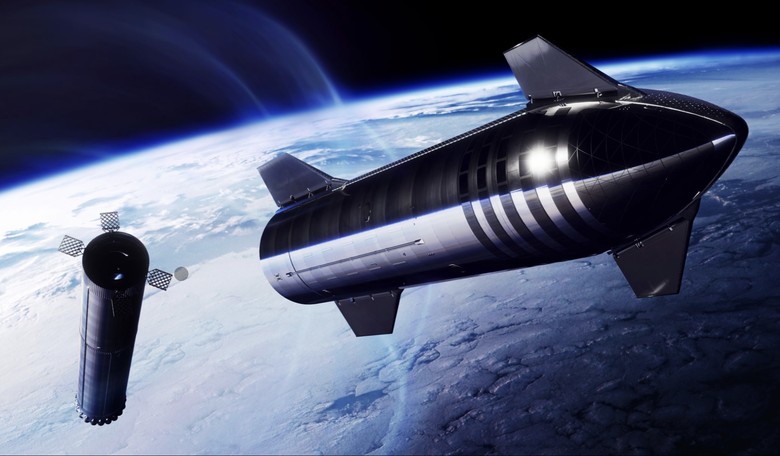
Saturday afternoon at about 3:20 p.m local, SpaceX Ship #42 "Don't Panic" did the near-impossible. After orbiting the Earth 14 times at Mach 25 and deploying 26 Starlink satellites, it performed a successful re-entry burn, and re-entered the Earth's atmosphere on a trajectory that would put it right back at the launchpad in Starbase, Texas, where its mission started about 22 hours earlier.
The Ship executed a near-miraculous "belly flop" maneuver, then fired its engines once more to place itself gently in the "chopstick" arms of SpaceX's Mechazilla catch mechanism. "The margins are so incredibly narrow," Eric Berger wrote for Ars Technica. "Two nubs on either side of the rocket, each protruding only about 1 foot, were the only purchase the rocket would have on the arms."
Yet "Don't Panic" went from flying more than 10,000 miles per hour in Low Earth Orbit to that gentle purchase on the Gulf coast.
A fully reusable spaceship — not a partially reusable spaceplane like the Shuttle — had never achieved such a feat. No other company or government has even tried.
That impossible catch opens a new era in spaceflight, exploration, travel, military logistics, and more.
Yet the initial reports were mostly about that fiery explosion.
So let's talk about that "setback" with the booster shall we?
Following a textbook launch, Booster 22's boostback burn ended early on a low fuel mass alarm. The massive first stage — 237 feet tall and producing 18 million pounds-force of thrust — simply didn't have enough methane left in its tanks. Guidance triggered an automated abort, diverting to an offshore water landing. There, the booster hovered as designed, the engines shut down, and the flight termination system fired just above the water.
The explosion was the termination system destroying the rocket.
"Slight underperformance of engines on this flight is the reason," Elon Musk explained on X. "The booster is meant to land with tiny residuals, so the solution is to improve engine performance and performance consistency (underway with Raptor V3.2), as well as adjust flight software to do MECO1 [Most Engines Cut Off] about one second earlier to ensure enough propellant for boostback and landing (tiny change)."
Had ground control programmed the booster to fly a slightly different trajectory, or just hot-staged the Ship one second sooner — just one second! — the booster would have had enough fuel to return to Mechazilla. Just like it did on Flights 5, 7, and 8.
In any case, the V3.2 Raptor engines currently being manufactured for future flights are even more efficient than the V3 engines used on Friday's launch.
Nailing the booster landing would have been nice, but with improved engines (and a bigger Starship) already on the way, Booster 22 was never going to fly again, regardless. Or as Musk put it, "These early ships and boosters are already outdated by improved designs in production or on the test stand, so this booster loss does not change our timeline to reach high volume, fully reusable Starship flights."
We witnessed something almost miraculous on Saturday. What happened on Friday wasn't a setback — it was just the tiniest of miscalculations, already corrected.
SpaceX wants to get Flight 16 up before the end of the year, and so do I.
Recommended: The Jensen Huang Story Keeps Getting Weirder, but Wait'll You See This...