
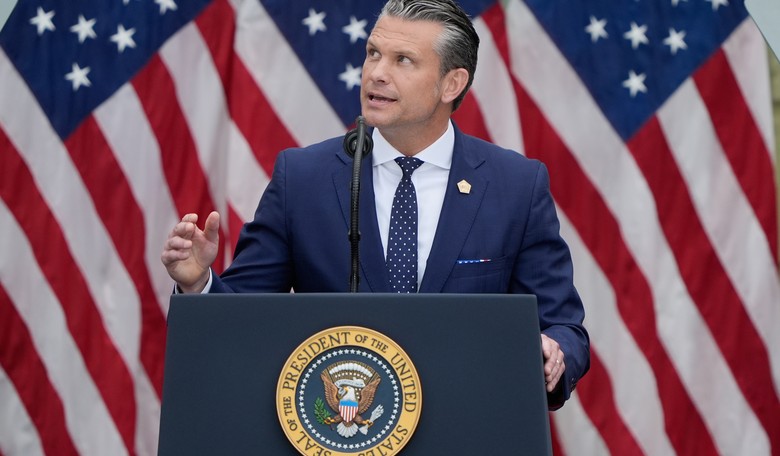
The rate at which a post-Nicolás Maduro Venezuela is being rebuilt has been a sore spot for many, particularly when it comes to getting the rest of the regime out of there and replacing it with people elected freely and fairly. However, the Donald Trump administration is still making progress, and we saw a sign of that this week when Secretary of War Pete Hegseth made a surprise trip to Caracas to meet with "interim president" Delcy Rodríguez.
Hegseth's trip to Miraflores Palace was the highest-level U.S. visit since American special forces grabbed Maduro and his wife on January 3. While he was in town, the secretary and Venezuelan Defense Minister Gustavo González López signed a military cooperation agreement covering joint training, intelligence sharing, equipment, and operations against the cartels that have treated the country as a safe harbor for years.
The last time our two countries had such a pact in place was 2005. It was suspended that year by Hugo Chávez. Delcy called it a resumption of technical-military ties and hoped it would reach "its highest possible level." Hegseth used somewhat stronger language.
While speaking at the newly reopened U.S. embassy, the secretary issued a warning to the narco-terrorists who operated with impunity under Maduro: "Your time is up. We will hunt you down. We will find you. And we will kill you." He described Venezuela as having gone "from our most aggressive regional threat to a compliant security partner" and tied the whole thing to what he called the “Donroe Doctrine," the Trump corollary to the Monroe Doctrine that prioritizes U.S. security and influence in the hemisphere over that of adversaries like Russia, China, Cuba, and the old Chavista networks.
The exact details of the cooperation agreement are somewhat limited, which leaves a lot of room for interpretation about what this means in broader terms. In my opinion, Spanish reporter David Alandete offered the best analysis. On Wednesday, he posted the following on X:
1. Trump extends his tutelage to the Venezuelan military. After taking on a role in oil and economic agreements, he is now moving into the military sphere to make changes.
2. The Pentagon will train personnel from the Armed Forces, the main pillar of support for Chavismo for more than two decades.
3. The military personnel who captured Maduro will train those who defended him. The Venezuelan military, traditionally linked to Russia, China and Cuba, will begin cooperating with the United States. E
4. Maduro’s capture did not dismantle the Armed Forces or the intelligence services. This new agreement opens a path to influence those structures without formally taking command.
5. Delcy continues to govern under U.S. supervision. The White House has kept much of the Chavista apparatus in place to ensure stability, without giving her full autonomy.
6. Tutelage is advancing faster than the political transition. There are economic and military reforms, but not yet electoral or governance reforms.
He included this photo of Miss Delcy Smiling at Hegseth like a smitten schoolgirl.
1. Trump extiende su tutela al Ejército venezolano. Tras asumir un papel en los acuerdos petroleros y económicos, entra ahora en el ámbito militar a hacer cambios. 2. El Pentágono formará a efectivos de las Fuerzas Armadas, el principal sostén del chavismo durante más de dos décadas. 3. Los militares que capturaron a Maduro formarán a quienes lo defendían. El Ejército venezolano, tradicionalmente vinculado a Rusia, China y Cuba, comenzará a cooperar con Estados Unidos. E 4. La captura de Maduro no desmanteló las Fuerzas Armadas ni los servicios de inteligencia. Este nuevo acuerdo abre una vía para influir en esas estructuras sin asumir formalmente el mando. 5. Delcy sigue gobernando bajo supervisión estadounidense. La Casa Blanca ha mantenido buena parte de las estructuras chavistas para garantizar la estabilidad, sin darle a ella autonomía plena. 6. La tutela avanza más rápido que la transición política. Hay reformas económicas, militares pero aun no electorales y de gobernanza.
— David Alandete (@alandete) November 18, 2026
Alandete’s point six is, for many, the most frustrating one. Members of the Venezuelan opposition and supporters in the United States — including major Trump allies — still believe these deals should be made with a trustworthy, legitimately elected leader, most likely María Corina Machado. In a Bloomberg interview this week, she said the big U.S. oil arrangement "worries a lot of people inside and outside the country, and it will be reviewed like all" transactions. She hadn’t seen the contract, she noted, but emphasized that Venezuela wants the United States as a long-term partner and that any future oil deals under her leadership would be checked case by case for compliance with Venezuelan law and the country's constitution.
After his trip to Caracas, Hegseth headed to Colombia, where he delivered the first of up to three C-130 Hercules aircraft to Colombia and met Defense Minister Jorge Eduardo Mora and other officials. Again, he spoke of the importance of working with regional partners to fight the cartels and narco-terrorists that plague all of us here in the Western Hemisphere.