
While it technically started a few years ago, Latin America's rightward swing has been a hot topic in recent months. Most recently, we watched voters in Brazil defy the predictions and vote for Donald Trump ally Flávio Bolsonaro when the incumbent little socialist dictator Luiz Inácio Lula da Silva had been leading the polls for quite a while. The two will match up in a runoff at the end of the month, and while the left is doing its best to go after the Bolsonaro family, the odds are in Flávio's favor.
Before that, Colombia rejected its first dance with socialism, electing Abelardo de la Espriella over Gustavo Petro's hand-picked successor. Peru, which is trying to put a decade of political volatility behind it, voted for the more conservative Keiko Fujimori. Earlier in the year, Costa Rica voted overwhelmingly for Laura Fernández, which, contrary to popular belief, was not a swing to the right, but a continuation of the Rodrigo Chaves administration that came before her. What is important to note is that while she was projected to win, she ended up with a much more decisive victory than polls predicted.
In the few years leading up to 2026, countries like Panama, the Dominican Republic, Chile, Honduras, Bolivia, Ecuador, Argentina, and El Salvador also made decisive changes or continuations with more center-right or conservative leaders.
What led to the swing? Pretty much the same things that led to us in the United States voting overwhelmingly for Donald Trump in 2024. I like to say that people were fed up with crime, corruption, and communism, which is a simplified answer, but it's true.
Crime was the biggest driver. People saw what Nayib Bukele did in El Salvador, and they were like, "Hey, our countries are also overrun with gangs and cartels. Can we have that too?" I was actually talking to a Costa Rican friend a few days ago whom I hadn't spoken with in a while, and we somehow got on the topic of my work. I mentioned Bukele retweeting me (because I can find a way to bring that up in nearly every conversation), and he said, "Ah, the president everyone wants to have."
Illegal immigration, bad economies, socialism fatigue, and the infiltration of woke culture in these socially conservative countries also played a role in this change. I will also take a moment to remind you that it had nothing to do with USAID, but the Trump administration's actions against the Venezuelan regime over the years did cost the leftist governments a lot of financial and diplomatic support. Trump and Marco Rubio's strategy to court and favor our hemispheric allies, rather than leaving them overrun by cartels and turning to China, has also helped.
Related: Hate to Burst Your Bubble, but USAID Didn't Cause the Rightward Swing in Latin America
So, my point to all of this is not to rehash the story that many of you already know. It's to ask what will become of this movement in 2027. Will it continue? Will it reverse? Whatever happens next year will either cement it or prove that it was just a fluke, in my opinion.
My prediction is that it will continue, but there are some caveats. First, let's look at what's on the table in 2027.
Brazil: The next big thing to watch, as I mentioned, is Brazil. The runoff between Lula and Bolsonaro will be held on October 25. The winner will take office in January, but it isn’t technically a 2027 election. Even so, it will help set the mood for the year.
El Salvador: Bukele is up for his third term when Salvadorans take to the polls on Feb. 28, 2027. He'll win with no problem. He's the most organically popular leader in the world. No change there.
Guatemala: The Central American nation will hold elections in June 2027, with a runoff, if needed, in August. The current leftist president, Bernardo Arévalo, can't run, and his approval ratings are low. The race to replace him right now is very open and fragmented across the aisle. That said, the same issues that helped turn these other countries to the right, especially corruption and crime and the desire for a Bukele-like leader, are what will drive people to vote. Guatemala isn't a lock, but the current mood favors the right. It just needs a strong candidate to run on that mood, and the center-right parties and candidates must consolidate behind that person in the end. Outlook: cautiously positive.
Argentina: Argentina goes to the polls in October of next year with a runoff if necessary in November, and Javier Milei is up for re-election. Honestly, if he wins, that will be the biggest test of whether this movement sticks. Aside from Bukele, Milei's economic reforms have helped create and encourage what's happening across the region more than almost anything. Polls are mixed, but overall they currently show Milei winning. Support from the Trump administration will help. Of course, a lot can happen in a year.
Venezuela: There is currently no election date set for Venezuela, but there needs to be. I don't want to get deep into the weeds here with this, but an increasing number of conservatives and Trump allies, along with Venezuelan opposition members, are calling for a 2027 election, potentially in July. In my humble opinion, not setting a date for next year is a big mistake, but I'll save all the reasons why for another article. That said, if truly free and fair elections are held next year without any funny business, María Corina Machado would win without a doubt, and Venezuela would be another country to add to the list. It'd be the biggest turnabout in the whole movement.
It's also worth pointing out that Mexico remains the biggest leftist holdout (not counting the Cuban and Nicaraguan dictatorships, which could both crumble to pressure in the year to come). But we're stuck with Claudia Sheinbaum for a while. She'll just be very isolated. I also know that someone in the comments will mention Uruguay, which is the outlier here. Uruguay did elect a moderate left-wing government in 2024. Right now, it's an oddly stable country that is not overly ideological and is not hostile toward the U.S.
So, what needs to happen for this movement to continue into next year and beyond?
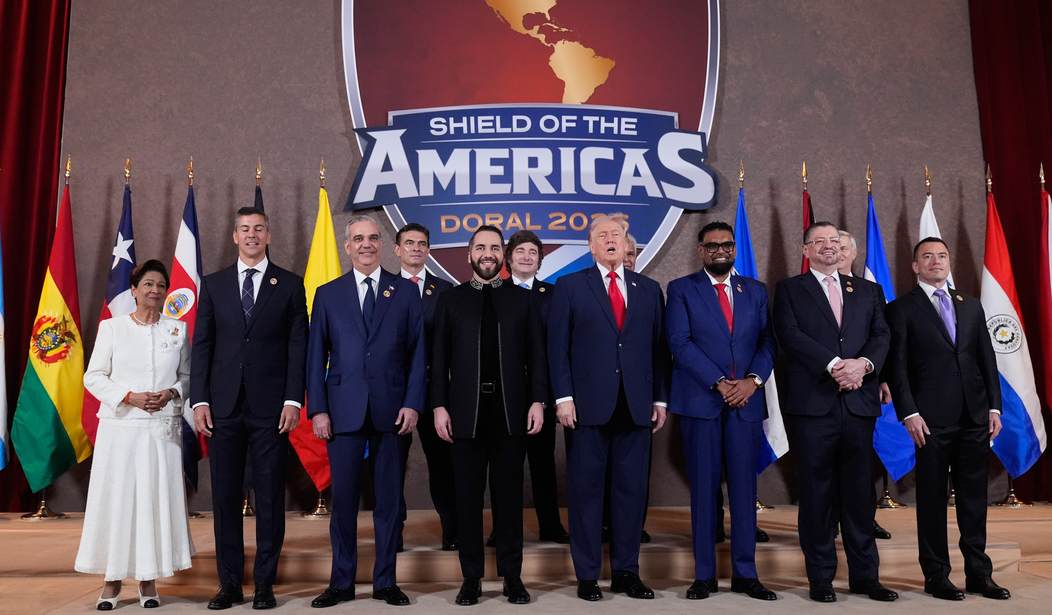
Trump and especially Rubio must continue to treat these countries as the valuable allies and partners that they are. Forming the Shield of the Americas back in March was a wonderful start at bringing us all together to counter the cartels, China, and other regional problems. Continued economic partnerships and endorsements of conservative candidates when they can move voters are a must. Rubio traveled recently to Colombia, Ecuador, and Peru. Aside from a Caribbean trip in February, I think it was his first trip within the Western Hemisphere since September 2025. He needs to do more of this.
What happens in Cuba and especially Venezuela will also play a role. Leftists across the region are already campaigning on Trump's Venezuelan oil deal, tossing around words like "imperialism." This is one of the reasons why holding elections in Venezuela is so important right now. The administration needs to show just how serious it is about bringing democracy to a country that hasn't seen it in many years and prove that this was not just about oil. There is much to be done in that country to get to the point where free and fair elections can be held, but setting a deadline would help speed the process and give Venezuelans and others in the region hope to hold onto. At this point, we need more action and less talk and 100% less Delcy Rodríguez and the rest of the regime.
The fall of the Cuban regime is something we've all been watching and waiting for all year. At the inaugural Shield of the Americas meeting, when Trump mentioned it, the entire room full of leaders went wild with applause. People are becoming impatient with that. Hopefully, we'll see something more tangible soon, which could have a big regional impact. The people I talk to who live in these countries want to root for Trump, Rubio, and the U.S. and vote for leaders like them. But they need to know 100% they're on their side, so hopefully, we'll see continued proof of that.
What these newly elected leaders do themselves will also be important. While some of them won by more percentage points than expected, others won narrowly. The people who vote in these countries must see changes to their everyday lives, particularly when it comes to crime and the economy. Bukele is the most popular leader because the lives of the Salvadoran people have changed so much in a short time. They could see it, touch it, and feel it. Voters across the region need more of that. That's why Milei's election next October will be a big tell.
Ultimately, if the Trump-Rubio approach stays consistent, the new governments deliver visible improvements on crime and the economy, and Venezuela holds a real election within the next year or so, the rightward swing stops looking like a series of anti-incumbent reactions and starts looking like real structural change in a region that has needed it for years. We'll see what happens.