
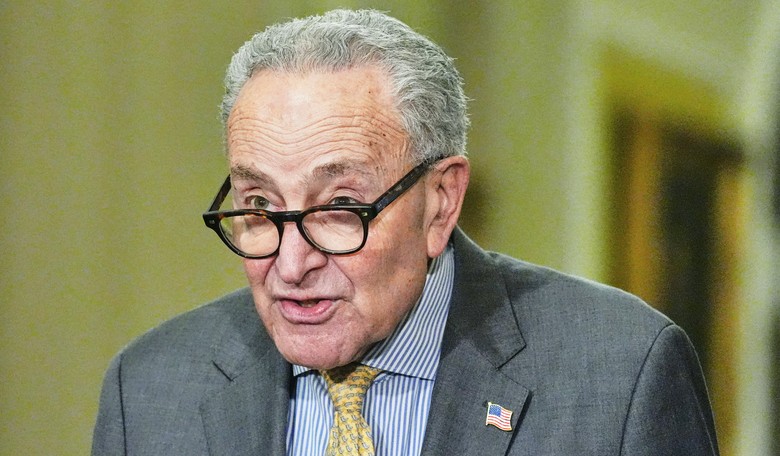
Current Senate Minority Leader Sen. Chuck Schumer (D-N.Y.) is going to win the race for Majority Leader. His only opposition, Sen. Chris Van Hollen (D-Md.), may be the favorite of some incoming Democratic senators, and the radical left would love to see Schumer dethroned, but Van Hollen would be a protest vote.
After the blue wave election that brought the largest Senate majority in two decades to Washington, the "generational change" that's already a tired mantra among Democrats will have to wait.
"I think it's really clear that both parties are ready for a new generation of leadership," Sen.-elect Annie Andrews (D-S.C.) said before the election.
"There is a generational change coming to the Democratic Party, which is vital," added former President Barack Obama.
"In this election, the American people called for change," Van Hollen announced on November 12. "It's now on us to meet this moment, and to do that we need new leadership… That is why I'm running for Senate Majority Leader."
"Van Hollen has argued that Democrats need a leader willing to confront the Trump administration more aggressively," writes The Baltimore Sun. "During a Tuesday appearance on Vox’s America, Actually podcast, he pointed to his trip to El Salvador to press for the release of Kilmar Abrego Garcia, a Maryland man who was wrongfully deported and detained, as an example of the resistance he believes Democrats should have mounted."
In other words, Van Hollen is better at grandstanding than Schumer, and Democratic senators should vote for him. Besides, he promises to be "more aggressive" in confronting Donald Trump.
How much more "aggressive" can Van Hollen be than Schumer? I suppose he could call Trump nastier names, but beyond that, there really isn't much Democrats could do while they were in the minority.
Now that they have the majority, Schumer is going to be as aggressive as a half-starved wolf eyeing the open chicken coop door.
What's the matter with Schumer? Well, he made the huge mistake of voting with Republicans to end the budget deadlock in March, 2025, averting a midnight federal government shutdown. The move triggered immediate criticism from House Democrats, including House Minority Leader Hakeem Jeffries and Rep. Alexandria Ocasio-Cortez, as well as progressive Senate colleagues, who argued Democrats surrendered their leverage without securing limits on administration spending cuts.
It's just more grandstanding from Van Hollen because Schumer's rationale was that the Department of Government Efficiency (DOGE) would take a pickaxe to beloved Democratic programs and departments if Democrats weren't around to stop him. He wasn't wrong, but it didn't convince the radical leftists in the House.
As Reason.com's Joe Lancaster points out, the call for "generational change" in the Democratic Party is falling on deaf ears.
But if the intent is to shake up a staid institution—be it the Senate or the Democratic Party—and introduce new blood, it's hard to make the case that the best alternative to a stodgy, 75-year-old career politician is…a 67-year-old who has served in elected office since 1990. The man is old enough to qualify for a full Social Security retirement benefit.
The challenger and his supporters have allowed that Van Hollen himself is not that generational change. But, they say, he'll be its champion.
"I've never said that I represent generational change," Van Hollen clarified. "I say we have a generational opportunity because of the big mandate, the 56 votes, for change."
"The way I assess the situation as it is right now is that the generational change is represented by this incredibly dynamic incoming freshman class of senators, and the generational change goal is something we'll achieve, you know, as we move forward," Andrews told reporters last week.
"As we move forward...," but for now? Faggettaboutit.
Schumer, like current Senate Majority Leader Sen. John Thune (R-S.D.), achieved his position by currying favor with enough Senators to win his post. Over the years, Thune and Schumer did enough favors for colleagues, genuflected to presidents in their party, and built up enough IOUs to win. They built up a power base in the Senate of a core group of Senators who could do their bidding, spread the largesse, make promises, and whip the vote when called upon.
Once in, it's virtually impossible to dislodge them.
Schumer was never in any danger of losing his post as leader. In fact, since the modern positions of Senate Democratic Leader (created in 1920) and Senate Republican Leader (created in 1925) were established, incumbent floor leaders have always left the post by retiring from the Senate, stepping down voluntarily from leadership, dying in office, or losing their general election Senate seat — never by losing a reelection vote inside their party caucus or conference.