
"Medicare For All (M4A)," or some form of it, will be law within months of the Democrats taking power in January if a Democratic president wins the 2028 election. They will use the budget reconciliation process to ram it through Congress by a simple majority vote, and that is that.
Or is it? There are at least three separate M4A plans being circulated in the House and the Senate, and getting this gaggle of radical leftists to agree on anything, including the shape of the negotiating table, is a challenge.
But, as with Obamacare in 2010, Democrats will see a M4A bill as an existential necessity that will define their party for the future. They will pass it because they must pass it.
Democrats are likely to concentrate their argument for M4A on "savings." A single-payer system will, indeed, create administrative cost savings and probably savings in hospital and drug charges.
What Democrats will try to sweep under the rug is something that Canada has discovered to their great sorrow.
"According to a new report by the Canada-based public policy think tank, the Fraser Institute, it takes a median time of 30.7 weeks — 215 days — for a Canadian to go from a referral from the family doctor to seeing a specialist to getting treatment," reports The New York Sun. Currently, Americans wait about 30 days from a referral to a specialist to treatment.
So we have that to look forward to.
If Democrats want government-paid "sustainable hospital and doctor rates, cover all Americans, and avoid lengthy Canadian-style queues — all at the same time — it is neither financially plausible nor practicable."
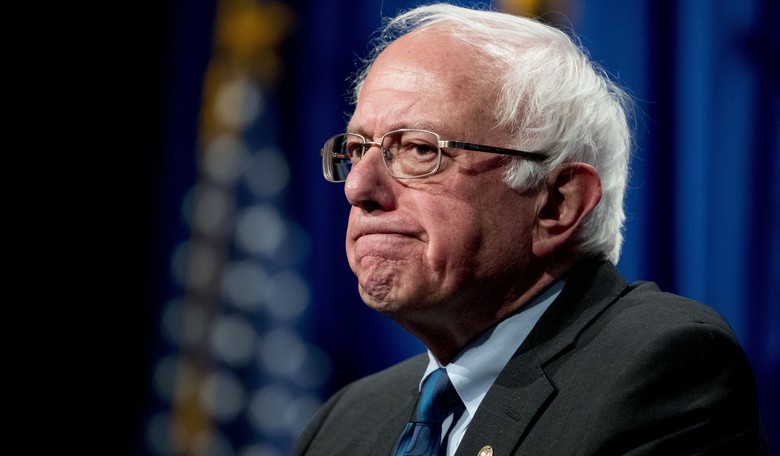
If you thought the transition to Obamacare was a clusterfark, just wait until the health bureaucrats sink their teeth into writing regulations for "Berniecare" or whatever the Democrats will call M4A. We'll get a whole new government-designed, government-run insurance exchange run with the same competence and expertise as the Obamacare exchanges.
“There is nothing from past experiences with payment rates, e.g., the Sustainable Growth Rate mechanism, that suggests there could be a dramatic reduction in reimbursement rates and a simultaneous large increase in caseloads,” the president of the American Action Forum, Douglas Holtz-Eakin, tells The New York Sun. “People would simply be unable to get a provider.”
Congressman Ro Khanna of California insists Medicare for All “would lower costs from $5.3 trillion to $4 trillion.” He calls it “one of the best anti-inflationary, pro growth, and pro business policies the nation could adopt.”
That claim rests on one of two competing studies at the center of the debate. The one referenced by Mr. Khanna is a paper from researchers at Yale and the University of Maryland, Baltimore, which has not yet been peer-reviewed. It finds that single-payer — one government plan paying every medical bill in place of today’s patchwork of insurers and self-financed payouts — would cut national health spending from $5.28 trillion to $4.24 trillion a year, mostly through lower drug prices, lower Medicare payment rates, reduced overhead, and less fraud. The authors estimate that universal coverage, combined with reversing cuts in last year’s budget law, would prevent more than 114,000 deaths a year.
Note the hopeful, dreamy savings from "less fraud." And if you believe that I got not one, but two bridges over the Chicago River, I can sell you for a song.
The second, from Mr. Holtz-Eakin’s American Action Forum, finds the plan would add $47.4 trillion in federal costs over a decade unless Congress raises new revenue. It also finds that the taxes posed by Senator Sanders in his bill to pay for the program would fall $19 trillion short by 2036. The author of the study, Stephen Parente, contends that the headline figures cited by Mr. Sanders and Mr. Khanna display more confidence than economic reality.
So far, there's no "there" there when it comes to realistically pricing M4A or guaranteeing treatment for even routine procedures.
“The Yale study provides a provocative case for Medicare for All, but its headline — $1 trillion and 114,000 lives saved every year — creates a degree of certainty that the economics of such a transformation cannot support,” Mr. Parente, a health economist and finance professor at the University of Minnesota, tells the Sun.
Emeritus professor of economics at the University of Massachusetts Amherst, Gerald Friedman, also challenges the Yale study's math. “The Yale study includes some ‘Magic Asterix’ assumptions about increased efficiency through improved health and reduced fraud. These would be wonderful, but I have my doubts.”
"Magic Asterix." Gotta use that somewhere else.
Realizing savings by cutting payments to doctors and hospitals is a very bad idea. Those payments have already been cut to the bone, to the point that many doctors won't accept any more Medicare patients. It could lead to more hospital closings, especially in rural areas, and even fewer doctors. The possibility of a rash of hospital bankruptcies is a nightmare that Democrats have yet to address.
Democrats will also have to make at least a half-hearted attempt to explain how they plan to pay for M4A.
“This is unknown because most proposals have not addressed the financing question,” Mr. Holtz-Eakin explains. “But revenue of the magnitude required would have to come from large tax increases in income taxes or a new federal tax like a value-added tax.”
No worries. It's all "free," right?