
Which Democrat will win the presidential nomination in 2028?
According to Rep. Alexandria Ocasio-Cortez, it doesn't matter.
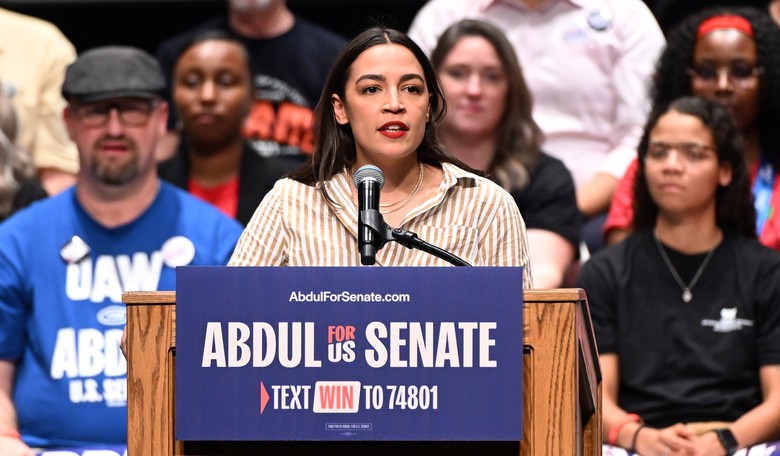
At a private fundraiser last week for Michigan Senate candidate Abdul El-Sayed, AOC reached a startling conclusion. "If Abdul can win in Michigan, anybody can win anywhere," she said. "We are going to break the electoral map everywhere, everywhere, because that is what it is going to take to guarantee health care to every American."
In fact, while Republicans were sleeping, a seismic shift in attitude toward government-run healthcare took place.
According to a KFF Health Tracking Poll, 66% of U.S. adults favor a national health plan ("Medicare-for-all") where all Americans get insurance from a single government plan. This is the highest level of support KFF has recorded in a decade.
That poll may be an outlier. An Axios/Ipsos survey reported that 43% of Americans support "Medicare for all," noting that supporters outnumbered opponents by nearly 2-to-1, while a bipartisan majority agreed the federal government should spend more tax dollars to lower healthcare costs.
Medicare for all is wildly popular with Democrats, as 84% of self-identified Dems support it. That's not surprising. What's astonishing is that 72% of political independents support it as well, and 34% of Republicans.
Overall, healthcare is considered the third most important issue for voters, behind "the future of democracy" and "the economy/affordability."
So if El-Sayed's support for Medicare for All isn't damaging his campaign and may be helping it, where can Republicans hit him to damage him the most?
“You don’t have to be a socialist to believe that you should be taxing billionaires [on] their wealth,” El-Sayed told the New York Times in August. “In fact, if you are a capitalist, you should believe in that. So, I’m a capitalist who just knows about capitalism. I have a bad habit of reading; I’m so sorry.”
We all know El-Sayed isn't a capitalist. But if he can run a winning campaign on his claim to be a capitalist, other DSA candidates could easily take that approach and skate to victory in 2028.
Even Chris Cillizza knows that El-Sayed supports many planks in the Democratic Socialists of America platform. He also wonders if that support for socialist ideas will truly hurt him in 2026.
That said, El-Sayed supports a number of key principles and policies at the heart of the DSA movement — from Medicare for All to a strong innate suspicion about the motivations of very wealthy individuals and large corporations.
It’s why he has been endorsed by the superstars of the Democratic Socialism movement — from AOC to Bernie Sanders.
It’s also why what happens to El-Sayed on November 3 matters SO much for what direction the Democratic party takes as it heads into 2028.
The knock on Democratic Socialists from the non-DSA wing of the party boils down to this: A candidate with DSA views cannot win a general election in anything close to a swing state.
If El-Sayed "beats former Republican Rep. Mike Rogers in 27 days — as polls suggest he is more likely than not to do — you can be damn sure that El-Sayed and AOC will cite that victory as proof positive that the notion of the DSA as a fringe movement that can’t work nationwide is fully debunked," surmises Cillizza.
Like all good little revolutionaries, DSA believes they're in a "generational fight."
"We are in a long-term — I’m being very open right now, right? — about our generational project that we have ahead of us," AOC said at that fundraiser. "Generational. We are here to break the map."
Related: The Real Crisis in Europe Isn’t Financial. It’s Generational Theft.
At same event, El-Sayed added his voice to the "generational project."
“What does it say about what America really wants, needs, and deserves if our state bucks all of the pundits and all of the pontificators who think that this is not possible?” he said. “What does it tell them? It tells them just how big America is and exactly what we want.”
Later, he said that “this one is for all the marbles” and referred to “the ripple effect that this race will have.”
"Now, do I think an El-Sayed win in Michigan would be indisputable proof that Americans, writ large, are ready to elect a very liberal/DSA-aligned candidate president in 2028?" Cillizza asks. "I do not!" he adds.
But I also know how politics works. And the reality is this: If El-Sayed wins, AOC immediately becomes a more viable and serious contender for the Democratic nomination in the eyes of the political class.
Scoff if you like! But ask yourself this: If El-Sayed loses, do you have ANY doubt that it will be used by the governing wing of the Democratic party as evidence that the DSA-aligned candidates can’t win anywhere the party will need to in order to reclaim the White House in 2028?
Candidly, I don’t think that sentiment is necessarily true either! El-Sayed losing does not convince me AOC isn’t a serious 2028 candidate if she runs!
But, politics is politics. And perception — and narratives — matter a LOT. And the narrative at stake in 27 days in Michigan is whether or not a Midwest swing state will elect someone in El-Sayed who has very, very liberal views.
Establishment Democrats (who have already adopted several DSA planks in their own campaign platforms) would dearly love to pretend that the DSA is an anomaly and that it will go away after it's trounced in 2026 or 2028.
That's not going to happen. The DSA has money; it has the support of a sizable number of younger voters as well as ancient hippies and the woke Hollywood crowd. The DSA is not a majority. But it can throw a monkey wrench into both parties' plans.