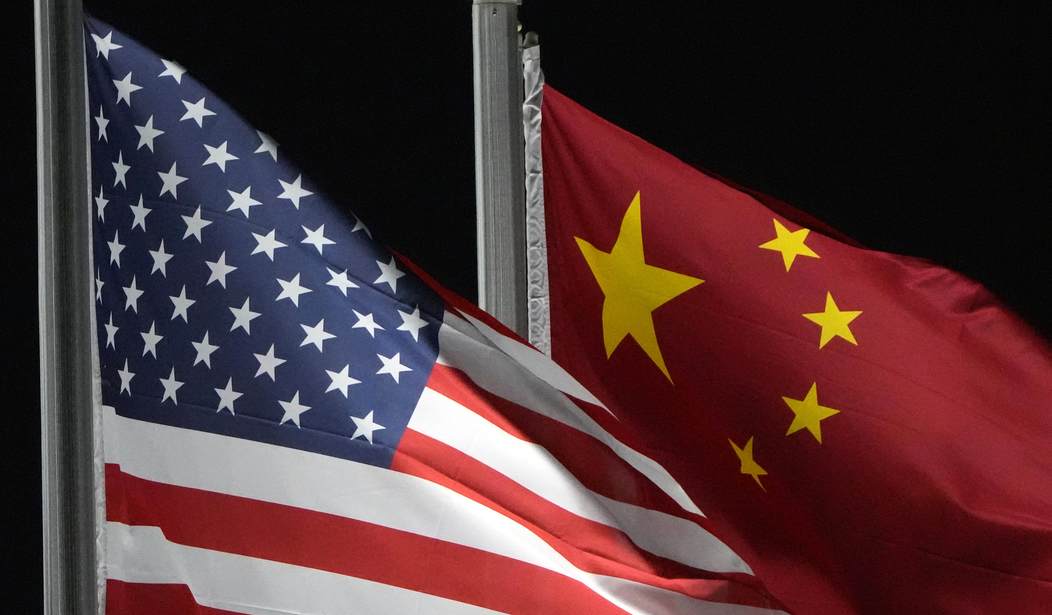

Former UN Ambassador Nikki Haley is pulling no punches about China's "stealth war" against the U.S.
"Communist China’s war on the U.S. has already begun," she and co-author John P. Walters write in The Free Press. "The trick is that Beijing is trying to make sure Americans never realize they’re under attack."
In truth, America is well along in its self-delusion about China, and forcing us to re-examine our assumptions that underlie American policy.
America has never faced an adversary like China. Japan in World War II was far more "Westernized" than China is today, and its belief in its superiority over the West made it an obvious enemy.
Is China an enemy, a "competitor," or something in between? That strategic ambiguity is at the core of U.S.-China relations, making confronting the "Middle Kingdom" a crapshoot.
Haley and Walters flesh out that ambiguity in stark terms.
The Chinese Communist Party (CCP) is working to undermine the U.S. across economic, technological, informational, diplomatic, and gray-zone military domains. Especially since Xi Jinping’s rise, Chinese leaders have committed to diminish American superpower without triggering a U.S. military response. The Chinese don’t want a shooting war today, or ever, if they can help it. Instead, they’ve chosen to erode the foundations of American power by coercing U.S. allies, commandeering global supply chains, and bending international institutions toward Chinese interests. Beijing wants to do all this while keeping the U.S. reactive, fragmented, and unsure about how seriously to take the threat.
More than any other nation on Earth, China plays the long game. Henry Kissinger, the brilliant and much-reviled former national security advisor and secretary of state, likened China's strategy to a game of "Go," the Chinese board game of high strategy.
In his 2011 book, On China, Henry Kissinger famously used the ancient game of Go (known in China as Wei Qi) as a metaphor to explain the fundamental differences between Chinese and Western strategic thinking.
He argued that while Western strategy is rooted in the logic of Chess, Chinese strategy follows the logic of Go, leading to deep-seated misunderstandings in international diplomacy.
Unlike Chess, which starts with all pieces on the board, Go begins with an empty board. Kissinger observed that China builds power incrementally, placing "stones" (economic ties, infrastructure, or military outposts) to slowly surround an opponent without ever triggering a single, decisive battle.
China is also waging the most expansive espionage and intellectual-property theft campaign in history. Thousands of U.S. companies, universities, and laboratories have been infiltrated or targeted. These are not isolated incidents but a systemic effort to accelerate Communist China’s technological rise by stealing the fruits of American innovation. The CCP understands that whoever controls the commanding heights of artificial intelligence, quantum computing, next-generation semiconductors, and advanced materials will dominate the global balance of power.
According to Kissinger, both players' pieces in Go often end up deeply intertwined. Kissinger argued that "China views the world not as a place to 'conquer' enemies, but to manage 'barbarians' through a web of dependencies that make resistance to Chinese interests too costly," according to the foreign policy site Classics of Strategy and Diplomacy.
China makes a mockery of "soft power," of which the Western left is so enamored.
China’s information warfare is even more pervasive. Through censorship, cyber operations, propaganda, the TikTok algorithm, and manipulation of Chinese nationals overseas, Beijing seeks to shape American public debate, weaken confidence in U.S. institutions, divide the electorate, and delegitimize democratic alliances. The CCP views information dominance as essential to national power—more fundamental than missiles or tanks. If it can shape perceptions, influence elites, and distort the American public sphere, it can achieve strategic objectives at minimal cost.
Like the aliens in Independence Day, using our own satellites to coordinate and carry out their attacks, China uses our own values and traditions of freedom of speech, open debate, and capitalism to undermine the nation at every level.
Are our leaders up to this existential challenge?
So far, we've seen little evidence that the U.S. can match China's moves on the Go board with the sophistication and subtlety required to compete successfully. The danger is that China may underestimate America and the West or, worse, become overconfident and begin to believe its "racial superiority" crap. America still has a significant military advantage over China and will continue to do so for the next decade.
A shooting war would be a catastrophe for the world, which makes understanding what China is doing to the U.S. across the board all the more important.