
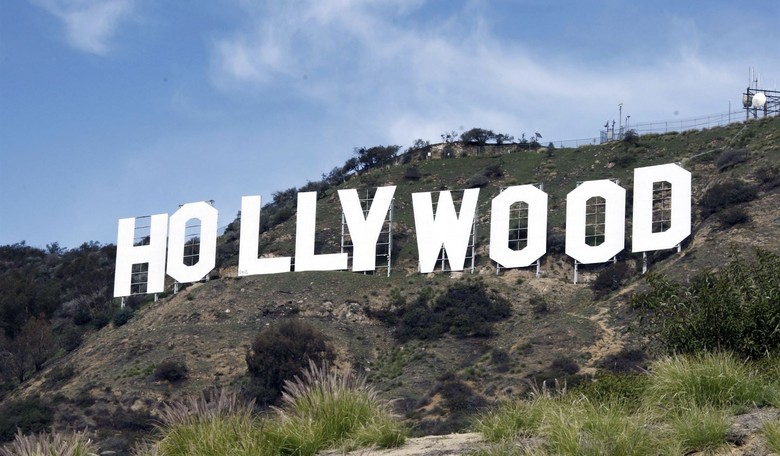
Hollywood and Los Angeles were once so inextricably intertwined that you could hardly mention one without picturing the other. So much more than just a neighborhood in central Los Angeles, Hollywood simply was the entertainment industry — a name that conjured all the glamour, glitz, beauty, wealth, thrills, and tabloid debauchery of a magical place that could only exist in America.
Out of all of America, Hollywood could only happen in California. And out of all of California, it had to be Los Angeles.
Hollywood wasn't just where they made the movies. Hollywood was the movies.
Just now I caught myself writing in the past tense.
The Los Angeles I knew, or at least thought I did, was the one from TV and movies in the 1970s. The city was sparkling and new, at once fabulously wealthy for the Hollywood types, yet affordable for the city's burgeoning middle class working jobs in aerospace, energy, construction, and the ever-growing transportation hubs at Long Beach and the Port of Los Angeles.
It was Disneyland, too. Mom took me in 1974, when I was four or five, and I'll never forget meeting the real Winnie the Pooh, riding the Matterhorn rollercoaster, or the clean and uncrowded beaches of Santa Barbara.
Hollywood put dreams on the screen, but Angelenos built an almost dreamlike city.
One of the last tributes to that Los Angeles was Steve Martin's 1991 romantic comedy, L.A. Story. It was as much a love letter to a version of Los Angeles that was already on its way out as it was to his then-wife and co-star, Victoria Tennant.
"Roland thinks L.A. is a place for the brain-dead," Tennant's character, Sara, says to Martin at one point in the movie. "He says, if you turned off the sprinklers, it would turn into a desert."
True enough.
But Sara continues: "It's not what I expected. It's a place where they've taken a desert and turned it into their dreams. I've seen a lot of L.A. and I think it's also a place of secrets: secret houses, secret lives, secret pleasures. And no one is looking to the outside for verification that what they're doing is all right."
That was all true, too. Or at least true enough.
Los Angeles wasn't without problems — the smog could be truly debilitating before the country belatedly got serious about emissions. And Skid Row was probably always Skid Row. Like any big city, there were neighborhoods best avoided.
But from the sparkling new airport to the glorious beaches to the shopping meccas where mere mortals couldn't even afford to look in the windows — and, yes, of course, Hollywood — there was nothing like Los Angeles anywhere in the world.
Of course, you could barely film a love letter to L.A. in L.A. these days — not without a CGI render farm or three to clean up the streets and erase the outdoor drug bazaars. And you wouldn't film it there these days, because, like dressing up for dinner, that simply isn't done anymore, dear.
It's been decades since film and TV production began decamping from Los Angeles to Toronto, British Columbia, Georgia, the U.K., and... Hungary? Yes, Hungary. Pretty much anywhere but Los Angeles. But the trend accelerated in recent years. The city has lost 40% or more of its production jobs from COVID-era peaks. Remember, those are the industry "grunts," as it were, who were middle class and far more conservative than the Hollywood elites.
The elites remained, naturally, their mansions still adorning the hills above the city, their shopping meccas largely untouched by the filth taking over the rest of the city. The network effects were just too strong for the studios to move their offices elsewhere.
Until now.
I've gone into the details at least twice already, so I'll keep this brief. But in a fit of self-destructive pique, California Attorney General Rob Bonta (along with several other blue state AGs) filed suit to stop Paramount Skydance from buying troubled Warner Bros. Even if the judge — an activist Biden appointee — deigns to let the buyout go through, the delay will cost Paramount $7 million per day in what amounts to contractual late fees. That's on top of the substantial legal fees, lost opportunities, and all the rest.
Paramount Skydance CEO David Ellison threatened to move Paramount out of California if Bonta didn't back off, but to no avail. The suit is so clearly detrimental to Los Angeles and to California that Democrat California gubernatorial candidate Xavier Becerra begged Bonta to settle out of court, and quickly.
Still to no avail.
So now Ellison will likely follow through on his threat: "Paramount Skydance is actively looking for office space in Nashville — a sign the company is seriously considering moving at least some operations from Los Angeles," Politico and other sources reported late Wednesday. Word is that the mayor's office already received notice of the company's intention to leave, but there's been no official comment from Paramount.
Maybe this is just a bluff to force Bonta to negotiate. But it feels real, and there's never been a better time to move.
"Tell you the truth, whenever I’m here I can’t wait to leave," hired killer Vincent (Tom Cruise) said of L.A. in Michael Mann's Collateral (2004).
Who would have dreamed that the head of Paramount would ever feel the same way?
Recommended: Reagan Smiles: Space Force Confirms We Have Weapons in Space
One last thing.
Here's another look at the Los Angeles of old, performed in 1981 but written not long after my magical trip to Disneyland.