
Every two years, we go through the same tired routine after the elections. The parties schedule their leadership votes, reports of a “coup,” a “rebellion,” or a “mutiny” start flying, and each side relishes the prospect of the other party's dysfunction.
And then nothing changes.
Do you remember how, during her years as House Speaker and minority leader, Democrats openly questioned Nancy Pelosi’s leadership and floated replacements? She faced genuine, organized rebellions. These weren't simply rumors circulating on social media. Members challenged her publicly, recruited potential successors, and tried to deny her the votes to stay in leadership.
She stayed anyway.
It doesn’t matter which party either. The story is the same.
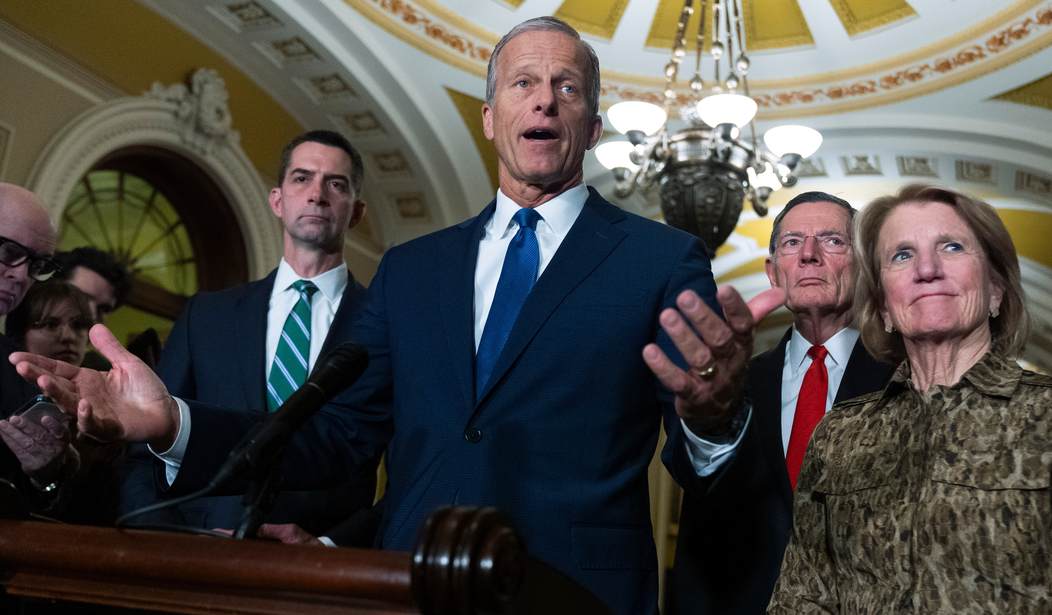
Despite reports of a rebellion brewing after last week's historic midterm losses, Senate Majority Leader John Thune (R-S.D.) won another term as the top Senate Republican on Tuesday. Several GOP senators pushed to delay the vote, and the push went nowhere. After more than seven hours of private talks in the Old Senate Chamber, Republicans quickly reelected Thune and most of his team, which now includes Sen. Bernie Moreno (R-Ohio).
Nobody ran against Thune or any other leadership candidate, and the so-called “rebels” never offered an alternative.
Sen. Rick Scott (R-Fla.), who has run for leader twice, most recently against Thune, backed the delay effort led by Sen. Ron Johnson (R-Wis.) but chose to sit this one out.
"I think we have to acknowledge the voters are not happy," Scott said. "We have to start listening to voters."
Scott wanted firm commitments on confirming judicial nominees, funding the government "without a massive omnibus," a stock trading ban, permitting reform, the National Defense Authorization Act, another shot at the SAVE America Act, and a balanced budget. Sens. Ted Budd (R-N.C.), Mike Lee (R-Utah), John Kennedy (R-La.), Jim Banks (R-Ind.), and Dave McCormick (R-Pa.) also backed the delay. Then senators cast secret ballots, and the whole thing fizzled.
Of course, Democrats have their own version of this show.
House Minority Leader Hakeem Jeffries (D-N.Y.), the frontrunner for speaker after the midterms, faces a grassroots push to keep the gavel out of his hands. Offices report hundreds of calls urging members to oppose him.
"I think our numbers are higher," one House Democrat told Axios. "It's our No. 1 issue, and it's not close."
ICYMI: This Is a HUGE Move for the House GOP
Many activists want Rep. Jamie Raskin (D-Md.), a radical-left favorite since the Jan. 6 committee, even though Raskin has shown no interest.
"Democrats in both chambers can't go back to business-as-usual politics," Ezra Levin, co-executive director of the leftist group Indivisible, said Friday. "People want leadership that's ready to join the rest of us in this new era of politics."
One senior member of the far-left wing put Jeffries' chances of losing at "0.0%." No House Democrat has ever voted against him for speaker.
Over in the Senate, several incoming Democrats, including Senators-elect Abdul El-Sayed (D-Mich.) and Peggy Flanagan (D-Minn.), won't commit to backing Sen. Chuck Schumer (D-N.Y.) for majority leader.
Mark my words, Jeffries and Schumer will both keep their posts.
These rebellions never seem to produce any meaningful change because the establishment has so much power. Voters can rage and activists can jam the phone lines, yet the people who hold the levers in both parties decide who keeps them. The establishment protects itself first, and it always has the votes to do it. Two years from now, we'll hear the same mutiny talk, and the same people will still be in charge when it fades.