
Juan Manuel Partida says he sent the U.S. Drug Enforcement Administration a WhatsApp message on Thanksgiving Day. The Sinaloa journalist said he shared information about possible ties between politicians and criminal groups in his state and received a reply within minutes.
From the Associated Press:
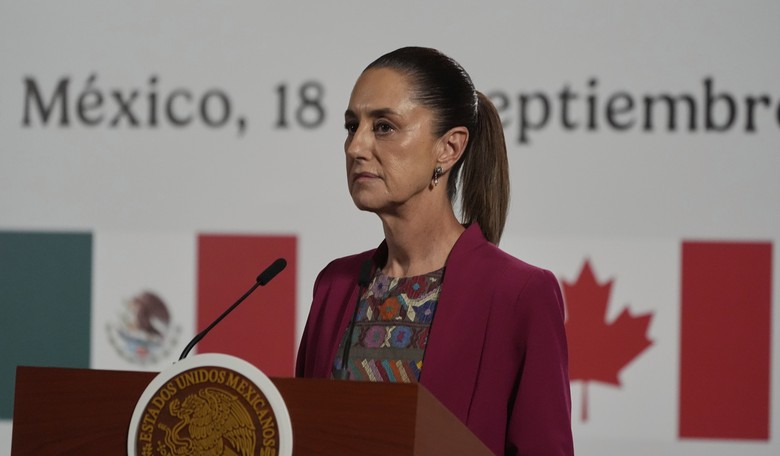
On Friday, Mexican President Claudia Sheinbaum said she escalated her fight with Washington over the tip line, filing a formal complaint with the U.S. Embassy for interfering in Mexico’s internal affairs.
“We have made it very clear in our relationship with the United States that the relationship is one of coordination, not subordination,” Sheinbaum said in her morning press briefing.
Sheinbaum once again urged Washington to address drug use and combat drug traffickers within its own territory while affirming that Mexico would continue working to confront cartels and prevent drugs from reaching the U.S.
DEA Administrator Terry Cole had announced the Sinaloa tip line on November 25. The agency invited people to share information about suspected cartel members, officials who help them, and networks that launder their money.
Cole also said the DEA planned a line for Jalisco.
On Friday, Sheinbaum said Mexico already has agencies that take tips and share information with the United States. She described the DEA’s move as interference and said the U.S. ambassador agreed to review the complaint.
Partida, who heads the Sinaloa Journalists Association, said he went to the DEA because he was fed up with violence and suspected corruption at home. His account tells us what one man decided to do with information he thought mattered. Any allegation he sent still needs evidence. His choice raises the question of why someone who lives and works in Sinaloa thought he’d get a better hearing from a foreign agency.
From the Associated Press:
Partida Valdez cited this case as a key reason he reached out to the tip line, saying it was a “very clear example of what we’re suffering because of these governments that do absolutely nothing but protect criminals.”
“This whole song and dance about sovereignty is just collusion with the politicians tied to drug trafficking who are being protected in our country,” he added.
While some observers warned of the dangers of the DEA's strategy, other academics and politicians celebrated the line as a potential tool or said they trusted the intelligence agency more than their own government.
Just days earlier, the two countries showed what they could do together. Mexican forces captured wanted cartel figure Fausto Isidro Meza Flores, known as El Chapo Isidro, with help from U.S. intelligence. On November 21, Cole publicly credited the Mexican authorities who carried out the operation. The tip line raises a question that comes earlier in the chain: Who gets to hear from a witness in the first place?
From Reuters:
Alleged links between elected officials and organized crime have become an increasingly fraught issue for ?Sheinbaum's government, which has rejected what it describes as attempts by US authorities to interfere in Mexican affairs.
"We have made it very clear that our relationship with the United States is one of coordination, not subordination," Sheinbaum said.
The complaint comes despite a significant expansion of security cooperation between the two nations under Sheinbaum. Her government has stepped up efforts against organized crime and fentanyl trafficking amid pressure from US President Donald Trump, who has repeatedly threatened unilateral action against Mexican cartels if Mexico didn't do more.
Sheinbaum also said the United States has work to do on its side of the border, from tackling drug consumption to pursuing people who distribute drugs and launder money here. She’s right about that responsibility; Washington should be able to say what it’s doing about the American end of the business, especially when it’s asking people in another country to come forward.
Mexico has every reason to insist on control of arrests and searches on its territory. Receiving a tip raises a different set of questions. If a tip implicates a public official, who gets to see the name of the person who sent it? Can investigators check the allegation without exposing the source?
The DEA should explain who handles those decisions before more people put their safety in its hands.
There’s a disagreement inside Mexico, too. Opposition Sen. Lilly Téllez of Sonora welcomed the line as a way for the two countries to cooperate against cartels. Her endorsement and Sheinbaum’s objection raised questions for Mexican officials as much as American ones.
Where should someone go with a tip when the allegation concerns the people who might ordinarily receive it?
If Mexico wants people like Partida to use its reporting channels, it needs to show them that a complaint can get a fair hearing even when it concerns someone in office. The DEA will have to show that it can follow up on tips without exposing the people who supply them. Partida says he got an answer in minutes. What happens to his information after that is the part worth watching.
That goes for Jalisco, too. Before a second line opens, both governments have a chance to settle who can handle leads that cross the border and how they’ll keep sensitive reports from reaching the people named in them.
Those are practical questions the public can ask without demanding the details of any investigation.