
An older woman in a wheelchair approaches the edge of a cliff, and a smiling man tips her over. The message is unmistakable: Republicans want Grandma dead.
Americans saw that ad in 2011, when a progressive group attacked Wisconsin Republican Paul Ryan’s Medicare proposal. The ad used an imagined death to sell a political warning.
Remember it when somebody insists political cruelty began this week in Ohio.
ICYMI: Trump’s DOJ Returned Ogles’ Phone, and Now Agents Have Omar’s.
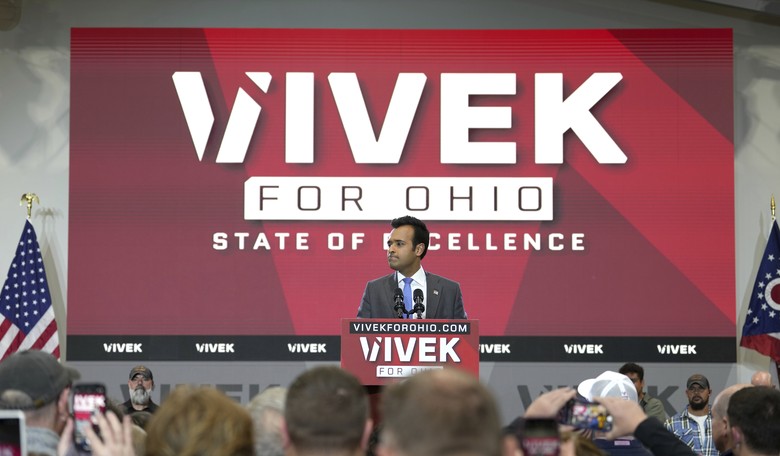
Republican gubernatorial candidate Vivek Ramaswamy has committed $4 million to an advertisement featuring Donna Arthur, the estranged mother of Democratic nominee Amy Acton. Arthur calls her daughter dishonest and disputes Acton’s account of childhood hardship.
#OHPol: "My name is Donna Arthur, and I am Amy Acton's mother ... I love my daughter, but when I saw her lying about her opponent, it's not easy for a mother to say this, but Amy has a serious problem. She is a liar." Vivek Ramaswamy and Rob McColley are up with this new #OHGov ad on broadcast TV this morning. Total Ohio governor general election ad spending: 🔴$129.6M 🔵$44.5M
— AdImpact Politics (@AdImpact_Pol) October 22, 2026
President Donald Trump calls the spot powerful and wants it to remain on the air. Ohio Republican Gov. Mike DeWine calls it wrong and wants it removed. DeWine still endorses Ramaswamy. The Republican split complicates any claim that every objection is manufactured by Democrats.
From the Statehouse News Bureau:
"The ad on its face is deeply, deeply troubling," DeWine told reporters in an impromptu gaggle Thursday morning. "But when you know the rest of the story, when you know the back story, when you know that the husband of the mom was indicted by a grand jury after hearing testimony and that he took off along with the mother, and that the two children never saw the mother after that. When you know that it, just to me, makes it more serious. It makes it just more wrong."
"It's wrong to run this ad," DeWine added. "I would just urge the Ramaswamy campaign to to take this down. It's just wrong."
But when asked if he would be rescinding his endorsement of Ramaswamy, DeWine said: "I'm not changing the endorsement. I endorse the whole ticket."
The disagreement deserves more than partisan cheering. Court records corroborate Acton’s account that her stepfather was indicted for raping her when she was 12, but he left the state before trial. Acton and her brother were removed from their mother’s custody and their mother remained married to him. Her brother supports Acton’s account, yet those records don’t prove every detail of her childhood recollections, but they make it unreasonable to treat Arthur’s accusations as established fact.
Ramaswamy owns the choice to use her.
Now, apply the Referee Test. In 1964, Lyndon Johnson’s campaign showed a little girl picking daisies before a nuclear explosion filled the screen. Barry Goldwater was never named, but the suggestion was obvious: Elect the Republican and risk nuclear annihilation. The spot became an American campaign classic, not an unfamiliar breach of political manners.
What is the Referee Test? The test asks whether politicians, the media, and government institutions apply the same standards when the political parties and people involved change. It measures consistency, exposes selective outrage and double standards, and asks one simple question:
In 2011, the Agenda Project, a progressive group rather than the Democratic National Committee, produced the cliff ad. The spectacle alleged that Ryan’s Medicare reforms would effectively destroy the program. People could oppose Ryan’s proposal without pretending Republicans planned to toss elderly Americans to their deaths.
Yet the imagery was the selling point.
A year later, Priorities USA Action, a pro-Obama super PAC, aired a steelworker’s story linking Mitt Romney’s business record to the death of the steelworker’s wife from cancer. The plant closed in 2001, she died in 2006, and Romney was organizing the Salt Lake City Olympics when the plant shut down.
Whatever one thinks of Bain Capital, the ad’s insinuation outran its evidence. Democrats and their allies knew fear worked long before Ramaswamy entered politics.
In Virginia’s 2017 governor’s race, the Latino Victory Fund showed a pickup truck displaying Republican Ed Gillespie’s campaign sticker chasing minority children. The group later withdrew the ad. Such ads drew criticism, and rightly so.
A standard that excuses this imagery but condemns every Republican attack would amount to political convenience masquerading as principle.
The referee must ask the same questions regardless of whose logo appears on the screen. Is the charge supported? Is vital context being withheld? Does an unrelated family member deserve to be used as ammunition? Under those rules, Ramaswamy’s campaign faces difficult questions. So do Democrats who tolerated earlier excesses from their own side.
Political firepower shows a target has been noticed; it doesn’t show the target was hit fairly. The outrage in Ohio includes Republicans who know the facts and object on principle. Their objections can’t be waved away as partisan theater. Democratic complaints also deserve to be heard, even when delivered as if their movement never made vicious ads.
If political decency is worth defending, it should survive a change of party labels.