





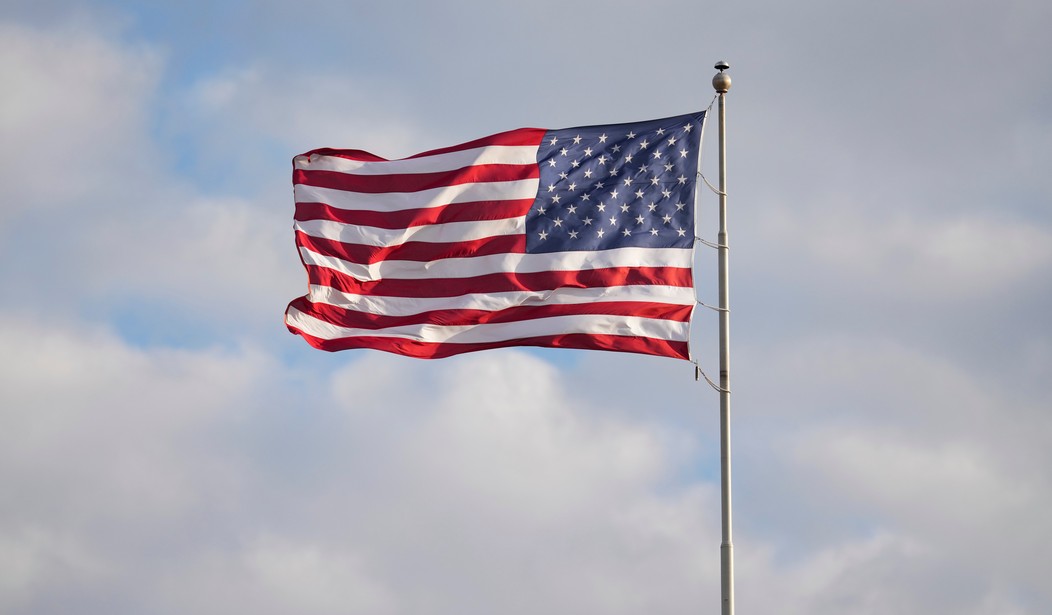
Watch what happens when an American flag starts slipping toward the ground during a ceremony. Somebody moves, a veteran reaches out, a scout lunges forward, and a ballplayer grabs the edge before it hits the dirt.
The reaction often comes before anyone has time to think about why.
Americans have been taught for generations that the flag shouldn't touch the ground. Federal law puts the rule plainly in the U.S. Flag Code: the flag should never touch anything beneath it, including the ground, floor, water, or merchandise. It should also be handled and stored so it isn't easily torn, soiled, or damaged.
The instinct, however, didn't begin with Congress writing instructions about fabric. American flag customs developed gradually, especially after the Civil War. Veterans who had fought beneath those colors helped push a growing belief that the national emblem deserved special care and protection.
By the early 20th century, states and civic organizations had developed an assortment of rules. They weren't always consistent. On June 14, 1923, representatives of military, veterans, patriotic, fraternal, and civic groups gathered in Washington, D.C. to establish a common national standard for flag etiquette. Congress eventually adopted the Flag Code in 1942 while Americans were again fighting overseas.
From the Smithsonian:
Led by Civil War veterans who wanted to uphold the sacred character of the national emblem they had fought to defend, the first efforts to restrict uses of the flag were targeted at commercial and political advertisements. While the federal government did not pass any flag desecration legislation until the 1960s, by the early 1900s most states had adopted such laws, and in 1907 the U.S. Supreme Court upheld a Nebraska statute in a case against a manufacturer of “Stars and Stripes” beer.
The flag-protection movement regained national momentum during World War I, and on June 14, 1923, the first National Flag Conference was held in Washington, D.C., to establish a set of rules for civilian flag use. The U.S. Flag Code, first published in 1923 and adopted by Congress in 1942, is based on the belief that the American flag “represents a living country and is itself considered a living thing.” It proscribes any use of the flag that could be construed as disrespectful, including using it for advertising and to decorate clothing and other goods. While the U.S. Supreme Court struck down flag-protection laws as violations of free speech in 1989, the Flag Code is still maintained as a code of etiquette, enforced not by law but by tradition.
The language Congress preserved explains something deeper about the tradition. The code describes the flag as representing a living country and says it is considered a living thing.
Nobody believes the cloth itself breathes; the words explain why Americans traditionally treat the physical flag differently from a tablecloth, banner, or piece of decoration.
Even the nickname "Old Glory" carries a personal history. Sea captain William Driver received a large American flag in 1824 and began calling it Old Glory. During the Civil War, he hid the flag in Tennessee rather than surrender it to Confederate authorities. When Union troops captured Nashville in 1862, Driver brought it out and raised it over the state capitol.
There is also a persistent myth worth clearing up: if the flag accidentally touches the ground, it doesn't automatically have to be burned.
The rule is intended to keep the flag from becoming dirty or damaged. A flag that falls can be picked up, cleaned if necessary, and flown again as long as it remains suitable for display.
Dignified destruction, preferably by burning, is reserved for flags that have deteriorated to the point where they are no longer fitting emblems for display.
Nobody gets arrested because the corner of a flag brushes the grass. Most provisions of the Flag Code establish etiquette rather than criminal penalties. The absence of punishment makes the American reaction more interesting, not less.
People reach because somebody taught them to.
Maybe it was a father showing his son how to fold a flag. Maybe it was a teacher, scout leader, veteran, coach, or service member explaining why the colors shouldn't drag across a gym floor. Maybe nobody ever explained it at all. A child simply watched adults stand, remove their hats, carefully handle the flag, and reach when it began to fall.
Customs survive that way.
The flag has covered the coffins of Americans who came home from war. It has been carried into battle, raised above disasters, planted on the moon, flown outside schools, and hung from front porches. Families have received carefully folded flags after burying someone they loved.
So when Old Glory starts falling, somebody usually reaches. The ground isn't what Americans are afraid of.
We're protecting what the flag represents.
Some American traditions survive because each generation quietly teaches the next one what they're worth. PJ Media VIP gives us room to tell those stories along with the news of the day. Join today and save 60% with promo code FIGHT.


Join the Conversation
VIP members get the ability to comment on articles.