
Democrats have made a bold branding decision since the midterm elections: They want to be known as the anti-choice party, where education is concerned.
The governor-elect of Texas, Gina Hinojosa, is Exhibit A — she made scrapping the Lone Star State's school-choice programs a centerpiece of her campaign against Republican Gov. Greg Abbott.
She wants the state legislature to take away the educational vouchers that 110,000 Texas students currently rely on.
Doing so would also shut the door on parents who are just beginning to discover how the Texas Education Freedom Accounts established last year can help them afford more options for their children, from private schools to homeschooling.
The increased competition that school-choice programs introduce even improves the quality of public schools, which gain a greater incentive to educate students well when they know that failing to do so will lead to parents taking their state funding elsewhere.
Parents should be the ones deciding how education dollars are spent on their children — but that's not how Hinojosa and other rising Democratic leaders see it.
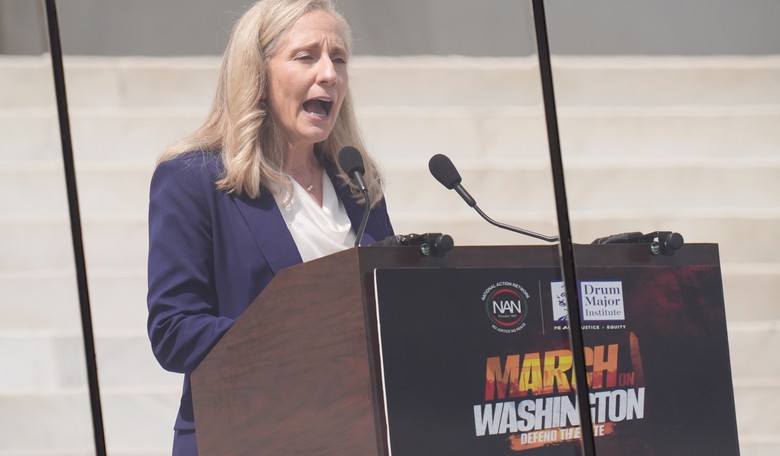
In Virginia, Gov. Abigail Spanberger is even trying to withdraw the state from enrollment in the Federal Scholarship Tax Credit program, a national school-choice initiative.
The FSTC is a tax credit of up to $1,700 for contributions individuals make to designated nonprofit scholarship-granting organizations, which in turn help parents with educational expenses, including private tuition.
State voucher plans work by giving parents a direct say in how public funds are spent for their children's education.
Public school systems don't like the competition for tax dollars, however, and critics of voucher programs say they starve public schools of resources.
But the federal program Spanberger is determined to keep Virginia from participating in doesn't touch any funding for public schools — it only supports scholarships for students whose parents choose other options.
Yet Spanberger opposes it anyway. What she objects to is simply giving parents any choice.
What Democrats like Spanberger want is for parents to have no alternative to sending their children to public schools, even if those schools are failing.
And the class-war rhetoric anti-choice Democrats deploy is pure hypocrisy: They claim school-choice programs only help the rich, who already send their sons and daughters to private schools.
But that's just the problem. At present, private schooling is a luxury only relatively few Americans can afford.
It doesn't have to be that way. Middle-class and poor parents deserve the kinds of choices that only the wealthy have when there are no vouchers or tax credits to help everyone else.
The policies Spanberger and Hinojosa are pushing would make educational inequality worse, by perpetuating a class divide between those who can afford private schooling on their own and those who can't.
Supporters of school choice are trying to narrow that gulf by expanding the options available to parents and children of every income level.
But that's bad politics from many Democrats' point of view:
Forcing all state education funding to go to public schools is a way of rewarding one of the Democratic Party's most loyal constituencies, teachers unions.
When Esther Wickham, an education reporter for The Center Square, looked last August at campaign spending by the two largest public teachers unions, the American Federation of Teachers and the National Education Association, she "did not find a single contribution from either the NEA or AFT toward any Republican member of a congressional education committee."
The teachers unions are running a partisan scam:
Democrats ensure the public schools get little or no competition — particularly for state education dollars — and in return the teachers unions put their full resources behind electing Democrats.
Parents get fewer choices as a result, and if public schools let their children down, there's no way out.
Opposing the federal tax credit makes sense from a partisan perspective, too.
Indeed, the logic followed by Democrats like Spanberger would lead them to ban private education and homeschooling outright if they could — although wealthy Democratic donors who send their own children to private school might object to that.
Spanberger is more extreme than some Democratic governors on this score, but she and Gov.-elect Hinojosa represent the way the party is trending.
School choice is broadly popular, though different plans in different places can be more or less controversial.
In Arizona, for example, an effort to get an anti-choice proposition on the ballot for the November elections failed to get enough signatures to quality — yet Democrats won control of both chambers of the state legislature, and now they can do legislatively what opponents of school choice couldn't do by referendum.
Hinojosa and Spanberger are doing supporters of school choice a favor: They're making it easier for voters to see that when they elect Democrats, they're electing a party that wants parents to have fewer choices in their children's education.