
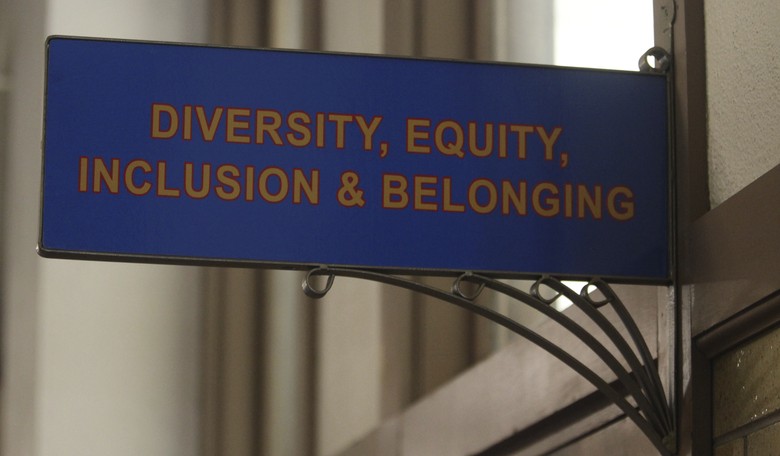
Does the DEI institution really need to force private youth clubs or jobs in any sector to include people because of gender or any other factor? No, but it keeps happening. What happened after the Supreme Court case Roberts v. United States Jaycees could be a precursor to DEI.
"Underrepresented groups encouraged to apply:" A large DEI loophole
On October 14, Sen. Ed Markey (D- Mass.) made a post on X encouraging underrepresented groups to apply for internships he hosted: "BIPOC, LGBTQ+, working class, veterans and other underrepresented candidates with special ties to Massachusetts." These internships are for Spring 2027 and are based in Boston.
The word "encouraged" confirms the DEI-based loophole. At first glance, this word can suggest that the groups are not emphasized in any special way, but it would be a bonus if they answered the job application and were on Sen. Markey's team, and there isn't any favoritism shown to any employees.
The word can also be used to indicate that Sen. Markey operates an LGBT- or veteran-friendly workplace.
However, the ad specifically mentions LGBTQ+, BIPOC, and various marginalized groups, rather than leaving out DEI content altogether and making a more generic job opening announcement on X or his website.
That might give an observer reading the job description the impression that the senator would hire an LGBTQ+ employee over a straight employee despite them having similar qualifications.
This internship will occur in the public sector, like all other government jobs, but this DEI "marginalized groups are just encouraged - not preferred - to apply" loophole has occurred in private-sector companies.
A DEI precursor? Why can’t organizations be free of DEI anymore?
1920 brought about the United States Junior Chamber, or the Jaycees. The Jaycees club was founded to develop financial, networking, and professional skills among young men from 18-35 years of age. Since the club's target audience was young men, the original rules did not let older men or women join.
This caused a 1984 Supreme Court case: Roberts v. United States Jaycees, where the state of Minnesota got angry about the national Jaycees membership rules because regional Jaycees clubs wanted older men and women to be complete members of the groups beyond associates and there was an anti-gender discrimination state law.
The Court thought that the club's goals would not be harmed if it were compelled, at any point, to add women to the club. As anyone can learn business networking tactics, they said, the Jaycees must legally admit women.
Leadership is more of a gender-neutral thing, they argued, and the Court pointed out that the Jaycees club was created to develop such business sense. This is comparable to DEI content being added to generic and gender-neutral activities, like Sen. Markey's political events.
The Jaycees lost the case, and because of it becoming a significant case in gender discrimination news, other youth clubs lost the ability to exclude would-be members based on gender or other factors.
When a club is allowed to create its own requirements and post them on an FAQ or somewhere else widely read by the public before joining the club, its purposes will be clearer to the general public. Hence, the government should not have been allowed to take away the Jaycees’ constitutional freedom of association.
Before this apparent precursor to DEI, the Jaycees simply retained and defined their target audience as being young men only, similarly to how sororities had the intent of being an exclusive organization, as they were only supposed to be for women, and fraternities for men.
Takeaway message
The outcome of Roberts v. United States Jaycees provides a new perspective on situations such as the Boy Scouts and Eagle Scouts allowing girls to join those activities in 2019 and 2021, respectively (despite Girl Scouts already existing), Greek Life organizations allowing students who are biologically the opposite gender to be included, and DEI content encouraging various underrepresented groups to apply in a manner that overshadows white males.
These organizations showed a similar preference to DEI demographics as Sen. Ed Markey, including LGBTQ+ groups, and overshadowed their original audience, even if the organization has knowledge of the First Amendment freedom of association.
Recommended: Adventures in the Patriarchy™: The Coconut Lady Strikes Back