



Sunday Afternoon
Caroline Glick wrote a review of my novel, “No Way In” at her site. Although a lot of people have liked (or disliked) the thriller aspect of the book, Caroline is one of the first to notice it’s actually a religious and philosophical book tricked out as a cliffhanger. She picked out this passage:
I think,” Alex said softly, “that all revolutions are about faith. In this case it’s faith for its own sake, about religion without God. Yes, we are told there could be a paradise on earth. But we’re not really convinced and we don’t really care for as long as we have some religion and some paradise before us.
“This makes it a moral problem, because the paradise we don’t really believe in has to be built with the bricks and mortar of people’s lives. What everyone caught up in revolution wants to know is whether faith in Stalin or Mao or Antonio Moran Singson is enough to kill or be killed for? Because it would be really funny, now that we are talking about religion – now that it is clear that’s what we are really talking about – to exchange Communism for Christianity and Trotsky for Moses. If you find your arms can’t reach the heavens, what is the sense to worshipping a model in mud on the ground?”
“So what do you believe in, Alex?” Justine asked. “In the old ways?”
“In the unchanging ways, in the human condition. What condemns us to freedom is the chance that God might exist. And if salvation is real, then freedom is real too.”
“Real freedom,” Justine asked, “must include the right to choose slavery or even Hell, though I can’t think of a good reason for anyone to choose it. Is that part of freedom?”
“It seems that deciding never to choose again is the one act that is forbidden to us,” Alex said. “To do that would be to leave the circle of mankind forever.”
Some might think its hard to discuss contemplative themes and still write something “so engaging that I ended up taking last Wednesday afternoon off to finish it” but the opposite is true. Part of the force of Hammett or Chandler’s writing and the better Hollywood scripts consists precisely in the self-reflection of the characters. They are never more alive than when they realize they are part of a story and consider on their own parts and wonder.
One last reflection on storytelling. Perhaps the best metric of the worth of a book, to an author at least, is whether beyond the usual yardsticks of sales and reviews, you are glad you wrote it. I’m glad I wrote it.
“No Way In” print and Kindle edition at Amazon
Tip Jar or Subscribe for $5
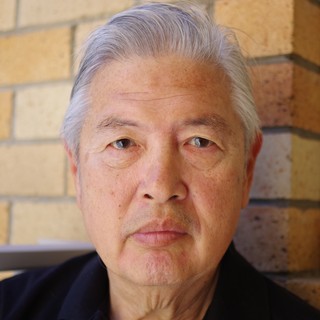






And I’m glad I read it. Thanks, Wretchard, for a book that’s both engaging on first acquaintance, and re-engaging on subsequent revisits.
Caroline is one of the first to notice it’s actually a religious and philosophical book tricked out as a cliffhanger.
That’s because the author’s speciality is always philosophical, ethical kinds of issues presented in thoughtful, poetic and symbolic ways. Religious only in a sort of a meta- way, don’t see a lot of stained-glass or snake-handlers around here.
… speaking of which I got the distinct impression this morning that Brit Hume has wandered by BC in the last week or so.
And I’m glad you wrote it too, and happy for you for getting a great review from a very serious writer.
My wife is reading a book about the perfume industry, and it contains an interesting observation from a French perfume executive, which I’ll paraphrase.
I think authors follow types, but they aren’t divided into just two categories, though for the purposes of this comment, let’s pretend they are. Which would you rather be? The first type or the second type?
Personally I had a horror of attempting anything that might be construed as art, because I’m not the Hermes scarf sort of guy. Moreover, I have this strange notion that anything that seriously starts out aspiring to “art” is hexed. That’s something you achieve by accident, because who knows what it is?
So to some extent, I wanted the book to be just an exciting drug store paperback so that I could at least tout it without embarrassment,though I don’t mind if people find it a little bit more than that.
This is not original but to me “art” occurs/exists when something is just right for its purpose, eg a canoe paddle, A-10 Warthog, or a bench vise. I saw a fascinating “art” exhibit once consisting of displays of computer chip engineering drawings (or blueprints?), starting with the first ones done by hand, getting progressively more complex and color-coded, and finally drawn by computers as no human could possibly keep track of the different layers, switches, and circuits.
Thus, simply by obeying the laws of physics and the principles of engineering, exquisite works of “art” were created, without any intent to do so. Such things, naturally beautiful, give us a glimpse of something we often can’t put into words. I stood and stared at those things for a long time, forcing myself not to think about them, just look.
Deliberately setting out to creat “art” I think too often just ends up something banal—except for those, like Van Gogh maybe, who just have to and will despite ridicule. To me, that’s natural, like the computer chip layouts.
I haven’t read it yet but I want it today! Is it on Kindle?
This is one of the finest exposition of the ideas that you outline here.
http://www.amazon.com/Time-Patrol-Poul-Anderson/dp/1416509356
@Gordon”This is not original but to me “art” occurs/exists when something is just right for its purpose, eg a canoe paddle, A-10 Warthog, or a bench vise.”
Frank Lloyd Wright is considered one of the greatest architects who ever lived. One of his greatest achievements is the Florida Southern College campus in Lakeland, Florida. When I lived in Lakeland I used the library. It was full of head-bangers, as were the covered walkways. And don’t get me started on his furniture, with its perfectly square unsittable chairs. Wright fails Gordon’s test many times over.
It is on Kindle. Just follow that link.
I believe art can be a reflection of the beauty in an artist, and that itself is a glimpse of the Creator.
re: A-10. I’ve had the privilege to serve with the gentleman who persevered through bankruptcy and fierce criticism to create the A-10 (which is but a short footnote on a remarkable career beginning as a teenager runner for the resistance – who was captured and tortured by the Nazis) and I know the light does shine.
A more unassuming and humble man I’ve yet to find, sustained by his faith and those he inspired (and continues to challenge and educate – an engineer-physicist of the old school seldom seen in the narrow specialists we currently graduate, many who are surprisingly innumerate and lacking even a glimmer of the Feynman skepticism of everything PC).
As a novelist, I can easily report with great dismay that very few people read for meaning anymore. Over the years my writing has become increasingly simplistic and yet still the majority of readers have no clue what I’m writing about beyond the plot.
The only person who ever got my work is my rabbi.
It doesn’t surprise me that Caroline, then, would see deeper into No Way In.
(Yes, I have it. No, I haven’t read it yet.)
And yes, I was very surprised to see a mention of Luca Turin here. I’ve been reading about perfume, too.
I’ve always bought into the theory that if you don’t read you can’t write. It a very personal thing but I’ve always kind of wanted to see Wretchard’s reading list. I suspect though that it would take up a book to make the list.
I wonder what Obama and the people around him read…..if anything.
Michael Ledeen was comminting on his Pajama’s Medium blog that the gaffe’s that are constantly showing up in Obama’s speehes is due to the staff proof readers being very narrow and resticted in their education and world view.
The Luca Turin things comes from my wife’s side of interest. But she showed me a clip of his speaking on the subject of perfumes and Turin was interested in the question of how we smell and moreover what it means to us. In particular, he wanted to know how mollecules impart “beauty”. It was a practical problem, because in order to design a scent efficiently, he had to have some idea of how the whole thing worked to prevent a complete relapse into trial and error.
The one thing I came away with from Turin’s talk was that the “beauty” lay in the suggestion. The base notes of a scent, conveyed with only harsh edges, would be no different from aftershave, I guess. It’s the imperfections, the elusive stuff that provides the “beauty” part.
I think it was CS Lewis who remarked that ultimately we all fill in the “beauty’ part, which is why all successful art must leave something to the imagination. Lewis also remarked that two people could be looking at the same scene, but when they tried to communicate what they saw in its fullness — not just the base notes — then they would fail utterly. What each saw in completeness was a private vision. They way Lewis put it, I think, is that heaven is made in some sense, for each of us specially.
So in the matter of “art”, what we can reliably construct is the base; like the base on a pizza, and to it we can add such elements as half-lead on. I came away from the Luca Turin talk with a new respect for perfumers. He also said, elsewhere, that the trick was to do this art for a hundred bucks when it used to take ten thousand. So I guess there’s hope for him still.
Richard, thank you. I’m in chapter 1 now.
Thanks Wretchard…just picked up the Kindle version…had to clear my reading backlog and was just wondering what to pick up next when I was reminding about this book. Can’t wait to dive into it.
Great artists understand that the mind creates its own reality. This is so for all reality including music and vision. The challenge for the connoisseur is to fill in the deliberately created gaps. Raymond Chandler, Picasso, Mozart and even some of the contributors to this blog have left a lot of deliberate gaps. Caroline Glick is such a connoisseur.
Cf. the new book “Incognito. The Secret Lives of the Brain”
I would add to Glick’s observation is that is also something of a travelogue as well as a remarkable picture of a society. I don’t know how I would have described the Phillipines of that time but it probably would have amounted to Gilligan’s Island with a few more lights, phones and motorcars. And I would not have given a rat’s rump if that view was inaccurate. I learned something I did not particularly wish to know and enjoyed it.
One of the more remarkable old films I have seen was a travelogue and piece of propaganda as well. I think the title was “The 38th Parallel” about the survivors of a sunken German U-boat who try to escape through Canada. I would not have cared in the least to watch a travelogue about Canada in 1940, but it hooked me in. No Way In was like that as well.
As for “art,” I define that is the very best you can do at a particular level of education, talent, and experience, and not just authentic greek urn no 50,269 witha Chinese label on the bottom, even if the original model was art. By that defintion I think that No Way In is indeed art.
http://www.imdb.com/title/tt0033627/
RWE, you mean the 49th Parallel…
A war film set in pre-Pearl Harbor Canada — from Hudson’s Bay on south to the dream: the 49th Parallel: USA!
I don’t have an artistic bone in my body and don’t miss it. Mostly when faced with art I shrug my shoulders and head to the fridge for a snack and a beer.
I do read though and appreciate good writing, not that I’m sure exactly what that is. I do know what I like and that’s good enough for me.
I just started “The Creature from Jekyll Island” and think I’m going to like it. In his acknowledgments the author; G. Edward Griffin, points out that a writer who steals one man’s writing is called plagiarist. He who steals from many is called a researcher.
Tickled my fancy that did.
EG/7—agree; although I’m not well-informed about his work, I think his early stuff was pretty good, simple. But then he became famous . . .
AT/9—if you can, I like for you to tell more about this person and the A-10 or is there perhaps a publication?
“No Way In” is a very good read. It is thoughtful and well written. The unique story line is powerful and the writing is tight. There are many places in the book that start the reader thinking outside of the book’s story about one’s own life . I would recommend it to anyone.
WWII started on Sept 3 1939 and ended Sept 2 1945. Six long years.
Wretchard, great art gives us new insights into the human condition or experience. That is what you give us nearly every day, without aspiring to “Great Art”. You are an artist, but you just don’t have the affectations of an “artiste”. Many other great artists don’ t as well.
Blert #17:
Yep, I just looked at my official STS-51F Space Shuttle Mission Planning Chart and it would be the 49th parallel. The original idea the Germans had was to escape to the west coast where they would board a Japanese ship, and barring that, to escape to the neutral USA.
Quite a film. They even run into of all people, Leslie Howard, out in the Canadian bush, playing a fop that turns out to be pretty tough when the going gets rough. Of course Leslie was known for P.O.ing the Germans by making popular films that cast them in a bad light. I don’t guess we will ever know if that was why they shot down his BOAC flight out of Lisbon.
I bought it but had a feeling it will be nearly impossible to put down, so I’m holding it for a free afternoon. Now that I’ve read that passage, the afternoon will be made, if it doesn’t offer itself.
The problem with discussing the laws of nature as a means to reach the unknown ineffably beautiful in the context of a discussion of the laws of God who is ineffable beautiful is that you run into a categorical problem created by Descartes/bacon in the early 1600′s–or about the same time as the Pope was chastening Galileo and the Calvinists were at about the height of their power in Europe–during the council of Dort (circa 1616 in Holland–the calvinists were the great losers of the 30 years war (1619-1649)in Europe but they were dominant in America a century later in 1776 so their ideas about the nature of man make it into Americas founding documents).
What Descartes did in the early 1600′s was to systematize science and at the same time he created the tree of knowledge. What he did with that tree was to make theology (along with witchcraft) into a subcategory of philosophy. The problem with this is that while math and science are subbranches of philosophy because “man is the measure of all things”–theology is not. Why not? Because with theology–necessarily–”God is the measure of all things.” We cannot say philosophically/scientifically what ultimate reality is–because you/I/we–cannot measure ultimate realty– not that we shouldn’t try–according to Albert Einstein:
To know that what is impenetrable to us really exists, manifesting itself as the highest wisdom and the most radiant beauty, which our dull facilities can comprehend only in the most primitive forms–this knowledge, this feeling, is at the center of true religiousness. In this sense, and in this sense only, I belong to the ranks of the devoutly religious men.’
Einstein is speaking philosophically–as was Socrates when he said…
‘Wisdom begins in wonder.’
However, we can say theologically what ultimate reality is. Ultimate reality is God. From this ultimate reality God we can draw the plumb line. Why? whereas God is unchangeable immutable immortal omniscient omnipotent–man is not. I am not. You are not. We are all very changeable–relative to God.
But because Descartes fused the categories of man centered philosophy and God center theology– later in the 1600′s when Issac newton came to look at theology — he came with the premise that theology is a subbranch of philosophy–that he could draw the plumb line on God–that man is the measure of all things–including God. On the continent–the higher criticism school did the same thing. If you begin with the premise that man can measure ultimate reality –that man is the measure of all things–including God–then there really isn’t anything supernatural. There are no miracles. Therefor Jesus could only have been a man. This is why Newton and the Higher Criticism school on the continent became the great progenitors of the modern arian heresy. (which holds that Jesus is just a man.) The higher criticism school took hold of the theological schools in Europe during about 1850 and killed the protestant churches there within five generations. Francis Crick the discoverer of the double helix was an atheist. Like all geneticists he was struck by how the genetic code looks like the hieroglyphics of an ancient civilization. Asked where they came from–he replied “space aliens.” That means there’s a second great unknown. We cannot say philosophically/scientifically how or why life from inorganic chemistry or how/why complex organic chemistry came from simple inorganic chemistry. But we can say theologically where life came from. Life came from God. So yes, the laws of nature and beauty come from God because God is nature’s God and he is beautiful –(as well as our God). But the 1.knowledge of nature and the apprehension of beauty 2.knowledge of God are two different orders of knowledge.
Tolkein in his theory of subcreation made clear that for Fiction to work it must obey its own rules. That ability to deliver a message while operating under a constraint is what distinguishes Art. In a good thriller the reader joins the protagonist in discovering what the rules are.
Refer to Caroline Glick’s website that Wretchard linked. Glick wrote:
“Fernandez is the sole author of the Belmont Club, now at Pajamas Media. I’ve been following his writing for years.”
Caroline Glick is a world class journalist and political commentator. She’s in the same league with Charles Krauthammer and Victor Davis Hanson. Her comment about lurking at Belmont Club confirms what I’ve long suspected, i.e. the Belmont Club has significant political impact. We need to maintain the high quality of our comments at Belmont Club, reject moonbats/trolls and be mindful that bad guys are also lurking here.
I downloaded the Kindle edition and read your book. I enjoyed it thoroughly because it portrayed brave and honorable characters engaging in doing things that needed to be done. It was also educational about a place and time I knew little about. At the same time it was an exciting read. Art? I don’t know how to judge that, but as a book it was a success on several levels.
I certainly enjoy reading Wretchard’s work and have followed it for many years. He has a knack for describing things as they are. Artists do that as well, using whatever their chosen media to communicate their descriptions. One can only describe what they know or understand.
I think the reason there are so few trolls at the BC is that they don’t understand or appreciate what Wretchard is talking about – it’s beyond them what we find here.
But we have something special.
28. aaron
A similar thought to yours – the point of both art and science is to give a coherent account of human experience.
Poetry is condensed truth. The best poem includes all words needed, and removes all words not needed. So a talented poet has an eraser worn from removing words not needed. So what is not seen is just as important as what is seen.
Regarding theology, Truth is paradoxical. The more you understand a paradox, the more painful, because it peels an onion that grows larger the more you peel. Each half of a paradox is true, and also cannot be true if the other half is true. Once you understand this it becomes simple. Or you become simple. A wise fool.
Naming things. We seem to think to name something, is to understand it. We name “God”… “God is Love” etc.. As though we now understand him/her/infinity. Have a god in a box. Say “Now I know God.” We are all heretics. Our vision of God is false, no matter how familiar we are with I AM. Yet one mystery of the Bible is how “The Name of Jesus”, has power. How is that possible. Is it separate from Jesus, variously called Jesus Christ, and Christ Jesus. Are these the same name, or different? Such a simple question. Any answers?
Clarke in “The Nine Billion Names of God”, has Monks write all the names of god. They finish, stars go out. Names. What is Truth or truth? What is beauty? I know it, when I see it? Or does that depend on what the meaning of the word it is.
Stephane Mallarme admonished his circles of painters in Symbolist/Impression-era, Third-Republic Paris to “paint not the thing, but the effect it produces.”
It is as distilled a summation on the search, process, and perception on “art,” of any era and medium, as any other I’ve come across.
The classical Greek word for “art” literally translates as “technique.”
Read this yesterday and was moved to order the book. I’d been dithering about it for awhile but it’s now on my Kindle and I’m very much looking forward to reading it.
