PJ Lifestyle
Why Does Classical Music Make You Smarter?

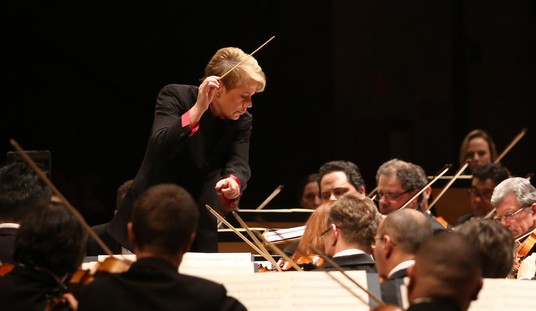
Thirty-six million Chinese kids now study classical piano, not counting string and woodwind players. Chinese parents pay for music lessons not because they expect their offspring to earn a living at the keyboard, but because they believe it will make them smarter at their studies. Are they right? And if so, why?
The intertwined histories of music and mathematics offer a clue. The same faculty of the mind we evoke playfully in music, we put to work analytically in higher mathematics. By higher mathematics, I mean calculus and beyond. Only a tenth of American high school students study calculus, and a considerably smaller fraction really learn the subject. There is quite a difference between learning the rules of Euclidean geometry and the solution of algebraic equations: the notion that the terms of a convergent infinite series sum up to a finite number requires a different kind of thinking than elementary mathematics. The same kind of thinking applies to playing classical music. Don’t look for a mathematical formula to make sense of music: what higher mathematics and classical music have in common is not an algorithm, but a similar demand on the mind. Don’t expect the brain scientists to show just how the neurons flicker any time soon. The best music evokes paradoxes still at the frontiers of mathematics.
In an essay for First Things titled “The Divine Music of Mathematics,” just released from behind the pay wall, I show that the first intimation of higher-order numbers in mathematics in Western thought comes from St. Augustine’s 5th-century treatise on music. Our ability to perceive complex and altered rhythms in poetry and music, the Church father argued, requires “numbers of the intellect” which stand above the ordinary numbers of perception. A red thread connects Augustine’s concept with the discovery of irrational numbers in the 15th century and the invention of calculus in the 17th century. The common thread is the mind’s engagement with the paradox of the infinite. The mathematical issues raised by Augustine and debated through the Renaissance and the 17th-century scientific revolution remain unsolved in some key respects.
The Men Responsible for Starving Egyptian Families
Egypt’s pound has fallen by 40% since last December, from 6 to the dollar to 8.25 to the dollar on the black market. The prices of basic food items like beans and milk have risen by more than that, pricing all forms of protein out of the range of the half of Egyptians who live on less than $2 a day. And the worst is yet to come: according to the U.S. embassy, the Muslim Brotherhood government has vastly inflated its estimates of this year’s wheat harvest in order to keep export orders down — because it doesn’t have the money to pay for them. Egypt reportedly got $5 billion in emergency loans from Libya and Qatar (although it is not clear how much of that can be spent), but that barely covers the government’s arrears to oil companies operating in the country. I published an update on Egypt’s economic free fall in Asia Times Online this morning.
Mohammed Morsi’s Islamist government is living hand to mouth, stiffing suppliers and exporters, and cadging emergency loans, but it hasn’t ordered a shipload of oil or wheat since January. When things get this bad, everyone who can get dollars out will. The ship is sinking, and the cry is, “Women and children last!”
Here’s an example.
Just after I filed the story, Al Ahram reported that the country’s cotton exports had dropped 40.6% between September-November of 2012 and the same period of 2011 (hat tip: Daniel Pipes). According to the Egyptian daily, the drop is due to much larger domestic purchases of cotton by local textile companies:
Egyptian textile companies bought 415.8 thousand metric quintals of the local cotton in the period September-November 2012, a whopping increase of 326 percent compared with the corresponding quarter a year before.
That makes no sense, because Egyptian textile exports also fell by a big margin.
‘I Have a Mustard Seed, and I’m Not Afraid to Use It’
All who love the Free World heard with sadness today’s news of the abdication of Pope Benedict XVI, whose physical infirmity caused him to step down from the chair of St. Peter. As the shepherd of the founding institution of the West, Benedict personally embodied its best traditions. He is one of the last men living to have assimilated the fullness of European culture, a member of the “heroic generation” of Catholic theologians that included Henri de Lubac and Hans Urs von Balthasar.
We will remember many acts of intellectual courage from this pope. One in particular comes to mind today, namely his speech at the University of Regensburg on September 12, 2006. In the face of great controversy, Benedict cited the Byzantine emperor Manuel II Paleologue: “Show me just what Mohammed brought that was new, and there you will find things only evil and inhuman, such as his command to spread by the sword the faith he preached.” And he added:
The emperor, after having expressed himself so forcefully, goes on to explain in detail the reasons why spreading the faith through violence is something unreasonable. Violence is incompatible with the nature of God and the nature of the soul. “God,” he says, “is not pleased by blood—and not acting reasonably is contrary to God’s nature.” . . .The decisive statement in this argument against violent conversion is this: Not to act in accordance with reason is contrary to God’s nature. . . . The editor [of the Greek text from which Benedict is quoting], Theodore Khoury, observes: For the emperor, as a Byzantine shaped by Greek philosophy, this statement is self-evident. But for Muslim teaching, God is absolutely transcendent. His will is not bound up with any of our categories, even that of rationality. Here Khoury quotes a work of the noted French Islamist R. Arnaldez, who points out that Ibn Hazm went so far as to state that God is not bound even by his own word, and that nothing would oblige him to reveal the truth to us. Were it God’s will, we would even have to practice idolatry.
Benedict’s commitment to theological truth as he understood it at the expense of political correctness is unique among today’s religious leaders.
Jewish communities in particular have reason for sadness at Benedict’s abdication. He is a true friend of the Jewish people. As Israeli journalist Assaf Sagiv wrote in the Autumn 2009 issue of the quarterly journal Azure on the occasion of the pope’s May 2009 visit to Israel:
Benedict XVI—the former Joseph Ratzinger—is actually one of the best friends the Jewish people has ever had in Vatican City. On the eve of the pope’s visit, Aviad Kleinberg, a scholar of Christian history and a columnist for the Israeli daily Yediot Aharonot, attempted to remind his readers of this. Ratzinger, he explained, “was the confidant of Pope John Paul II, and his immense theological authority was a critical aspect of the previous pope’s moves…. John Paul and Ratzinger buried once and for all not only the accusation of the Jews’ murdering the messiah, but the entire theological theory that the Christians replaced the Jews and are now the Chosen People and that the New Testament annuls the Old Testament. The Old Testament is still valid, declared the two, and the Jewish people is still God’s chosen and beloved people.”
I wrote at the time on the website of the religious magazine First Things where I was then an editor:
Benedict’s unprecedented efforts to draw near to Judaism as a religion were summarized by the Bonn University theologian Karl-Heinz Menke, who argues that His Holiness is the first pope since St. Peter to read the whole of the Gospels as a Jewish work. From a theological standpoint, the Jewish people have had no better friend in the Vatican since the founding of Christianity.
Why J.R.R. Tolkien’s Enduring Popularity Is a Cause for Hope in Our Popular Culture
Peter Jackson’s first of three “Hobbit” films took a thrashing from the critics, who disliked the effect produced by the new 48-frames-per-second projection system. This makes everything a bit too clear, a bit too smooth, such that sets and costumes seemed artificial to some. It is off-putting at first. Halfway through the film, though, I suddenly thought, “This is the way I saw the world when I was a child!” There are many wonderful things about Jackson’s film, of which the choice of Martin Freeman as Bilbo Baggins stands at the top of my list; unlike the listless Elijah Wood, a boy playing the role of the middle-aged Frodo in the “Rings” trilogy, Freeman is a grown-up. He is a master of English understatement but also an actor of great range, and he carries the film brilliantly. As in the “Rings” trilogy, the sets and settings are marvelous. Especially gratifying was the inclusion of many of Tolkien’s poems with affecting settings by Howard Shore.
J.R.R. Tolkien’s enduring popularity is cause for hope in popular culture. He did not write fantasy so much as roman à clef about the past and future of the West. His Hobbits are the English standing against totalitarian aggression — the two towers of Berlin and Moscow — with decency and courage. “Alone among 20th century novelists, J.R.R. Tolkien concerned himself with the mortality not of individuals but of peoples. The young soldier-scholar of World War I viewed the uncertain fate of European nations through the mirror of the Dark Ages, when the life of small peoples hung by a thread. In the midst of today’s Great Extinction of cultures, and at the onset of civilizational war, Tolkien evokes an uncanny resonance among today’s readers,” I wrote when the first of the Rings films appeared. I am no maven where Christian literature is concerned, but Tolkien’s theological depth impressed me:
Tolkien is a writer of greater theological depth than his Oxford colleague C S Lewis, in my judgment. Lewis is a felicitous writer and a diligent apologist, but mere allegory along the lines of the Narnia series can do no more than restate Christian doctrine; it cannot really expand our experience of it. Tolkien takes us to the dark frontier of a world that is not yet Christian, and therefore is tragic, but has the capacity to become Christian. It is the world of the Dark Ages, in which barbarians first encounter the light. It is not fantasy, but rather a distillation of the spiritual history of the West. Whereas C S Lewis tries to make us comfortable in what we already believe by dressing up the story as a children’s masquerade, Tolkien makes us profoundly uncomfortable. Our people, our culture, our language, our toehold upon this shifting and uncertain Earth are no more secure than those of a thousand extinct tribes of the Dark Ages; and a greater hope than that of the work of our hands and the hone of our swords must avail us.
When Does Religion Become Illegal?
Is it illegal to be a Catholic in the United States? That’s kind of a grey area, after Barack Obama’s Health and Human Services Department issued an Aug. 1 order requiring all employers offering medical insurance to cover “reproductive services,” including contraception as well as abortion drugs (hat tip: www.politicaloutcast.com). Under the “required health plan coverage guidelines,” HHS lists:
All Food and Drug Administration approved contraceptive methods, sterilization procedures, and patient education and counseling for all women with reproductive capacity.
That includes abortion-inducing drugs. If you manage a Catholic institution, you either violate your most basic religious principles or fail to comply. The correct answer, evidently, is that you can be a Catholic at home with closed shutters, but you can’t have Catholic institutions.
It’s still legal to be a Jew in the United States, but not in some parts of Europe. After a June 26 ruling by a Cologne court defining infant circumcision as “inflicting grievous bodily harm,” you can go to jail (at least in theory) for performing Jewish ritual circumcision. Although German Chancellor Angela Merkel and other political leaders have promised to find a legislative way around the court and uphold religious freedom for Jews and Muslims, policies against circumcisions are proliferating. Two Swiss hospitals have stopped circumcisions (although they continue to offer euthanasia). One Austrian province banned circumcision before the Justice Ministry intervened. Now Norway’s ombudsman for children’s rights demands that circumcision be replaced with a “symbolic ritual.”
While a ban on kosher slaughter was narrowly averted in the Netherlands, European rabbis warn that a new wave of attacks on this basic Jewish practice is in the offing. Jews who stand by while America’s largest religious community, the Catholic Church, is persecuted should remember that we’re next. The Catholic Church is the only European institution that has consistently defended Jewish religious freedom in Europe. It would be hypocritical as well as self-damaging if we Jews failed to do everything in our power to support Catholics against this new persecution.
Why You Won’t Find the Meaning of Life
The “meaning of life” business is booming despite the recession. After eviscerating Jim Holt’s new meaning-of-life tome in an Asia Times Online review, I felt sufficiently saturated with antibodies to watch Terrence Malick’s Oscar-nominated existential epic Tree of Life on pay-per-view. Giggles overcame me after about half an hour.
As G.K. Chesterton said (actually, he didn’t quite, but should have), if you stop believing in God, you’ll believe in anything. For all their self-righteous scientism, atheists turn into the soupiest spiritualists when it comes to problems like birth and death. Malick’s silly flick wants to project the problems of a 1950s Texas family onto a cosmological backdrop, with images of the birth of the universe, or whatever. It so pretentiously idiotic that I wrote off the $4.99 I had paid to Time Warner Cable in short order.
Woody Allen had it down pat in Antz. An ant on a couch tells an ant psychiatrist, “I feel so insignificant!,” to which the ant psychiatrist replies, “That’s a breakthrough. You are insignificant.” I’m not out to proselytize, but the choice is digital: either the Maker of Heaven loves you, which makes you significant, or the idea of a Creator God is as of the same ilk as Richard Dawkins’s Flying Spaghetti Monster, in which case you are insignificant. In the latter case, get over it.