Claudia Rosett

Claudia Rosett is journalist-in-residence with the Foundation for Defense of Democracies, and heads its Investigative Reporting Project. She is widely recognized as a ground-breaking reporter on corruption at the United Nations. Her investigative reporting skills, drawn from three decades as a journalist and editor writing on international affairs, led her to expose the U.N. Oil-for-Food scandal, the worst financial fraud in the history of humanitarian relief. Due in substantial part to her investigation, the U.S. House and Senate launched inquiries into the program. Ms. Rosett has appeared before five U.S. House and Senate Committees and Subcommittees to testify on U.N.-related corruption. Her work on Oil-for-Food earned Claudia the 2005 Eric Breindel Award and the Mightier Pen award.

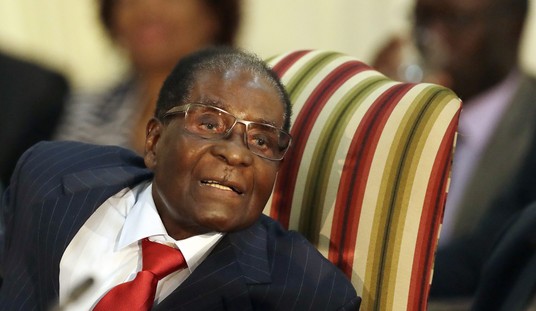
Yep: Robert Mugabe, UN Leader for Tourism

Surely even the United Nations would hesitate over celebrating Zimbabwe’s longtime despot, Robert Mugabe, as a “leader” of any kind?

That’s why, in my previous post, I hesitated to assume the accuracy of a dispatch in the Zimbabwe Herald that the UN World Tourism Organization is appointing Mugabe as one of its “international tourism ambassadors.”

My apologies for doubting the Herald, which, as it turns out, was correct in its report. I sent a query to the UNWTO’s “Principal Media Officer,” as listed on the UNWTO web site, and received confirmation, by email, that the UNWTO is indeed celebrating Mugabe, as part of its “Leaders for Tourism Campaign.” Yes, the UNWTO’s Jordanian secretary-general, Taleb Rifai, will be visiting southern Africa, reportedly this Monday (that’s according to the Herald — the UNWTO did not provide a date) to dignify Mugabe, along with Zambia’s President Michael Sata, as UNWTO “leaders.”

The reason Rifai is going to such lengths, explains the UNWTO press office, is that Zimbabwe and Zambia will be co-hosting the UNWTO’s General Assembly next year, at Victoria Falls. Quite likely that augurs a pleasant excursion for the eminences and UNWTO staff who will be attending the UNWTO’s 2013 General Assembly, plus plenty of diplomatic glad-handing for co-host Mugabe.

Will the UNWTO’s festivities promote better times for the people of Zimbabwe — battered and impoverished  as they are, due to decades of Mugabe’s thuggish rule? Well, the UNWTO is a UN organization that includes North Korea and Syria, as well as Zimbabwe, among its members; and seated on its 32-member governing board are such tourism-challenged regimes as those of Zimbabe, Russia, Saudi Arabia and Iran. Don’t get your hopes up.

Posted at 4:25 am on May 27th, 2012 by Claudia Rosett

Robert Mugabe, UN Tourism Ambassador?

Surely they’re kidding….or are they?

From Zimbabwe comes a report that the United Nations World Tourism Organization (UNWTO) is appointing Zimbabwe’s President Robert Mugabe as a UN international tourism ambassador, in recognition of all he’s done to promote and develop — yes — tourism. According to the Zimbabwe Herald, this is an honor Mugabe will share with Zambia’s President, Michael Sata, because “The two leaders have shown that tourism is central to the development of Africa by naming it as one of the four pillars of economic development.”

One might have supposed that the prime pillar of African development would be to dispense with rulers such as Mugabe, who during more than three decades in power has reduced Zimbabwe from a bread basket of southern Africa to a basket case. But reportedly he is due to sign a “golden book of tourism” on May 28th, in a ceremony to be witnessed by the Jordanian head of the UNWTO, Talib Rifai.

On the UNWTO site I have so far found no mention of this honor being conferred on Mugabe. Neither do I find any denial of this report. The whole thing needs checking with the UNWTO, and I’ve just sent them a query about it. But while we await word of what’s really going on here, I’ll observe that it would be a lot easier to dismiss this sort of story out of hand, had the UN in previous years refrained from such travesties as tapping Mugabe’s regime  to head (I am not making this up) the UN’s Commission on Sustainable Development, or appointing a daughter of Libya’s late tyrant Muammar Qaddafi as a goodwill ambassador for the UN Development Program. Perhaps the report of Robert Mugabe, UN tourism ambassador, is a complete misunderstanding, and the UNWTO would not dream of disgracing itself this way? We shall see…

Posted at 4:02 pm on May 22nd, 2012 by Claudia Rosett

Will Vogue Magazine Ever Learn?

You might suppose that Vogue magazine would have learned to be a lot more careful about its cover stories, after the landmark outrage of its February, 2011 cover spread lauding Syria’s Asma al-Assad, wife of the dictator.

Not quite.

Who can forget that cover story? Profiling Asma as “A Rose in the Desert,” writer Joan Juliet Buck gushed on and on about Asma, first lady of Syria: “glamorous, young and very chic — the freshest and most magnetic of first ladies.” Vogue treated its readers to a tour of Asma’s “wildly democratic” life with her husband, Syria’s President Bashar al-Assad, and described Asma as leading a down-home life of style and good works, answering the door of the presidential residence herself, “in jeans and old suede stilleto boots,” and rushing around, “breezy, conspiratorial and fun,” accessorized with little more than her Chanel agates and a Syrian-silk Louboutin handbag.

It was all about rebranding Syria’s regime as open, modern, classy. Asma, according to Vogue, was on a campaign to promote what she called Syria’s “brand essence.”

The month after Vogue ran that cover story, Syria’s people rose in open protest against the Assad regime — protest that has now gone on for 14 months, to which the regime has responded with hideous violence, shelling, shooting, jailing, and torturing, with a death toll now topping 10,000. During these horrors, as we now know from leaked emails, Asma whiled away some of her time with high-end online shopping.

Vogue initially defended its Asma cover story; then — as the carnage in Syria kept making headlines — scrubbed the piece from its web site.

Now, in a more subtle manner, comes another Vogue exercise in branding — this one featuring United Nations Secretary-General Ban Ki-Moon on the May cover of Italian Vogue. In this case, unlike that of Syria’s regime, there is at least some reasonable justification for the advertised aim — which is “rebranding Africa.” Reportedly, L’Uomo Vogue is trying to create a better image for Africa’s more successful ventures, calling attention in an accompanying press release to “a positive side to the continent.”

Fair enough. But in that case, why on earth is Ban Ki-Moon the cover celebrity for this issue focused on the better side of Africa? In an article on this latest bout of Vogue creativity, the Guardian suggests that Ban is such a big draw — interviewed by Italian Vogue editor Franca Sozzani — that his starring appearance suggests Vogue is serious about giving Africa a boost.

Posted at 5:50 pm on May 14th, 2012 by Claudia Rosett

The UN and the Terrorism Trade

Compensation of victims of terrorism sounds like a good idea. But is this something the United Nations should be involved with?

Fresh from the Guardian newspaper comes a dispatch headlined “UN moves to compensate the victims of terror: Report will recommend far-reaching changes to rebalance international law in favor of those who have suffered.”

The report in question, details of which have apparently leaked to the British press, is the work of the UN’s special rapporteur for counter-terrorim and human rights, British lawyer Ben Emmerson. In it, according to the Guardian, Emmerson proposes a global overhaul of insurance policies, to provide for compensation to victims and next of kin, in the event of terrorist attacks. This coverage would affect everything from travel to medical to life insurance, including “as appropriate, restitution, compensation and rehabilitation.” The Guardian article notes that this report, if accepted by the relevant UN bodies, would entail a system in which all UN member states would adopt a uniform set of standards for compensating victims of terrorism.

There’s plenty to be said for the idea that justice should be done. In this regard the Guardian cites the case of a British citizen, Will Pike, wounded in the 2008  Islamist terrorist attack on Mumbai.

But the prospect of the UN hashing out such a system is not one that augurs justice. Emmerson, as rapporteur, works under the aegis of the UN Human Rights Council in Geneva. His report is due to be presented to the Human Rights Council on June 20, and  then to the General Assembly in New York, on June 28th.

What’s wrong with that? Well, for starters, there’s the question of how the UN defines terrorism, which at the moment it doesn’t do at all. The UN has yet to produce a comprehensive definition of terrorism — the sticking point being that some member states prefer a definition that would excuse the likes of Hamas or Hezbollah terrorists as being not terrorists at all, but “freedom fighters.”

Posted at 4:02 am on May 13th, 2012 by Claudia Rosett

So, the UN Wants the U.S. to Return Land to Indian Tribes…

Ever ready to meddle where it’s least needed, the United Nations Human Rights Council recently dispatched its special rapporteur on the rights of indigenous peoples, James Anaya, to inspect the United States.

Actually, it appears that Anaya himself is from the United States, or at least his biography says he graduated from Harvard Law School in 1983 and works as a professor of law at the University of Arizona. But for purposes of UN business, the UN tells us, Anaya was “invited” to come to America on his UN Mission — apparently the first time the UN has dispatched to the U.S. a special rapporteur of this kind —  by the Obama administration, along with “indigenous Nations and organizations.”

Anaya’s itinerary included twelve days visiting Washington, D.C., Arizona, Alaska, Oregon, South Dakota and Oklahoma; talking with federal and state authorities, tribal leaders, NGOs and so forth. And on Friday he held a press conference in Washington charging “racism” and “discrimination” and inspiring the Guardian headline, “US should return stolen land to Indian tribes, says the United Nations.” Or, as the BBC further expounds, “UN official calls for US return of native land” — including the Black Hills of South Dakota, site of Mount Rushmore.

Posted at 9:01 pm on May 4th, 2012 by Claudia Rosett

What’s Wrong with Having an Atrocities Czar?

I’m against atrocities. I’m against genocide. I’d bet you are too.

So why is it somehow so troubling that President Barack Obama, citing a “core national interest” and “core moral responsibility” of the United States, has now ordered into existence an inter-agency Atrocities Prevention Board?

The name alone is not a good sign. With its implication of bureaucrats battling evil, it sounds like satire. An outtake, perhaps, from Graham Greene’s novel, Ministry of Fear, or Washington’s variation on Saudi Arabia’s Committee for the Promotion of Virtue and the Prevention of Vice. In editorializing last week on this new Atrocities Prevention Board, the Wall Street Journal rightly warned its readers that “this is not an item from the Onion.”

Nor is the format promising. At least once per month, and more often in times of emergency, the Atrocities Prevention Board, or APB, will convene representatives of State, Defense, Treasury, Justice, Homeland Security, USAID, the Joint Staff, the U.S. Mission to the United Nations, the Office of the Director of National Intelligence, the CIA, and the Office of the Vice President to hammer out “the development and implementation of atrocity prevention and response policy.” The White House is calling this approach “whole of government,” and no doubt everyone will have something to toss into the pot. But if this pileup is now to become yet another piece of entrenched federal bureaucracy, it sounds like a formula for steering policy to the same lowest-common-denominator level as the average National Intelligence Estimate. (I can only guess that they omitted the Post Office and the Department of Transportation because the former is going out of business, and the latter doesn’t answer its phones.) Whether that means the entire exercise will be irrelevant, or actively dangerous, remains to be seen.

Nor, if you have reservations about the priorities of Obama’s National Security adviser Samantha Power, does it augur well that she is heading this new board — becoming, as some have already dubbed her, the administration’s Atrocities Czar. As James Gibney astutely notes on Bloomberg, “Can the Atrocities Prevention Board Define ‘Atrocity‘”? Gibney asks, is it an atrocity that a vast majority of Egyptian married women have undergone genital mutilation? Is it an atrocity when an Israeli missile goes astray and kills a Palestinian family? Is it an atrocity when the Japanese government fails to regulate its nuclear plants, and people die. He asks, “Just where does one draw the line?”

Posted at 11:36 pm on April 30th, 2012 by Claudia Rosett

Doing the Airport Shuffle

I’ve just returned from a meeting of the free-market Mont Pelerin Society in Morocco, the first time this laissez-faire group has met in the Arab world.  The meeting itself was fascinating, and I’ll have more to say about that. But for the moment, a comment on the trip home, which left me yearning — not for the first time — for more private sector ingenuity not only in foreign lands, but at American airports.

I can remember a time when going to the airport was enjoyable. Incredible as it now seems, I used to look forward to it. Arriving at the airport was a prelude to adventure, or a welcoming portal for returning home. You often had to wait in lines, but you were not required to surrender an inordinate measure of human dignity. There wasn’t all that much reason to wonder if someone had mistaken you and your fellow travelers for a herd of cattle. These days, it’s all too common to exit the airport feeling like you’ve just escaped from the chain gang.

The specific airport I went through on this trip was New York’s JFK, though it would be unfair to focus solely on JFK when much the same goes on at every major U.S. airport I’m familiar with. In this instance, I got lucky on the immigration line, which for U.S. citizens, though not for hapless foreigners, was mercifully short. But I was foolish enough to require a connecting flight. For that, in the perpetual hodge-podge-cum-construction-site that is Kennedy Airport, it is necessary to exit one terminal and go through security clearance in another. Apparently it is a matter of continuing surprise to the Transportation Security Administration that airplane passengers turn up in the numbers they do; either that, or the TSA calculates cost-efficiency with a lot more regard for its own convenience than that of the folks who spend millions of man hours every year juggling their carry-on luggage in its lines.

Note — I’m not protesting the wholesale imposition of security checks, though many good articles have been written by now on how the TSA might better spend its resources zeroing in on the likeliest threats, and less on frisking pre-teens and great-grandmothers. I’m simply wondering if, given the TSA’s general approach to security, there might be ways to make it less absurdly onerous for the passengers the federal government is presumably trying to serve.

Clearing security in this instance meant joining a queue that stretched the length of the terminal’s main hall, and then inching along to the place where tickets and identification were checked. There, the real line began — with the preliminary line feeding into one of those zig-zag rope corrals in which you become part of a big rectangle packed solidly with humanity, shuffling first one direction, then reversing course, winding toward the actual security check.

After 45 minutes of that, you finally arrive at the tubs. Those would be the grimy plastic tubs, stacked in somewhat random locations near the x-ray machine conveyor belt, which you are expected to pry loose, align on the belt, fill with your belongings and steer into the x-ray machine — while moving along at a reasonable clip (on this occasion, someone’s carry-on bag jammed at the entrance to the x-ray; the passenger had already walked through the checkpoint, and it took a while for the nearest, yawning security official to notice and stroll over to clear the conveyor belt).

Posted at 11:58 pm on April 28th, 2012 by Claudia Rosett

UNESCO Romances Riyadh

As if any more reasons were needed for the U.S. to pull out of UNESCO altogether,  it appears that UNESCO Director-General Irina Bokova is now celebrating Saudi Arabia as an exemplar of “dialogue” and “building a culture of peace.” Bokova has just dropped in on Riyadh, where — according to the Kuwait News Agency (KUNA) — she decorated the Saudi king with a gold medal, which KUNA describes as UNESCO’s “highest honorary recognition award.” Also in attendance, according to KUNA, were “elite of UNESCO’s ambassadors,” including envoys of  Germany, Brazil, Poland, France, and — now we get to the real UNESCO elite — “Palestine” and Zimbabwe.

I’m not yet sure  what to make of this report of a UNESCO gold medal bestowed by Bokova in Riyadh. On the UNESCO web site, I’m not seeing any mention of it — though perhaps such news will turn up. The UNESCO web site does, however, carry a series of reports on Bokova’s adventures these past few days in Saudi Arabia, including her praise of Saudi science labs, educational ambitions, and a miasma of UN jargon about peace, renewable this and sustainable that. And Saudi Arabia figures large right now at UNESCO. Bokova’s visit to Riyadh follows her opening last week of a three-day Saudi cultural event at UNESCO’s headquarters in Paris.

All this follows Bokova’s lengthy visit in March to the U.S., part of a UNESCO self-advertising blitz in which Bokova has been campaigning for the U.S. to overturn its own law in order to restore the funding UNESCO lost last year due to its own folly in admitting the Palestinian Authority despite warnings from the U.S., and a red light from the UN Security Council.

What’s the common denominator of Bokova’s visits to Saudi Arabia and the U.S.? How should we understand this romancing of both the democratic U.S. and repressive Saudi Arabia? What principle does UNESCO steer by?

These countries have one big thing in common: Pots of money. Bokova runs a UN organization substantially hostile to U.S. values and interests, headquartered in Paris and top-heavy with well-paid officials accustomed to fat perquisites, comfortable lifestyles, and often vague responsibilities. That takes a lot of money, and she appears to be pursuing that money, whatever it takes, and wherever it takes her. The best response for the U.S. would be to pull out of UNESCO entirely, wave good-bye (again) and wish UNESCO’s director general and her flock of “elite” ambassadors a grand old time pursuing dialogue, peace and sustainable cash in Riyadh.

Posted at 9:11 pm on April 23rd, 2012 by Claudia Rosett

China’s “Precious Treasure”

Wire services are reporting that China’s senior official for foreign policy, Dai Bingguo, was effusing Sunday about a relationship he described as China’s “precious treasure.”

What would that treasure be? Why, “The traditional friendship between China and North Korea,” which State Councilor Dai described to a visiting senior North Korean official, Kim Yong-il, as “a precious treasure for our two parties, two countries and our peoples.”

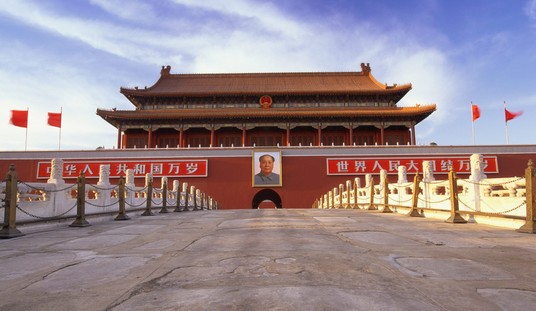
Lest that sound like some sort of ancient Asian bond, tracking back to the misty beginnings of recorded time, let us note that the two parties involved are both products of the 20th century’s monstrous romance with communism, each of these parties wielding monopoly rule over its respective “People’s Republic.” And the two People’s Republics concerned — the People’s Republic of China and the Democratic People’s Republic of Korea — only came into being as such in the late 1940s. Whatever the deeper connections among the actual populations, what Dai was celebrating is a mutually reinforcing partnership of repression and mischief-making at the top, in which China’s regime supports North Korea’s, and North Korea’s regime makes trouble for democracies from South Korea to Japan to America to Israel (recall the nuclear reactor Syria was building with North Korean help, until the Israeli Air Force destroyed it in 2007).

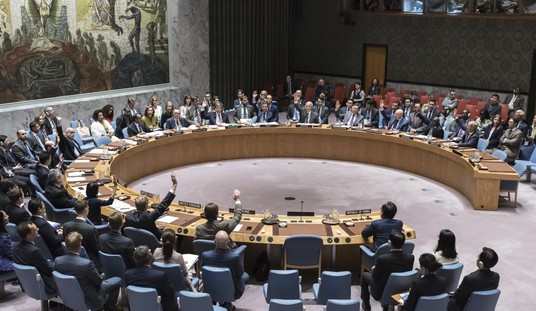
Yes, China went along with the United Nations Security Council on April 16 in giving North Korea a harmless slap over its latest missile launch (the Security Council condemned, deplored, etc., but did nothing likely to stop the next North Korean missile launch, or nuclear test). But Dai laid it on thick this past Sunday in publicly assuring North Korea there are no hard feelings. Not only is the relationship apparently one of Beijing’s real gems, but, praising North Korea’s new tyrant, Kim Jong Un, Dai went on to assure his North Korean guest that “China is willing to work with North Korea to take friendly cooperation to new heights.”  (At any rate, that’s the Reuters translation from the Chinese. The AFP translates the statement as China planning to “push friendly and cooperative China-North Korean relations to a new level.” … Take your pick).

Just a little something to remember, next time Washington diplomats describe China as a valuable ally in dealing with North Korea.

Posted at 9:56 pm on April 22nd, 2012 by Claudia Rosett

Guess Who’s Buying Flowers for Pyongyang

At the best of times, North Korea’s regime ranks among the most vile on the planet, and this past week has not been the best of times. The totalitarian Kim dynasty carries on, and on, from grandfather to father to son — a brutal regime sustained by proliferation, extortion, and counterfeiting rackets abroad, and grotesque repression at home. This is the regime that targeted an estimated one million or more North Koreans for death by famine in the 1990s, and continues to eradicate dissent by means of such atrocities as incarcerating hundreds of thousands of people in Stalinist prison camps, as described in the recently updated report on “The Hidden Gulag.”

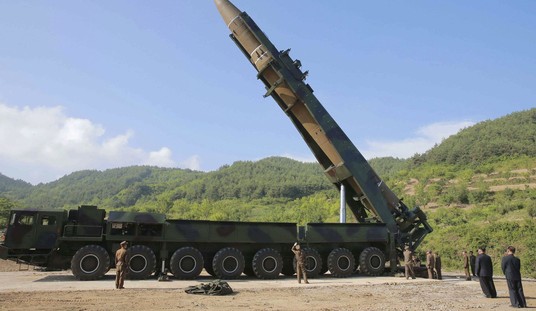
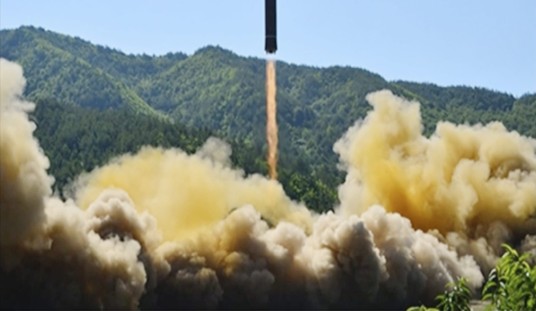
With the late Kim Jong Il now exalted as “general secretary for eternity,” his son, new ruler Kim Jong Un, has just reaffirmed the regime’s “military first” policy, and celebrated the advent of the 100th birthday of Kim Junior’s dead totalitarian grandfather, Kim Il Sung, by conducting a ballistic missile test — which North Korea’s propaganda organs dutifully translated for us as being an attempted satellite launch. There are signs that another North Korean nuclear test may be right around the bend, and this one may be uranium-based, which would be potentially more helpful to North Korea’s business pals in Iran than North Korea’s previous plutonium-based tests, in 2006 and 2009. North Korea’s regime collaborates with Syria and Iran on weapons development. And for its record of kidnapping alone — many of its victims never returned or even fully accounted for — North Korea deserves to be put back on the U.S. government’s list of state sponsors of terrorism.

Yet, even beyond Tehran and Damascus, Pyongyang’s regime has its fans, and receives its share of tribute, including floral wreaths and letters, which the state’s Korean Central News Agency loves to report. For instance, KCNA tells us this week that the communist parties of Peru and Norway sent delegates, bearing gifts, to celebrate the 100th birthday of Kim Il Sung (what the gifts are, KCNA does not explain).

Curious to see who else was sending tribute to the Kim dynasty during this fraught week, I was scrolling through the KCNA site, and lo! What to my wondering eyes should appear but a KCNA report that on Friday — the same day as the missile test (which United Nations sanctions forbid) — “The dear respected Kim Jong Un received congratulatory letters from the offices of the World Food Programme and the United Nations Development Programme.”

Congratulatory letters? For what?

KCNA does not elaborate. To be fair, we can reasonably assume that the World Food Program and UNDP were not congratulating Kim on the missile launch (which was in any event not a successful launch, though such are the hazards of missile tests). And, of course, this is a report from KCNA, a state propaganda organ, prone to such paroxysms as its description Friday of Kim Jong Un as “a great statesman of literary and military accomplishments, who is possessed of outstanding wisdom, distinguished leadership ability, matchless pluck and noble revolutionary comradeship.” It would be unwise to trust entirely to KCNA’s reports.

Except I can find no account of either the World Food Program or the UNDP hustling to deny any such congratulatory letters. If they would like to do so, I would cheerfully write that up. In the meantime, here they are, both these august UN agencies,  described by KCNA as orbiting the firmament of Kim Jong Un, the man of matchless pluck and noble revolutionary comradeship. Were they perhaps congratulating him on pioneering a third generation of totalitarian dynastic rule in North Korea? Or applauding the accomplishments of his grandfather, Kim Il Sung, in founding this family enterprise?

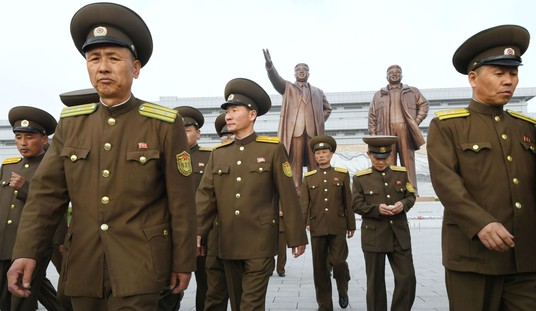
It gets worse. Scrolling further down the KCNA roster of Friday’s doings in North Korea, there’s a more detailed account of UNDP “staff members” laying “a floral basket before the equestrian statues of President Kim Il Sung and leader Kim Jong Il.” Apparently, after the UNDP staffers laid the floral basket before the statues of the two dead totalitarians, they “paid tribute,” according to KCNA.

Posted at 3:06 am on April 15th, 2012 by Claudia Rosett