
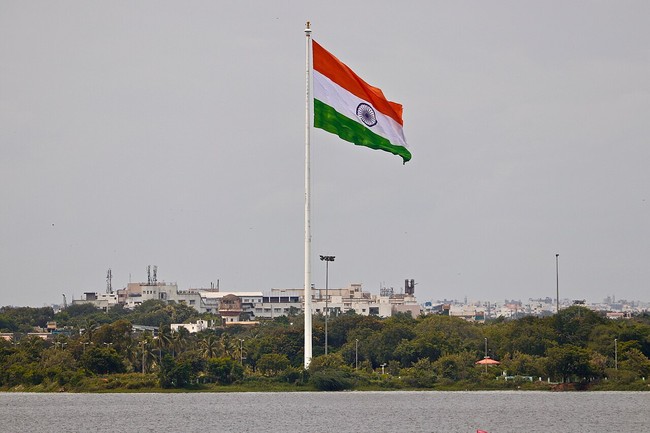
India’s External Affairs Minister, Dr. Subrahmanyam Jaishankar, used the U.N. General Assembly gathering to say something that climate scaremongers like Al Gore and John Kerry have spent three decades excluding from the conversation: “Energy security is at the heart of development. Availability and prices should not be manipulated for political ends.”
The developing world, he said, needs “fair economic and trade practices which enhance our production capabilities and do not reduce us to mere consumers. Our right to industrialize must not be denied.”
Dr. Jaishankar’s statement is a rebuke to climate campaigners who once envisioned India as the poster child of the “green” transition, the manipulators of energy “for political ends.” Those would be the anti-fossil fuel governments that themselves grew rich on coal, oil, and natural gas and now demand that others pursue their own prosperity with inferior energy sources like wind and solar.
The minister knows that a nation without the capability to make steel, cement, fertilizer, and electronics stays a buyer of other people's goods. That is the future of "mere consumers" that he refuses to accept on behalf of India and the rest of the Global South.
What makes this moment interesting is that India's actions presaged Dr. Jaishankar’s words. New Delhi has spent years reciting net-zero talking points at climate conferences while quietly building one of the most aggressive expansions of fossil fuel use on the planet.
India achieved 1 billion metric tons of coal production for the first time in 2024-25, with thermal plants supplying more than 70% of the country's power.
India also turned to the United States to lock in supplies of oil and natural gas, a move I described as a manifestation of energy sovereignty in the India-U.S. deal. Coal for the grid, oil for transport, and gas for fertilizer and industry. That is the energy mix of a country that intends to grow.
In April, the most telling decision to date came when New Delhi quietly withdrew its bid to host the U.N.'s annual climate summit in 2028, citing a "review of its commitments." Its net-zero target of 2070 already was the most distant deadline of any major economy.
Though India has made progress in tackling poverty, its per capita income remains a fraction of G7 nations whose diplomats lecture climate dogma and expect India’s rural families to wait decades for grid-scale batteries so that a European bureaucrat can announce a climate milestone. That is the outrageous bargain publicly rejected by the subcontinent.
India's louder voice did not emerge in a vacuum. The current American administration has created more space for public discussion about the economic consequences of aggressive climate mandates. This matters because Washington still shapes global finance, energy diplomacy, and institutional priorities.
When America treats oil, gas, coal, nuclear power and domestic energy production as strategic assets rather than embarrassments, developing countries are better positioned to resist pressure from globalist bureaucracies. Washington’s pro-energy, pro-growth posture empowers India to speak plainly.
Jaishankar made his argument in the context of the "Global South," and that framing matters. Hundreds of millions of people in sub-Saharan Africa still live without electricity. Many African governments sit on vast gas and coal reserves they are expected to leave in the ground. India, with its economic weight and diplomatic reach, can say what smaller nations fear to utter at the negotiating table.
The climate movement has built its moral authority on the claim that it speaks for the world's poor. India has dismantled that assertion on the U.N.'s own stage. The poor, it turns out, want electricity that works, fuel they can afford, and jobs in factories that run on something more dependable than good intentions.