
Professional “influencers” have two metrics for measuring success: First and foremost is audience size, because that’s how they get paid. Clicks = money.
Audience size is far and away their most important measurable.
The second is how much “influence” they actually have over their audience. That’s the Holy Grail for advertisers, because brand exposure is secondary to audience activation. It’s why programs that capture hearts and minds are exponentially more valuable than ones that don’t.
Most don’t: They amuse more than they influence. In other words, they’re (mostly) empty entertainment calories.
Gaining oodles of eyeballs makes you rich, but influencing political thought makes you powerful.
Think about it like this: There are over 20 billion videos on YouTube. About 0.33% have over 1 million views. That means there are 66 million videos with over a million views. Another 330 videos have more than 1 billion views, with the “Baby Shark Dance” leading the way with over 14 billion.
But how much does “Baby Shark” influence political opinion?
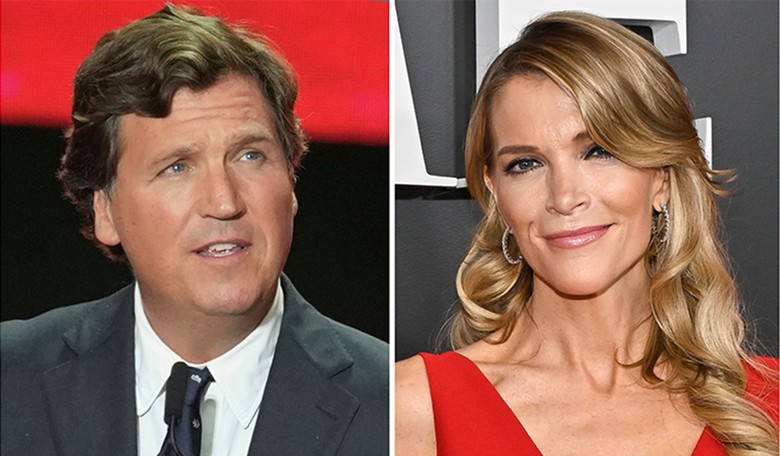
It’s a question worth pondering, because the Iran War has revealed a startling disconnect between MAGA’s most-watched influencers — Tucker Carlson, Megyn Kelly, Candace Owens, and more — and the hearts and minds of MAGA voters. Our influencers are raging against the Iran War with increasingly vitriolic rhetoric:
Iran strikes are ‘disgusting and evil’ says longtime Trump ally and MAGA stalwart Tucker Carlson: report https://t.co/3hIsvFRaNs
— The Independent (@Independent) March 1, 2026
🚨 WATCH: Megyn calls for accountability for the people who pushed President Trump into the Iran war:
— The Megyn Kelly Show (@MegynKellyShow) March 27, 2026
"There are very prominent activists on the right who were practically frothing at the mouth for this thing. It's not only going poorly, but the President's poll numbers are in a… pic.twitter.com/X1i8gAlLsc
Do not join or remain in the United States Military. Trump has betrayed America and expects you to die for Israel.
— Candace Owens (@RealCandaceO) March 6, 2026
There is no honor in being led by dishonorable men to your death. https://t.co/EOnH2d0C2m
Amidst their frantic handwringing and furious teeth-gnashing, they’ve unmasked themselves as rudderless navigators of public discourse: 84% of Republicans still support U.S. military action against Iran — including a whopping 92% of MAGA members.
Furthermore, Trump’s overall approval rating amongst the MAGA faithful remains sky-high:
CNN:
— Karoline Leavitt (@PressSec) March 18, 2026
“MAGA GOP view of Trump, approve is 100%. If you are a member of MAGA in the GOP, you approve of Donald John Trump. 0% say that they disapprove… he’s the 1972 Miami Dolphins.” pic.twitter.com/ELYv9d5OPM
So what’s an influencer supposed to do when they’re incapable of influence?
Simple solution: They move the goalposts and claim their thoughtful, well-intentioned critiques were unfairly maligned.
Some of us expressed great concern about the Iran War when it was first launched. We were shouted down and condemned as “panicans” and “blackpillers” and even Islamist sympathizers. But it’s pretty clear from how things have gone that our concerns were absolutely reasonable and…
— Matt Walsh (@MattWalshBlog) March 28, 2026
I like Matt Walsh. Hands down, he’s the most gifted absurdist in the MAGAverse. But right now, he’s making hay of strawmen, because “expressing great concern” is, was, and will always be perfectly acceptable in the public square.
None of the Iran War critics have been silenced, deplatformed, banned, or censored. To suggest otherwise is a bald-faced lie.
How was Walsh “shouted down”? Nobody took away his megaphone — even though his employer, The Daily Wire, certainly seems to disagree with his opinions. (Company cofounder Ben Shapiro has made his support for the Iran War abundantly clear.) As far as I know, Walsh still enjoys the same editorial freedom to say whatever the hell he wants.
If Shapiro (or others) at The Daily Wire are attempting to muzzle him, Walsh should have the courage to say so. Otherwise, he’s tossing red herring-shaped strawmen off the slippery slope of his roof.
Legitimate criticism is 100% welcomed.
Since there seems to be confusion, here’s a handy-dandy guide on how to disagree with the Iran War without being a duplicitous dirtbag:
Rule #1: Make a good-faith argument.
Rule #2: There is no rule #2.
As long as your argument is in good faith, argue for — or against — absolutely ANYTHING you’d like. Argue passionately and ferociously. It’s your God-given right.
In fact, I’d go further: Staying silent is irresponsible — especially when the consequence of your silence is the death of young men and women.
So how do we differentiate between a good-faith and a bad-faith argument?
Most of the time, it’s really not that difficult:
Why are so many neocons closeted gay Republicans? pic.twitter.com/WBYO6vHClr
— Tucker Carlson Network (@TCNetwork) May 2, 2025
No matter how hard the GOP tries to make “radical Islam” happen, the base doesn’t care about it.
— Candace Owens (@RealCandaceO) December 27, 2025
We are way more concerned about Israel.
You can deny reality and scream about Tucker, but the party can no longer be governed by those who refuse to acknowledge the Zionist…
Kelly: “I am sick of this ********! I am allowed to have questions about what if, anyone, aligned with Israel or from Israel might have had to do with Charlie's death.”
— Bonchie (@bonchieredstate) January 8, 2026
She’s gone, folks. Stop giving her the benefit of the doubt.
pic.twitter.com/mxb3079o46
And if you’re still confused:
- If you’re claiming that Islamic extremism isn’t dangerous, it’s NOT a good-faith argument.
- If you’re claiming that Iran isn’t an enemy of America, it’s NOT a good-faith argument.
- If you’re claiming that everyone who disagrees with you is an evil warmonger, an “Israel First” traitor, anti-American, and/or secretly gay, it’s NOT a good-faith argument.
- If you’re claiming that Iran’s pursuit of nuclear weapons, ballistic missiles, and status as the world’s leading supporter of terrorism doesn’t matter, it’s NOT a good-faith argument.
- If you’re claiming that Israel/Jews control America, Congress, the media, and Donald Trump, it’s NOT a good-faith argument.
- If you platform self-professed antisemites and pretend their criticism of Israel is credible and legitimate, it’s NOT a good-faith argument.
- If you claim Iran’s PR is authentic and true — but everything America/Israel says is a Zionist lie — it’s NOT a good-faith argument.
- If you claim Israel/Mossad/Erika Kirk murdered Charlie Kirk — and not a trans-loving ex-Mormon named Tyler Robinson — it’s NOT a good-faith argument.
But you know what is a good faith argument?
Disagreeing with the risk-reward calculation that led us to war. Or believing that U.S. resources would be better allocated elsewhere. Or favoring new foreign alliances. Or arguing that we could’ve enhanced the safety and security of the American people via different tactics.
And y’know what? You could be correct!
The success or failure of the Iran War isn’t guaranteed. By its very nature, war is unpredictable; its outcome unknowable. As Field Marshal Helmuth von Moltke the Elder observed, “No [war] plan survives first contact with the enemy.”
(Or, as famous philosopher Mike Tyson once said, “Everyone has a plan ‘til they get punched in the mouth.”)
The God’s honest truth is, we don’t know how the Iran War will turn out — so if you oppose the war, feel free to shout it at the top of your lungs. It’s not only your right — it’s your moral responsibility. There’s nobility to thoughtful, fact-based criticism.
It’s the hallmark of true patriotism.
But there’s nothing moral about a bad-faith argument, especially during times of war: A Tokyo Rose by any other name smells just as foul.
Nor is there anything noble about propagandizing against your own country, promoting the enemy’s talking points, or profiteering from misinformation. That’s not patriotism.
It’s moral treason.