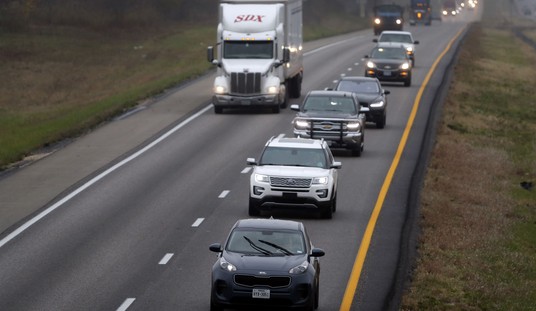

I wrote recently that to understand who we are, we need an understanding of who we've been. This column is another working example of that idea. I got to thinking about automotive technology over the years last Saturday, driving back from an event I attend every year.
My dad, when I was growing up, was a bit of a miser. The only brand-new car he ever bought was a 1966 Chevy Bel Air, which was almost cop-car-level basic, even for the time. Four-door, full-size, three-on-the-tree manual transmission, with a 155-horsepower inline six — the then- base engine, 235 cubic inches, or about 3.9 liters. He opted for an AM radio, which surprised me a little. Imagine paying a couple hundred dollars in today's money for an AM-only radio. It turned out to be the best AM receiver I ever encountered, in terms of pulling in far-away signals.
I remember picking up WJR out of Detroit in the middle of the day, driving through downtown Rochester, N.Y. It had a heater, but no A/C. For all that frugality, though, he almost invariably got 24 MPG out of it — day in, day out, for years on end. Very good economy for a full-sized car. He kept insanely detailed records of that car's functioning life, and I recall looking over that documentation frequently.
At the opposite end of the spectrum, my dream car in the late '80s was a Buick Grand National. Turbo V6, roughly 275 horsepower. It was, in fact, the fastest domestic car of its era — it would eat Corvettes for breakfast. Never did get one, though.
What brought all this to mind was driving my Ford Edge, with its 3.5L V6. A bit less displacement than the Buick, but 280 horsepower, paired with a six-speed automatic, all-wheel drive, and every bell and whistle you could ask for — including a stereo that rivals a lot of the professional systems I heard during my years in broadcasting. Heated leather. Android Auto. GPS navigation. Power seats. Zoned HVAC. Even a 110-volt household outlet in the back seat, to charge your laptop or whatever else needs juice.
It's got a shade more power than the Grand National had back in its day. It's not quite as quick, given the weight difference between them (4.9 seconds for zero to 60, versus around 7 seconds for my Edge), but it'll still put you back in your seat when you want it to. And yes — it still gets 24 MPG, just like Dad's old Chevy.
It's genuinely remarkable when you actually think it through. Sixty years separate Dad's old Bel Air and this Edge. In that span, horsepower nearly doubled out of an engine that's actually smaller than Dad's inline six. We picked up all-wheel drive, an automatic transmission that shifts itself smarter than most people shift manually, heated everything, a sound system that would've required a recording studio's budget in 1966, and enough onboard electronics to make the Apollo guidance computer blush. And after all of that — after six decades of engineering, computer modeling, turbocharging, direct injection, and every trick the automotive world could throw at the problem — we landed back at 24 miles per gallon. The exact same number Dad got out of a machine with none of it.
That's not a knock on progress. It's actually the most interesting part of the whole story. All that added weight from safety equipment, comfort features, and all-wheel drive hardware got fully paid for by efficiency gains elsewhere in the engine — turbocharging, better combustion control, smarter transmissions squeezing more work out of every drop of fuel. We didn't get more miles per gallon. We got the same miles per gallon plus about a hundred extra horsepower and a rolling living room. That's not nothing. That's actually a hell of a trade.
This brings me to the harder question, and I don't think it's just nostalgia talking: are we running into the wall of diminishing returns on the internal combustion engine itself?
The engineering data backs up the gut feeling. For decades, gasoline engines sat stubbornly around 30% thermal efficiency — meaning roughly two-thirds of the energy in every gallon of gas got thrown away as waste heat, no matter how clever the engineers got. The best production engines today have pushed that closer to 40%, which sounds impressive until you realize how much effort it took to get there, and how much harder each additional percentage point is getting to squeeze out. One engineering analysis I came across put it plainly: push compression ratios higher, and the efficiency gains get marginal fast, while the added weight and cost don't. Every lever left to pull moves the needle a little less than the lever before it.
And there's a real cost showing up on the other side of that push, too. Some 2026 industry reporting has flagged a genuine reliability problem tied directly to this exact squeeze — engines built smaller, more highly stressed, turbocharged, and direct-injected to hit ever-tighter emissions and fuel economy targets, running on razor-thin manufacturing tolerances that leave almost no margin for error. Toyota, Honda, GM, Hyundai, Kia — brands that used to be bulletproof by reputation — have all had engine trouble crop up in relatively low-mileage vehicles in just the last year or two. The theory making the rounds among people who actually build these things: we've been wringing efficiency and power out of engines by shrinking them and cranking up the stress they operate under, and we may finally be hitting the point where that trade stops being free.
So maybe that's the honest answer to my own question. We're not out of runway entirely — there's still real research chasing 55%, even 60% thermal efficiency through hybrid cycles and advanced combustion strategies nobody's fully cracked yet. But the comparatively easy gains, the kind that got us from Dad's Bel Air to my Edge without any real downside, look like they're behind us. What's left is a harder, more expensive climb, and it's starting to show up not just in the numbers, but in the check-engine lights. And a fair share of that squeeze is government-inflicted, courtesy of emissions systems layered on top of engines that were already being asked to do more with less.
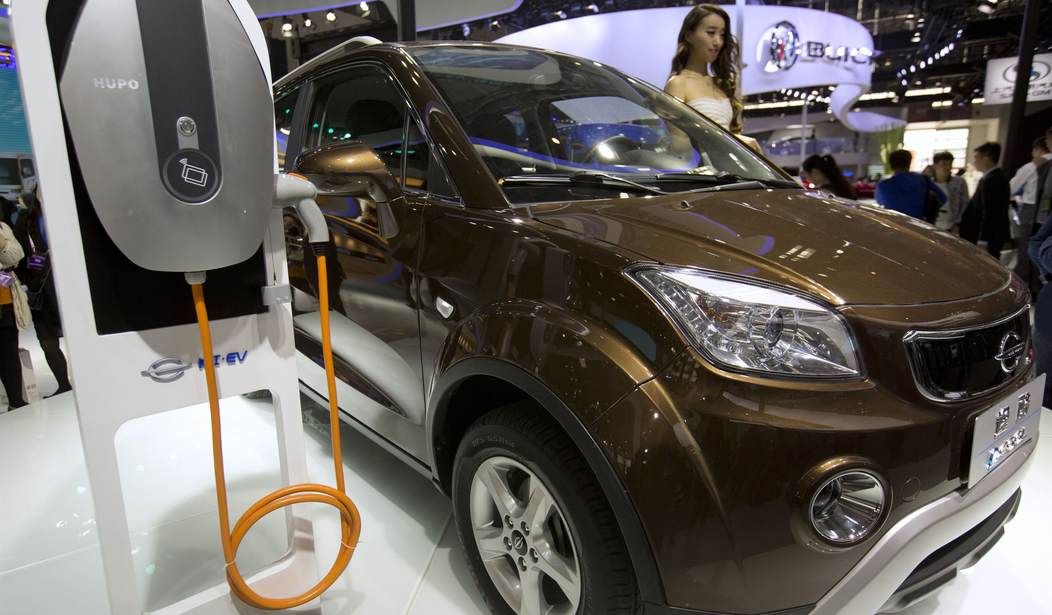
It's true the government's also pushing electric vehicles… golf carts with delusions of car-hood. Frankly, I remain unconvinced of the practicality of the things, particularly here in the Northeast, where winter doesn't ask permission before it shows up.
And don't even get me started on battery-powered tractor-trailers. I could make a whole column out of that subset alone. Sorry, but they're simply not ready for prime time, since they're worse than your Tesla is in terms of practicality.
All of this leads me to the question: as much as a constant state of improvement is a part of human nature, are there some areas of engineering where we should admit that real- world practicality limits our ability?