
An American jail should be a difficult place from which to help organize an attack on American troops. Federal prosecutors allege that Mohammad al-Saadi managed to keep communicating with an Iran-backed network anyway. If they prove it, the government will owe the public an explanation of how those messages traveled beyond his cell.
An eight-count superseding indictment unsealed November 10 charges al-Saadi and two alleged associates over a terrorist campaign that included a September plot against RAF Fairford in Fairford, England. American military personnel and aircraft were stationed there. Prosecutors allege that al-Saadi used calls with relatives in Iraq to pass coded messages while in federal custody in New York.
From the DOJ:
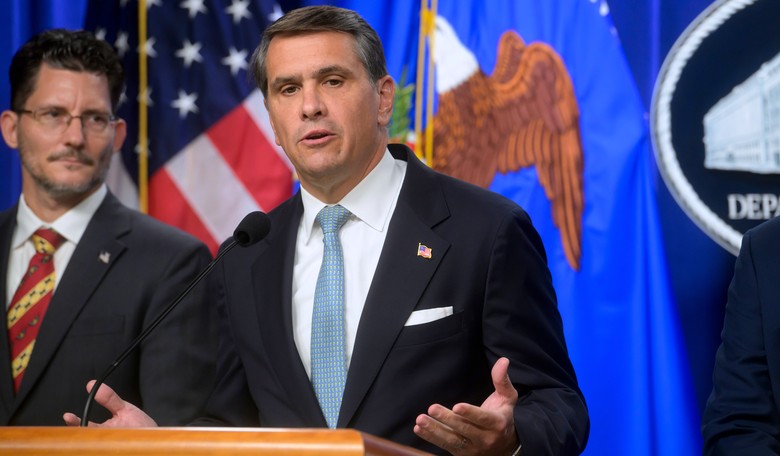
“Anyone who plans a terrorist plot on a military base housing American service members will be prosecuted by the United States government,” said Attorney General Todd Blanche. “The defendants listed in the indictment allegedly supported two foreign terrorist organizations, and al-Saadi allegedly coordinated with his co-defendants in the days leading up to the attempted terrorist plot. This Department of Justice will continue dismantling terrorist networks and protecting the American people from terrorist organizations.”
“This eight-count indictment shows the determination of Iran to commit terrorist attacks in Europe and the U.S., including one plot that was recently prevented at RAF Fairfield, a British Royal Air Force Base where American forces were stationed,” said FBI Director Kash Patel. “According to the indictment, one of the subjects is behind bars awaiting trial yet he allegedly sent coded messages to assist in future acts of violence. To date, the subjects have been allegedly involved in nearly 20 attempted attacks throughout Europe and the United States in support of Kata’ib Hizballah and Iran’s Islamic Revolutionary Guard Corps (“IRGC”), two U.S. designated foreign terrorist organizations. This FBI will use all our resources to detect and stop such terrorist attacks as we’ve done the last 21 months – with over 1,300 terrorists disrupted and nearly 7,000 Foreign Terrorist Organization-related arrests, up 1,057%. All those who threaten our homeland will get the message – justice will find you.”
The indictment describes a September 24 family call in which al-Saadi allegedly discussed a co-defendant and instructed relatives to provide money. Days later, British authorities intercepted vans connected to the alleged plot. Some contained barrels of fuel. Prosecutors say the preparations included surveillance and business decals intended to disguise the vehicles.
Those allegations warrant questions that extend beyond the prosecution. When did investigators identify the communications as potentially operational? When did they connect them to the British plot? What restrictions governed the calls, and how quickly did officials act on what they heard?
The public record reviewed here doesn’t establish those answers. Recorded communications may help investigators map a network and prevent an attack. Their existence alone doesn’t prove that jail officials ignored a known danger. The government should explain the sequence without compromising legitimate intelligence methods or the pending prosecution.
Al-Saadi’s defense disputes the government’s interpretation. In an October 14 filing, his lawyers characterized the coded-language allegations as speculative, questioned Arabic translations, and offered ordinary explanations for the conversations. He previously pleaded not guilty to the earlier charges. Iran has denied involvement in the suspected Fairford plot.
From Reuters:
- Iraqi national Mohammad Baqer Saad Dawood Al-Saadi attempted to pass coded messages to two other alleged Iran-backed operatives through phone calls to immediate family members from jail in New York, US prosecutors said.
- Al-Saadi had previously pleaded not guilty to eight criminal counts including conspiracy to provide material support to Kata'ib Hezbollah, an Iran-backed militia the US considers a terrorist organization.
- A lawyer for Al-Saadi declined to comment.
- In a court filing on October 14, Al-Saadi's lawyers said the prosecution's assertion that he was using coded language during phone calls with family was speculative and based on questionable translations from Arabic. They said there were banal explanations for conversations the prosecution flagged as concerning.
Prosecutors must establish what the conversations meant through context, reliable translations, corroboration, and evidence linking words to actions. People speak ambiguously about money and work. A terrorism case requires proof of the alleged criminal meaning, especially when officials seek tighter restrictions on communications.
Family contact serves a legitimate purpose for people awaiting trial. Officials also have a duty to prevent those contacts from becoming a route for operational instructions. Both obligations require competent screening, accurate translation, clear procedures, and prompt decisions. Neither prosecutors nor jail administrators should get to substitute broad assurances for a documented account.
The indictment places the defendants within networks allegedly supporting Iran’s Islamic Revolutionary Guard Corps and Kata’ib Hizballah, both designated foreign terrorist organizations. It links the case to attacks and attempted attacks against Jewish communities as well as the military target.
A person in custody retains knowledge, relationships, and influence. Overseas associates can recruit others, arrange payments, and move equipment. Effective counterterrorism therefore requires investigators to follow the remaining connections after an arrest. The public should judge success by how thoroughly authorities disrupt the capacity to inflict harm.
British authorities stopped the alleged Fairford operation. The indictment now gives American officials a chance to show how they identified the network’s continued activity and what they changed in response. Congress should seek that account through appropriate oversight, including classified briefings where necessary.
The review should identify who had responsibility at each stage, whether warnings reached the right people, and whether existing safeguards worked as intended. Specific findings can support specific corrections.
American families send their sons and daughters overseas expecting their government to take every lawful step to protect them. Jewish families should be able to attend worship without fearing an international terror network.
If prosecutors prove these allegations, the response must include convictions where warranted and specific measures to prevent another prisoner from helping direct violence beyond the jail wall.