
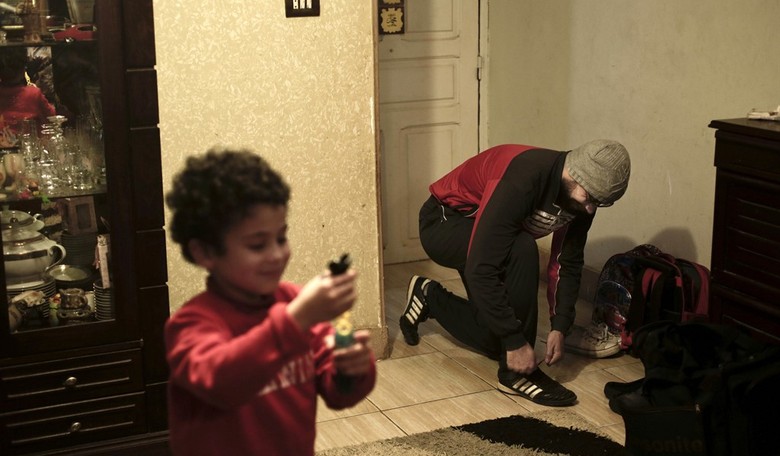
A woman put down her purse in a grocery store and tied my shoe. This whole encounter lasted about 30 seconds, and I’m still writing about it.
I was recovering from one of my eight shoulder surgeries, wearing a sling with a pillow that held my arm away from my body. Anyone who has worn one knows how quickly ordinary tasks can become complicated. Getting dressed requires planning, and a loose shoelace can become a problem you hadn’t prepared for.
When I noticed my shoe had come untied, I found a nearby bench. I sat down and struggled to get my hands close enough to fix it. Reaching hurt a lot, and I wasn’t making much progress.
Before frustration could turn into helplessness, a woman approached me wearing a warm smile. She set down her purse and tied my shoe.
I thanked her profusely. She smiled again and talked about tying the shoes of her children, nieces, and nephews, as though helping a grown man in a grocery store required no explanation beyond having done it before.
Then she walked away. I sat there, stunned.
I’d heard the expression “random acts of kindness.” Until that encounter, I’d never seen one unfold quite so plainly in front of me, with me on the receiving end.
She had noticed someone struggling and decided to help. Whatever else she had come to the store to accomplish could wait for half a minute.
I think about how she mentioned the children in her family. Her easy conversation made the moment feel ordinary, which was a kindness in itself. I was already hurting; she gave me no reason to feel embarrassed, too. Sometimes the way someone helps stays with you as much as the help itself.
How many people across America do something like that every day? How many pause beside a bench, reach for something another person can’t carry, or quietly cover a shortage at a register?
We’ll never have a complete count. Most of those encounters end with a thank you, and the people involved go on with their day.
At a pharmacy on another occasion, I saw an elderly woman at the cash register searching through her wallet. She was looking for money she didn’t have, and I happened to have a $20 bill.
I pulled it out and kept it hidden from her. Then I walked over, asked her to move her shoe, and pretended to discover the money she had lost.
Nobody saw me slip the bill into the moment. As far as she knew, her missing money had turned up.
I’d been given an opportunity to pay that grocery-store kindness forward. Twenty dollars was all I could offer.
I couldn’t imagine my mother standing at a pharmacy counter in the same predicament without wanting someone to help her. Watching that woman search her wallet, I knew I had to do something.
Our parents spend years handling the little things for us. Eventually, we understand how much it means to know a stranger might handle one little thing for us when we aren’t there.
I hope someone would’ve done that for my mother. I hope someone would do it for yours.
The woman who tied my shoe had no way of knowing I would remember her when another stranger needed help. She finished the knot, picked up her purse, and went about her business.
Her kindness kept going after she left. It reached a pharmacy counter, an elderly woman, and a $20 bill that was never missing.
I wish I could tell her how far those 30 seconds reached. I thanked her for tying my shoe, but I understand now how much more she gave me.