
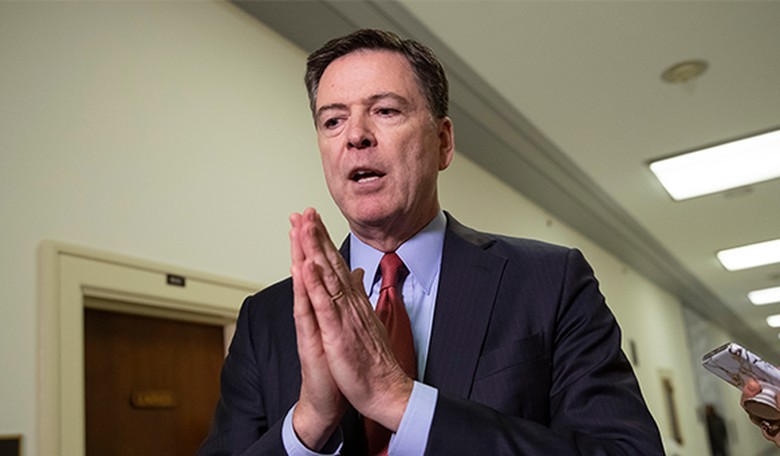
Ever have an itch on your back you simply can’t reach? You scratch nearby, get a little relief, and then it's back, irritating you just as much as before.
James Comey has occupied that spot in my political consciousness for years. Every controversy brings another explanation, another defense of his judgment, and another opportunity for him to present himself as the grown-up everyone else should trust.
I don’t trust him. His sanctimony irritates me almost as much as the conduct he keeps explaining.
My distrust has a documented foundation. During the Hillary Clinton email investigation, Comey concealed plans for his July 2016 announcement from Justice Department leadership because he feared his superiors would stop him. He also instructed subordinates to keep quiet. The inspector general called that conduct “extraordinary and insubordinate.”
The public shouldn’t have to admire a former FBI director before demanding answers from him. Years in high office should increase his obligation to explain himself, especially when his own conduct departed from the rules.
Apparently, respect for institutional rules became negotiable when Comey decided James Comey had a better idea. Forgive me if I’m unwilling to accept another lecture about his exceptional integrity.
Prosecutors now allege he unlawfully transmitted national defense information and conspired to do so. The charging document alleges that on Oct. 5, 2016, he directed a disclosure to a reporter through intermediaries. These are Espionage Act charges concerning an alleged disclosure, not an accusation that he worked for a foreign intelligence service.
I’d like to see those allegations tested thoroughly. Comey’s former position makes the questions more consequential, and his hostility toward President Donald Trump shouldn’t buy him immunity from answering them.
Still, this case hasn’t arrived with the evidentiary clarity that some headlines suggest. Prosecutors filed a criminal information rather than obtaining a grand jury indictment. A three-page accusation can’t tell us how persuasive the witnesses will be or whether the government can prove an unlawful, willful disclosure.
The allegation is more concrete than an argument over seashells spelling “8647.” Concrete, however, doesn’t automatically mean easier to prove. Public acknowledgment of some communication would still leave questions about its contents, authorization, and criminal intent.
The election timing also deserves precision. The DOJ filed under seal on October 5, saying it sought to preserve the case before a 10-year deadline. Comey’s lawyers requested that the filing become public on October 26. Blaming the administration for choosing that public unveiling would omit a rather inconvenient fact.
From Reuters:
The new case adds to the legal fights facing Comey, whom the Justice Department has already charged twice, accusing him of lying to Congress about media leaks and threatening President Donald Trump in a social media post. A judge dismissed the false statements case, while the threats case remains pending.
Comey's lawyer, Patrick Fitzgerald, said in a statement that the document "purports to charge Mr. Comey with crimes that he did not commit." The criminal information was filed on October 5, but was unsealed on Monday at the request of Comey's lawyers.
A Justice Department spokesperson described the maneuver to halt the statute of limitations as a "widely recognized practice in federal court."
Comey denies wrongdoing. His lawyers argue the filing didn’t meet the deadline and say two investigations during Trump’s first term ended without charges, including a 2018 review by John Durham. Those earlier decisions require an explanation from today’s prosecutors: What changed?
From the Associated Press:
The effort to prosecute Comey is also part of a series of politically charged investigative actions the department has undertaken in the run-up to next week’s midterm elections.
“Well, they’re back — again,” Comey said in a video statement Monday. “It would almost be funny if it weren’t such an appalling abuse of the Department of Justice – one that we cannot become numb to. Nothing’s changed with me; I’m still innocent, I’m still not afraid of these people — and I still believe in an independent federal judiciary.”
Politically, a collapsed prosecution would give Comey another chance to play his favorite role: the indispensable public servant besieged by lesser men.
I have no appetite for funding the next installment.
But an approaching election shouldn’t erase a legitimate prosecution deadline. If the evidence supports charges and the filing was lawful, prosecutors should proceed. They should also present their case with far more discipline than Comey showed when he decided ordinary supervision was beneath his mission.
I suspect his certainty about his own righteousness helped him justify decisions other officials would have been expected to clear with their bosses. His documented conduct supports that judgment. A criminal verdict requires proof of the charged acts.
Comey deserves hard questions, and prosecutors deserve scrutiny of their answers.
My itch remains, but I want a case that holds up in court. Another failed prosecution would leave him explaining his greatness while the rest of us keep scratching.