
The village of Plover was coming for the leaves, and mine were still in the yard. After a few unusually warm late October days in central Wisconsin, I had a narrow window to gather them and move them to the road before the village’s giant vacuum came through.
Plenty of people face the same chore every fall. I know what it would cost me, but the leaves wouldn’t move themselves.
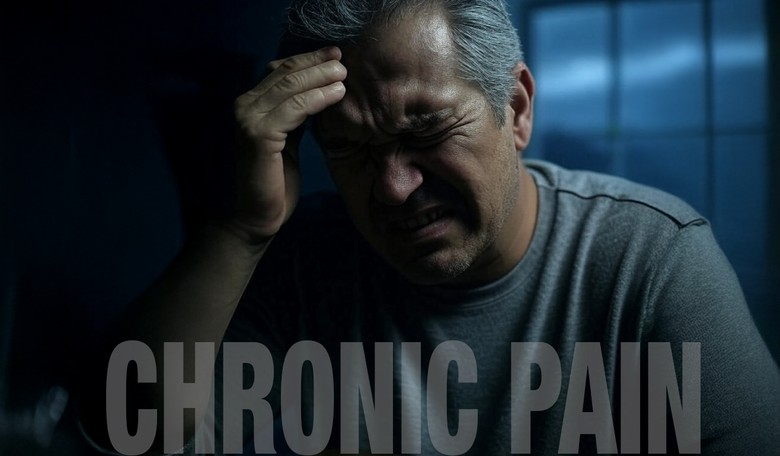
I have arthritis in more joints than I care to count, along with neck problems around two fused joints that send nerve pain down both arms. I worked hard to get the job done, and for the next day and a half, my body made sure I remembered every leaf.
Pain shot from both shoulders down to my elbows. Several years ago, I tore the biceps in my left arm, and the nerves in that area were screaming. Moving around became an exercise in reluctance.
Chronologically, I’m 59. Judging by the mileage, I’m somewhere north of 135.
My dad used to say sympathy lies between s**t and syphilis. I’m not sharing my story to collect either; I’m sharing it because the pain brought along something I’ve experienced before but wanted to understand better: I love my appetite.
When my beautiful, much smarter, better half made dinner, I had no desire to eat. That’s frustrating for me, and it’s frustrating for the woman who puts care and love into a meal only to hear her stunted-brain partner isn’t hungry.
Could the pain be responsible?
There’s evidence it can play a part. A preliminary 2019 study surveyed 219 adults with chronic pain who were taking prescription opioids. Nearly 47% said they ate less when they were in pain. About 38% reported no change in appetite, while nearly 12% said they ate more to feel better.
From the NIH website:
Results: In total, 219 participants' data were analyzed. Of these, 46.8% reported eating less, 38.2% reported an unchanged appetite, and 11.9% reported eating more to feel better when in pain. Adults with obesity were over three times more likely to report an increased appetite compared to adults with normal weight. Participants reported having either a nutritional or a non-food response to painful episodes.
Conclusions: This preliminary study supports that some adults with chronic pain follow poor nutritional patterns when in pain which may make weight management difficult. Pain clinicians should assess and counsel clients for overeating or undereating risks to facilitate pain and weight management.
Those numbers don’t mean pain suppresses everyone’s appetite, or that it was the sole reason the participants ate less. The study relied on people describing their own experiences, and all participants were taking opioids.
But their answers show that changes in eating during painful episodes deserve attention.
Scientists are also investigating how pain and hunger interact in the brain. A 2022 study found that a brain circuit suppressed food intake in mice experiencing persistent pain. The finding offers a possible explanation for how pain signals can affect eating, although a study in mice can’t tell me exactly what happened in my body after yardwork.
Full disclosure requires another piece of the story: I take Mounjaro for Type 2 diabetes. Reduced appetite is a known effect of the medication, which means I can’t lay the blame for my missing appetite entirely at the feet of my aching joints and angry nerves.
Pooled clinical trials reported decreased appetite in 5% to 11% of adults taking Mounjaro, depending on the dose, compared with 1% of those taking a placebo. Those figures don’t establish what caused my appetite loss, either. They do make the medication worth mentioning when I talk to my doctor.
For anyone dealing with a similar problem, a useful step is to pay attention to the pattern. Does your appetite fade as the pain worsens? Did it change after starting a medication? Are you eating and drinking enough?
Those are questions worth bringing to a medical professional, especially when the problem persists.
I’m glad the bloody leaves are gone. I’m less fond of the price my body charged for moving them, and I’d prefer to enjoy dinner with my wife without taking a seat at the table. Understanding why my appetite disappears won’t rake the yard for me, but it might help me, and others, know what to ask when it does.