
Pakistan's political showdown continues as opposition figures are increasingly implicated under Pakistan's 1997 anti-terror law.
Sohail Afridi, the former chief minister of Pakistan's Khyber Pakhtunkhwa province, has been formally named in a major anti-terrorism case. This development connects him with a growing number of political figures currently implicated under the country's anti-terrorism legislation.
Pakistan is home to numerous terror groups. However, anti-terrorism legislation is systematically used in cases involving politicians. Former PM Nawaz Sharif faced charges under it in 2000, as did General Pervez Musharraf, who overthrew Sharif in a military coup a year earlier.
Ironically, Pakistan's army was behind the downfall and sentencing of Sharif. The army also meddled in the country's 2018 elections.
Former PM Imran Khan, who is currently in jail, is also facing terrorism charges. In recent years, Kashmiri, Pashtun and Baloch activists were also accused of terrorism.
Zoha Waseem, a researcher focused on Pakistani policing, says the situation relates to the law's definition of terrorism. In the years since its inception, the law has been amended several times to expand both its definition and law enforcement powers. The law can now be exploited to try anyone – including politicians, lawyers and even human rights defenders.
Imaan Zainab Mazari-Hazir and Hadi Ali Chattha are currently being tried under anti-terrorism legislation. They're human rights lawyers and have been in prison since January.
Mazari and Chattha were convicted of offenses including "glorification of an offence," "cyber-terrorism," and spreading "false and fake information." They each received multiple concurrent sentences of imprisonment, totaling 17 years, with the longest being a 10-year sentence for cyber-terrorism.
This past September, a group of international civil society organizations working on the protection of lawyers, human rights defenders and freedom of expression issued a joint statement, calling on Pakistan to end the cycle of detention and judicial harassment of lawyers Mazari and Chattha. The statement noted, in part: "Terrorism legislation must not be used to criminalize peaceful assembly, protected expression, freedom of association, or legitimate professional activity."
Meanwhile, those whom the UN designates as global terrorists roam freely. They give speeches and raise funds to support terror activities in Pakistan.
Pakistan has a history of appeasing terrorist groups as well as radical Islamic parties, especially those from the Tehreek-e-Labbaik Pakistan (TLP).
A striking example of how Pakistan's government gave in to Islamic supremacists' demands is when Charlie Hebdo cartoons were republished in France in 2020. Thousands of TLP supporters clashed with police on the edge of the capital, Islamabad, in protests over the display of the cartoons in France.
The TLP only called off the protests, saying the Pakistani government had agreed to their demand for a boycott of French products. The TLP also said the government "promised to expel the French ambassador."
It turned out that the Pakistani government had not promised the actual expulsion, but rather a debate in parliament about the matter.
After increasing pressure from radical Islamic groups and parties, this debate took place in April 2021. Because of the violent atmosphere, France urged its citizens to leave Pakistan.
At the same time, the Pakistani government banned the TLP as a "terrorist group." In a show of its strength, the TLP called for another march towards the capital. The protest march triggered deadly clashes with police. The government once again gave in to TLP's demands by freeing hundreds of TLP members.
Pakistan's Interior Ministry also lifted the ban on the TLP on November 7, saying the party would now be allowed to participate in mainstream politics in the "larger national interest." The Dawn newspaper reported that TLP leader Saad Rizvi was expected to be released from custody on November 8.
The TLP gained prominence in 2017. In Pakistan’s 2018 elections, it campaigned on the single issue of defending the country’s blasphemy law, which calls for the death penalty for anyone who criticizes Islam.
As is evident from this case, as long as Pakistan's army (and with it, the government) tolerates certain Islamic groups and terrorists or uses them for their own purposes, such groups will continue to gain influence and power.
According to international media reports, intelligence inputs, and regional watchdogs, there have been several documented instances of designated terrorists being released from detention, marching, or delivering public speeches within Pakistan.
Hafiz Muhammad Saeed, the UN-designated terrorist and co-founder of Lashkar-e-Taiba (LeT), has historically been placed under house arrest or detention multiple times, only to be freed by Pakistani courts citing a lack of evidence.
Following his judicial release, Saeed addressed a massive "Kashmir Solidarity Day" rally in Lahore. Despite international bounties and designations, he and other terrorists regularly delivered fiery public speeches at mass rallies across major Pakistani cities. According to a special national investigation agency court in Jammu, Saeed was still at large as of September 2026.
The case of Mohammed Masood Azhar Alvi is also striking. According to intelligence reports and security briefs, the chief of the UN-banned outfit Jaish-e-Mohammed (JeM) was reportedly taken into protective custody or jailed following major terror attacks (such as the 2019 terror attack that killed 40 people in the Pulwama district of Jammu and Kashmir). Reports subsequently surfaced detailing Azhar's "secret release" to continue operations behind the scenes.
In public events, including a massive rally in Lahore, Hafiz Talha Saeed (the son of the jailed founder of the terror group LeT) openly addressed crowds. Standing before large audiences, he openly defended terrorist networks.
Terrorist rallies are common in Pakistan. Regional monitors have noted that during public gatherings organized by groups like the Pakistan Markazi Muslim League (PMML), pre-recorded incendiary speeches by designated leaders like Hafiz Saeed have been explicitly played over loudspeakers to crowds. Islamic clerics and leaders at these events have openly spoken about training thousands of youths for potential terrorist activity deployments.
Events like the Difa-e-Watan rally in Karachi have seen thousands of supporters and leaders from internationally banned terrorist groups, including LeT and Ahle Sunnat Wal Jamaat (ASWJ). They gather in public, march together, and deliver speeches behind bulletproof glass.
Two realities in Pakistan create serious problems for both Pakistan's society and its neighboring nations.
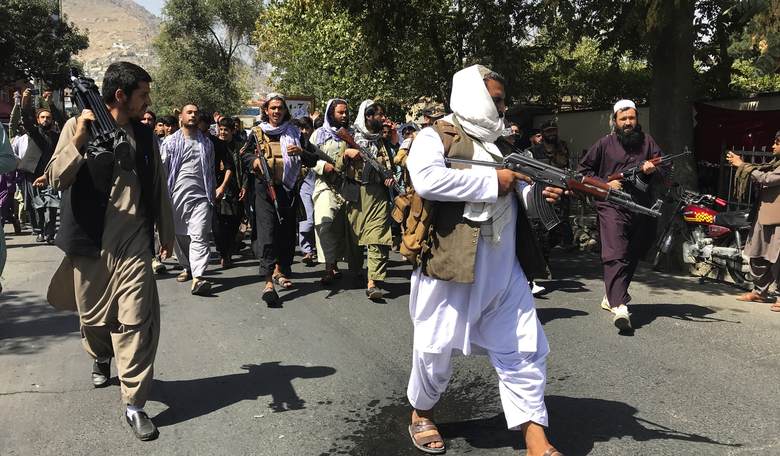
First, Pakistan's “bad terrorists-good terrorists” policy. “Bad terrorists” are those who attack Pakistan’s military, police, and civilians; “good terrorists” are those who attack India and promote causes in line with Pakistan's regime's ideologies. The Taliban regime takeover in neighboring Afghanistan, for instance, was supported by Pakistan's military establishment. Pakistan provided historical, logistical, and financial backing to the Afghan Taliban during their insurgency and return to power in 2021.
The second fundamental problem is the profound inversion of power in the country. Pakistan's army – rather than a civilian government — controls state policy. The country does not have an army — the army has a country. Behind a fragile, rotational facade of civilian governance, Pakistan’s military establishment dictates national policy.
Instead of seeking development and peace, Pakistan's military regime seeks internal suppression and external aggression. This includes using some terrorist groups for its perceived state interests.
The tragedy of Pakistan is an army that views peace as a threat to its budget and dissent as a crime against the nation. Hence, many actual terrorists roam freely while human rights lawyers are incarcerated in the country.