
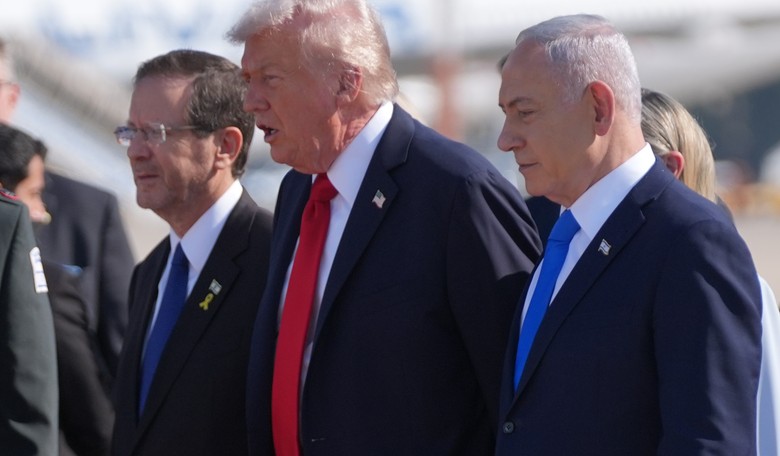
On Fox News early Tuesday morning, Donald Trump said the U.S. would end its longstanding military aid agreement with Israel by the end of the year and replace it with a new deal that would allow Jerusalem to buy weapons in exchange for "technology swaps or cash," according to the New York Times.
“We were giving them 4 billion,” Mr. Trump told Brian Kilmeade of Fox News. “We are. But it gets cut off at the end of the year.”
The U.S. has been supplying this direct aid to Israel since 1971. The Jewish state has been receiving designated military grants and specific annual allocations after France and other nations imposed an arms embargo on Israel after Saudi Arabia and other oil-producing Arab states threatened to cut off supplies.
Large-scale, multi-billion-dollar military aid packages, most notably emergency assistance during and after the 1973 Yom Kippur War, cemented the U.S. as Israel's primary strategic and military supplier.
Over the last 50 years, Israel has developed its own arms and technology industries, making aid from the U.S. a gesture of solidarity more than anything.
Israeli Prime Minister Benjamin Netanyahu has spoken in recent months about moving away from direct U.S. military aid. Democrats' abandonment of a powerful and loyal ally made congressional authorization of any additional aid packages problematic.
“They don’t need it,” Mr. Trump said of the American aid, “and why should we suffer the slings from lunatics like an El-Sayed when they don’t need it?” Indeed, removing a primary Democratic attack on Trump and Republicans will allow the president to save his political capital for other, harder fights.
“It’s a bad talking point,” Mr. Trump said. He went on to add: “Israel’s our No. 1,” but a “thriving country.”
The New York Times:
Mr. Netanyahu had his own reasons to get out of the arrangement: Control over aid to Israel has increasingly become a cudgel for those in Congress trying to compel Israeli government action. If Israel were to receive American armaments through more traditional military sales, or as part of a trade and technology agreement, the process could become less of a ritualized battle in Congress — though congressional oversight would not end.
The timing of Mr. Trump’s statement was remarkable: Just as polls opened in the United States, a Republican president was walking away from what has become a mainstay of American foreign policy for decades. Mr. Netanyahu’s office did not immediately comment on the president’s statement, and it is bound to come up as Mr. Netanyahu attempts to form a government after an inconclusive election in Israel last week.
No one is counting Netanyahu out in efforts to form a government. The anti- and pro-Netanyahu camps are going to have an extremely difficult time cobbling together a coalition that can govern.
For the U.S., it doesn't matter who takes power in Israel. The strategic situation won't change, though the atmosphere in the relationship might shift. Trump isn't liked any more by the Israeli opposition than Netanyahu is liked by Democrats.
Netanyahu realizes that.
"If you think we're going to continue receiving what I secured twice, and that's tens of billions of dollars in American aid for the defense budget, prepare yourselves and get used to the fact that it won't happen because America has changed," Netanyahu said in an interview with an Israeli television channel in October, reported by Fox News.
The end of direct military aid to Israel will not change the close relationship we have with Israel. There's still a war to fight and win, and neither Trump nor the Israelis, no matter who is prime minister, will walk away.