
What is an American?
It sounds like a laughably obvious question, the sort of thing you would ask a child learning civics, not adults living through the most contentious era in modern memory. We are Americans, aren’t we? Surely we know what that means.
But the moment you stop and examine the word, the ground shifts.
Josh Hammer took up this question on November 21 here at PJ Media, writing about tensions between Arab-Americans and other Americans in Dearborn, Michigan. He begins with the simplest form of the question and answers it thus:
The narrow, legal answer is straightforward: An American is a citizen of the United States, born or naturalized. … But that technical legal definition … is wildly insufficient.
He’s right. Citizenship is the beginning, not the whole. A passport doesn’t explain what binds a people, what creates loyalty, or why some groups assimilate while others form enclaves openly hostile to the nation that took them in. It doesn’t tell us what holds a country together, or what tears it apart.
In fact, we must face a hard truth: we are losing agreement on what the word American even means.
This isn’t a semantic quibble. It’s an existential warning sign.
The Quiet Fracture in Our Language
The shift begins with a simple process: bifurcation. A word that once had a single, widely understood meaning splits into two. The word stays the same; the meaning splits underneath it.
On one side is the original meaning, the one shaped by history, story, law, and tradition. This is what conservatives and older Americans would refer to as the correct meaning.
On the other side, however, is a new meaning, engineered by institutions with their own agendas that treat inherited definitions as outdated, exclusionary, or morally suspect.
The two meanings are incompatible, yet they coexist. The ambiguity isn’t a bug; it’s the tool. Most people continue using the old definition, assuming we all still share it. Meanwhile, the new definition spreads through universities, HR departments, media narratives, and activist rhetoric, ultimately stylebooks and dictionaries, until it becomes the only socially acceptable interpretation.
I described one example of this in my recent PJ Media piece, What We Talk About When We Talk About Fascism. “Fascist” still refers to Mussolini and corporatism in history books, but in daily life, it now functions as a moral accusation. The word didn’t evolve. It split.
Once a culture grows comfortable with bifurcation, once people accept that a single word can mean two opposite things depending on who’s speaking, the whole linguistic commons, our shared understanding of language, begins to dissolve. Arguments become impossible because everyone means something different. Misunderstanding becomes the norm. Social trust fractures.
If this can happen to a political insult like “fascist,” the damage is real but survivable. If it happens to the word “American,” the damage strikes at the identity of the nation itself.
The Bifurcation of “American” Is Already Happening
For most of our history, “American” referred to a people bound by a shared constitutional order, a common language, a civic story, and a moral expectation that citizens assume responsibility for their communities and their country. It was never a blank category anyone could project themselves into. It was something inherited, chosen, and upheld.
That is the old meaning.
The new meaning emerging across institutions is very different. In this version, “American” is not a member of a particular civic community at all. Instead, it means someone who holds the “correct” moral or political positions, usually positions closely aligned with the dominant ideology in elite institutions. Americanness becomes a matter of attitude, not allegiance; sentiment, not citizenship.
The signs are everywhere:
- Political figures increasingly define Americans not as a people but as “anyone who shares our values.”
- Universities and style guides cast “American” as exclusionary, urging alternatives like “U.S. resident.”
- Media organizations use “real American” and “not American” as ideological insults.
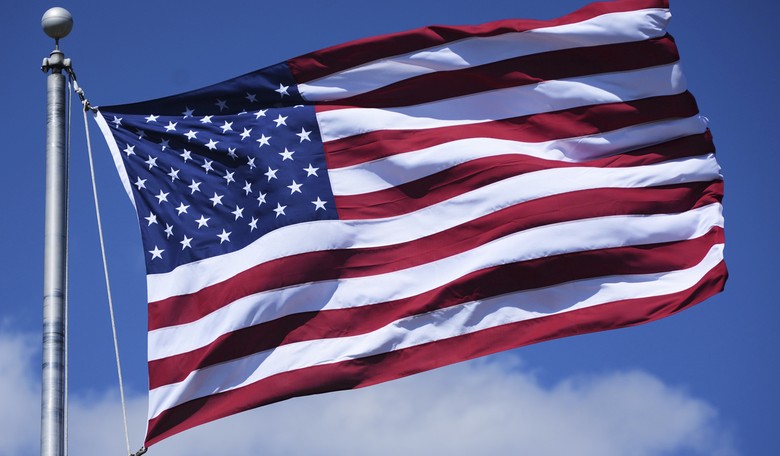
- The flag itself is reframed as a partisan emblem, not a unifying national symbol.
Two meanings now circulate.
- Americans as a people: inheritors and stewards of a shared civic and cultural tradition.
- Americans as an approved political posture: a category granted or withdrawn based on ideological conformity involving a new definition that may or may not change, sometimes on a daily basis.
Only one of these can sustain a nation.
More Examples
This all sounds insane and impossible. But it's not. Stealing a culture's shared language is sneaky, insidious, and, when you have control of the primary parts of the mass media as well as the reference books we build our language around, surprisingly easy. Here are just a few more examples you can spot yourself in the wild.
1. “American = ideological conformity”
Used constantly in political rhetoric:
- “Real Americans believe in X.”
- “Un-American” applied to political dissent rather than hostile acts.
- Labeling conservatives as “anti-American” simply for policy disagreement.
2. “American = anyone who shares our values,” regardless of legal status
- Politicians framing undocumented immigrants as “Americans in all but paperwork.”
- Editorials insisting that illegal entrants “are as American as anyone else” because they share progressive (not American) values.
- NGOs describing foreign nationals as “American at heart” if they support certain policies.
3. “American = not the people, but the ideology of the ruling class”
- Universities replacing “American people” with “American values” as a floating moral category.
- Corporate DEI programs teaching that Americanness is defined by DEI principles, not constitutional ones.
4. Style guides declaring the word itself exclusionary
- The American Psychological Association telling writers to avoid American because it “implies ownership of the entire hemisphere.”
- Some college style guides replacing American with bureaucratic nouns like “U.S. resident” or “U.S. person.”
- Teachers being told to avoid calling students “Americans” to avoid “othering.”
5. Media weaponizing the term as a moral judgment
- “Not American” used to describe political opponents, entire regions, or demographic groups.
- Headlines calling certain protests “un-American” purely because they challenge elite narratives.
- The phrase “real Americans” deployed only for voters who support progressive candidates.
6. Cultural elites redefining Americanness as a feeling, not a status
- Writers describing Americanness as “a vibe” or “a commitment to justice,” not a civic identity.
- Activists insisting “American” has nothing to do with citizenship, law, assimilation, or national culture.
- Public figures saying things like “Immigrants make America American” — implying the identity requires perpetual reinvention.
7. Americanness detached from loyalty to the country itself
- Prominent commentators arguing that denigrating the flag or national anthem is “the most American thing you can do.”
- Claims that refusing to enforce immigration laws is “American compassion.”
- Describing anti-U.S. protest movements as “deeply American” acts of “speaking truth to power.”
Why the Word Is the Target
Some words matter. Some words hold the architecture of a civilization. American is one of them.
It is the source of political legitimacy. Every claim of governmental authority rests on the phrase “the American people.” If the identity of those people becomes fluid, bad actors can literally hijack government authority for their own purposes. Consider if the definition "American people" expands to include illegal immigrants — then the will of the people must take them into consideration as well. And the supply of potential illegal immigrants is practically endless, ensuring a dilution of the will of American citizens.
It defines the boundary of belonging. A nation must know who is inside the circle of obligation. The ideological definition destroys the boundary entirely.
It carries the moral weight of history. “American” is infused with the memory of sacrifice, struggle, and achievement. Control the definition, and you inherit the moral prestige.
This is why activists target this word. It is the crown jewel. Capture it, and you capture the narrative of the nation.
A people who cannot agree on what they are cannot long remain a people.
- Citizenship collapses into paperwork. If identity is ideological, not civic, then the obligations of citizenship evaporate.
- The inside–outside boundary blurs. Anyone can claim the word simply by declaring ideological sympathy.
- The national story fractures. A country embarrassed by its own history cannot assimilate newcomers or maintain loyalty.
- Assimilation becomes incoherent. You cannot join an identity whose definition shifts every year.
- Mutual responsibility breaks down. The instinct to care for one’s own erodes once “one’s own” becomes undefined.
- Politics becomes moral warfare. When “American” becomes a moral badge instead of a civic identity, opponents cease being citizens and become heretics.
This is the death spiral of a republic. Not through violence, but rather through the erosion of shared meaning. It dies with a whimper, not a bang.
Reclaiming the Word: What an American Actually Is
We are not too late. To resist the bifurcation, the word must be restored to its full depth, legal, cultural, and moral. We must use it with intention and pride, remaining firm on who is and who is not an American, and we must insist that our leaders and the media we influence do the same.
An American is a person who belongs to the historic political, cultural, and moral community formed by the United States — a community joined not by ancestry alone but by entering, adopting, and upholding its constitutional order, its laws, its common language, its civic story, and its ethic of self-rule, ordered liberty, and mutual responsibility.
This definition honors every lawful immigrant who chose this nation intentionally. It honors naturalized citizens, who take the Oath more seriously than many natives. It honors the generations who built the country and the sacrifices made to hold it together. And it blocks the ideological rewrite of the word into a moral purity test.
A nation can survive hardship, recession, division, even conflict. But no nation survives the loss of the words that hold it together.
American is one of those words. It is not a slogan. It is not a posture. It is the name of a real people with a real history and real obligations. If the meaning of that word collapses, everything built upon it collapses as well.
To defend the meaning of American is not sentimentality. It is the necessary work of preserving a republic.
And the meaning of its name is not for sale.