
If all you want to read these days is about how the Democrats' irresistible Blue Wave is going to roll over all Republican opposition on November 3 and then plunge America into its final descent into historical curiosity, then this column is not for you.
And if all you care to scrutinize is yet another GOP strategist's big scoop on the four hidden factors that mean Republicans are going to wake up the day after the November 3 election having gained stronger majorities in both the Senate and House, well, what you are about to read in this space will be a disappointment.
That's because this particular column is about the too-easily-forgotten-these-days reality that even in the midst of the worst, there are people of faith, courage and compassion "out there" whom God uses to bring about hope.
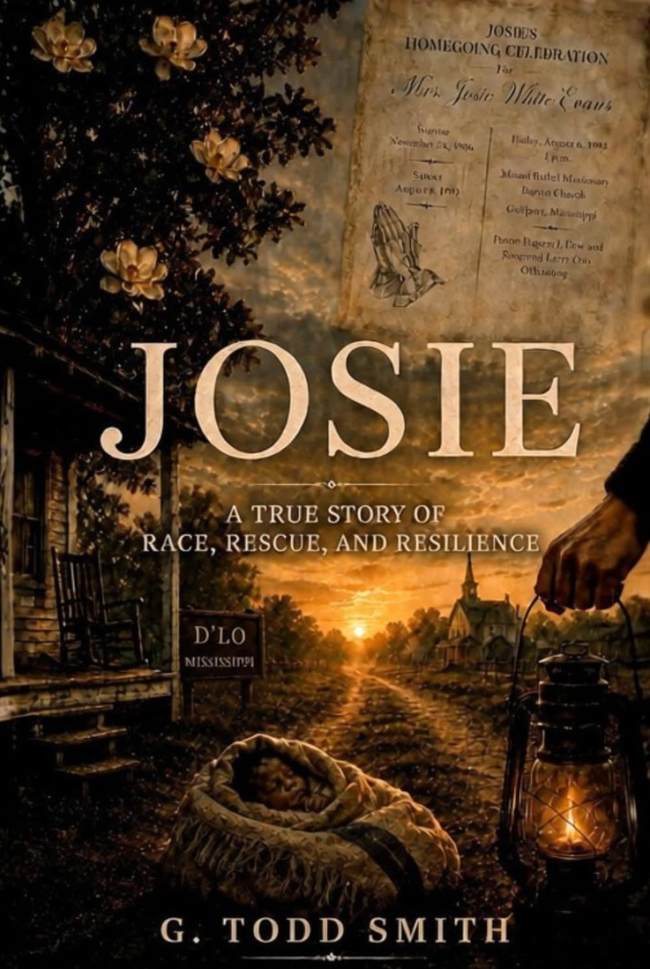
Allow me to introduce you to a new book — Josie: A True Story of Race, Rescue and Resilience — that will inspire you, encourage you, and, most important, bring you back to the reality that good can always defeat evil just by being true to itself and its maker. And always keeping in mind that we humans never see the final judgment here on Earth, because it doesn't come about here.
Several weeks ago, I received a message from a former colleague at the Washington Times, telling me he had written a book that he asked me to read and then pen a foreword to it for the first edition. Todd Smith and I had not talked since the Reagan era, when he was one of my most talented young charges on the national politics reporting beat.
Even so, I quickly agreed to give his manuscript a read and get back to him. I didn't have to read very far into that manuscript before realizing that Todd has written a book that is a rare gem. Josie is about the faith and courage of Todd's great grandparents — W.D. and Nora Cook — in deep backwoods Mississippi at the turn of the 20th century, at a time when the Democratic Party enforced across the entirety of the Old Confederacy the oppressive tyranny of Jim Crow.
Josie was born in the late evening depths of a stormy, rainy, freezing night to a teenage black mother who was terrified and lost, unable to take care of the infant girl she so painfully gave birth to in a shack. She wrapped Josie in a feed sack and left her in the muddy carriage rut of a nearby dirt road.
W.D. was told about this abandoned baby and didn't hesitate a second in getting out of bed, dressing and then going into the gloomy night to find her, wrap her wet, freezing, barely breathing little body next to his chest, and take her home. There, Nora similarly hesitated not at all in taking this little black baby girl into her arms, her family and her heart.
Josie is the story of how the Cooks quietly and faithfully defied Jim Crow to raise Josie to grow up as a remarkable woman whose influence stretches across multiple generations. The stories Todd heard as he grew up from parents, aunts and uncles, cousins, and friends of the family provide the basic facts.
Here's an illustration of just how well Todd did so, describing a scene that conveys why faith was at the center of the Cook family:
"Nora set the pot down, her eyes meeting W.D.'s with a profound, peaceful certainty. 'The credit belongs to the Lord, William. But I told him that ministry doesn't mean a thing if it stays locked inside the brick walls of Forest Baptist. If we are going to further the kingdom, we have to make sure our faith has boots on. It has to travel down the country roads where the people are hurting and hungry.’”
But what is grippingly delightful is how Todd puts these facts together to convey an incredible true tale in prose that recalls the grand tradition of Southern literature. As I explained in my foreword:
“As you turn these pages, you will encounter richly drawn characters, vivid Southern landscapes, moments of heartbreak, humor, perseverance, and redemption. You will also meet a woman whose quiet strength leaves an imprint long after the final chapter closes.
“My hope is that when you finish this book, you will carry more than memories of Josie herself. I hope you will carry forward the conviction that compassion is never wasted, that courage often wears ordinary clothes and that the most enduring legacies are inspired one act of grace at a time.”
Be assured, as I also wrote, Josie is not just another of those many titles presented in recent years as credible historic novels that are in truth little more than crusading DEI diatribes:
“At first glance, this may appear to be another intentionally incriminating tale about the segregated South. That it is not, though it certainly is rooted in the difficult history. The Mississippi of Josie’s childhood was marked by laws and customs that divided neighbors, denied dignity, and wounded generations of Whites and Blacks. That history deserves neither denial, nor romanticizing. But, as Faulkner once reminded us, ‘the past isn’t dead, it isn’t even past.’ History continues to shape us.”
Happily, I am told Todd's book is already on top of Amazon's new releases listings. Having grown up in the South — Oklahoma and Texas — and been blessed with three wonderful years in graduate school at the University of Dallas in the mid-1970s, where I buried myself in Faulkner, the Southern Agrarians, Willie Morris and the like, I am elated at this newest entry in a still-living tradition.