
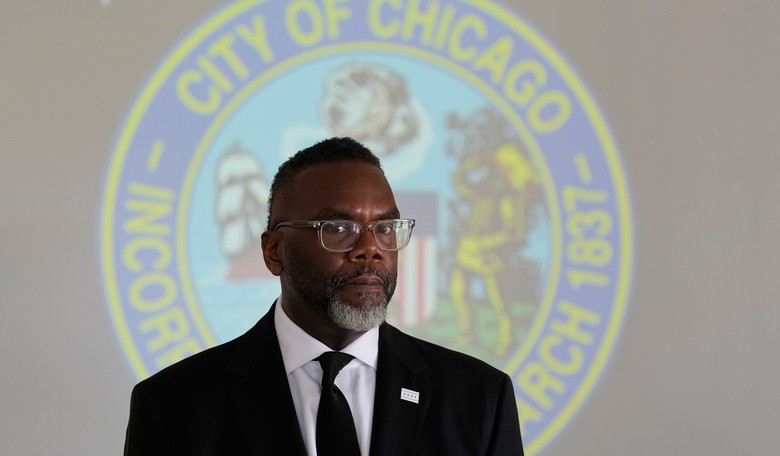
Brandon Johnson had plans for Chicago’s $75 million parking-meter windfall. On Monday, 44 aldermen told the mayor to make another pension payment, leaving his proposed budget with another hole.
Only six voted against the measure. When a mayor loses that badly, blaming political opposition requires explaining why nearly the entire council joined it.
From the Chicago Sun-Times:
Finance Chair and 3rd Ward Ald. Pat Dowell led the negotiating team that persuaded Stonepeak to pay the city $75 million up front, and 5% of profit-sharing going forward. Dowell estimated that Monday’s vote would “conservatively” save city employee pension funds “$213 million over time.”
“For too long, one-off revenues and asset leases have been used to fill immediate, short-term budget holes at the expense of our long-term financial health,” Dowell told her colleagues.
“We are drawing a hard line in the sand — not just for today but for the future of Chicago’s fiscal management. Securing our four pension funds is not just a statutory requirement. It is a moral obligation to the workforce that keeps this city moving. I urge my colleagues to stand on the right side of history, locking this into city code, securing this additional revenue for our pensions now and for the remaining 57 years of this contract.”
The money came from Stonepeak Partners’ acquisition of Chicago’s parking-meter concession. Council negotiators secured a $75 million payment to the city, along with future revenue sharing. Johnson counted the payment toward a supplemental pension contribution already anticipated in his proposed 2027 budget.
Council members wanted the windfall paid on top of previously planned contributions. Their vote demands additional pension funding instead of allowing the new money to substitute for money the budget already needed.
Both approaches sent the dollars to pensions. The disagreement centered on whether Chicago would use an unexpected receipt to further reduce its obligation or ease immediate pressure on its spending plan.
From Chicago Politics:
The $75 million. The City Comptroller would have to pay the full transfer fee to the four funds (municipal employees, police, fire, and laborers) no later than Dec. 31, 2026. Each fund's share would match its share of the City's total required 2026 contribution under state law. Interest earned before the payment would be split the same way.
What it can't be used for. The ordinance bars using the money, or interest on it, to pay any part of the contributions state law already requires for 2026, to pay back the City for those payments, or to cover any other payment the City owes the funds. It separately bars using it for the "supplemental" advance payments the City budgets each year under its pension policy, which has been in place since the 2023 budget. That second provision is the core of the dispute: the Mayor's budget would apply the money against the planned 2027 supplemental payment.
Chicago’s pension debt reached roughly $36.4 billion in 2025, up about $500 million during that year. Against an obligation that large, $75 million amounts to about 0.2%. The council can make a worthwhile payment without pretending it has solved the underlying problem.
The accumulated debt limits what today’s election officials can do. Money committed to yesterday’s promises remains unavailable for tomorrow’s priorities. Politicians can campaign on an expanding list of public benefits, but their budgets must eventually account for obligations that earlier administrations failed to adequately fund.
Finance Chair Pat Dowell argued that one-time revenues and asset leases have too often filled immediate budget holes at the expense of long-term financial health. Her point should embarrass a political establishment that needs reminding.
Responsible budgeting requires discipline precisely when extra money arrives. Otherwise, every unexpected dollar becomes permission to postpone another difficult decision, and every following budget begins with the same problem.
Johnson’s administration warned that the additional pension payment could put youth jobs, homelessness services, libraries, violence intervention, and the basic neighborhood services at risk.
Those are potential trade-offs, rather than an announced list of enacted cuts.
Chicagoans should insist on specific numbers behind that warning. Which spending would change? What alternatives has the administration examined? How much relief would each option provide? Invoking popular services doesn’t complete the arithmetic or excuse the mayor from presenting choices.
The council also owes residents an answer. Ordering an extra payment is easier than identifying the spending reductions or revenues needed to accommodate it. A 44-vote majority can reject Johnson’s approach, but it can’t vote away the resulting gap.
The mayor’s proposal already relies on roughly $100 million from reviving a head tax, charging large employers $25 per employee per month. The council rejected that approach a year ago, leaving another contested assumption in the spending plan.
Workers and retirees depend on promised benefits. Residents depend on functioning services, while businesses need reasons to keep employing people in Chicago. Years of underfunding make those interests harder to reconcile, regardless of how generously a politician describes his intentions.
Residents should also distinguish paying a pension bill from fixing the system that produced it. An additional contribution can reduce future costs, but lasting improvement requires budgets that consistently fund commitments and explain their long-term price. Nobody should accept a victory announcement that treats a single payment as evidence the city has finally brought its promises within its means.
Johnson must now revise his budget, and the council must scrutinize what he proposes. Chicago received $75 million in unexpected revenue and immediately fought over which existing need it would absorb.
The windfall was welcome, yet the freedom to spend it had already been consumed.